Medication Side Effect & Interaction Checker
Understand the Risks
Your medication's side effects can vary based on type, ingredients, and your unique health profile. This tool helps you identify potential risks.
Select Medication Type
Enter Medication Name
Results
Common Side Effects
Note: This tool provides general information. Always consult your healthcare provider or pharmacist for personalized advice.
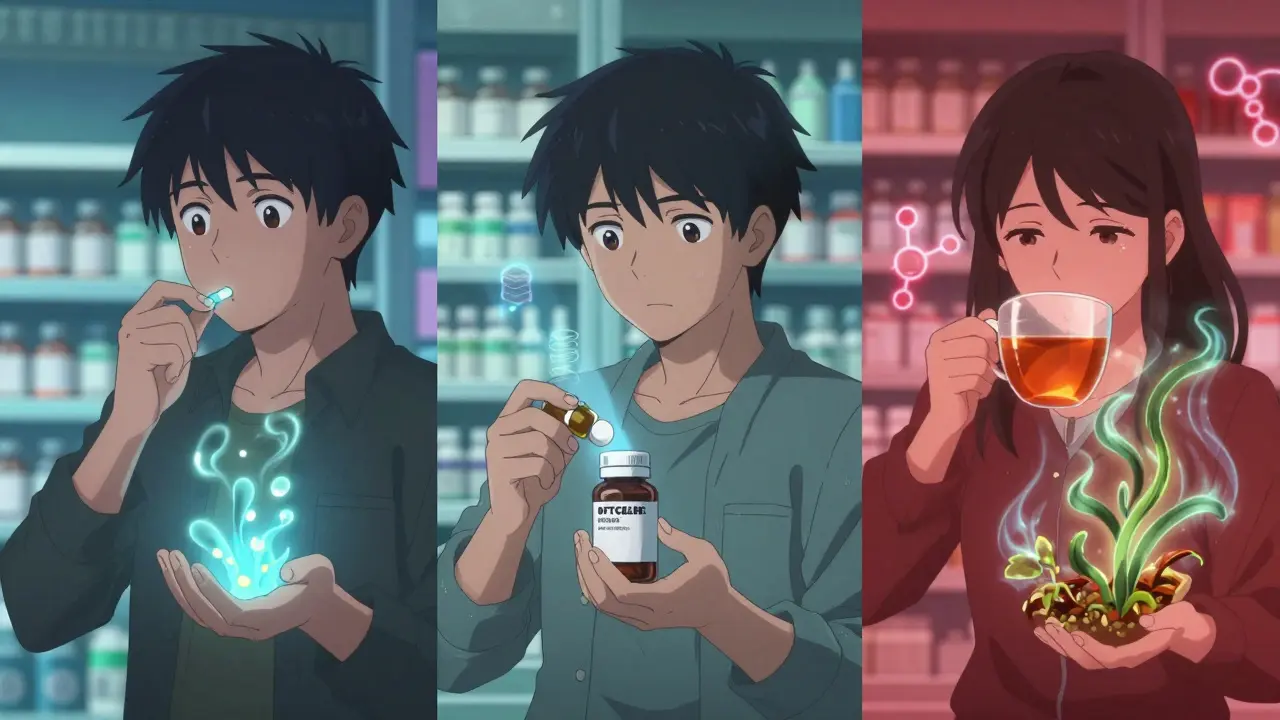
When you start a new medication, you’re not just choosing a drug-you’re choosing a set of risks. Whether it’s a prescription pill, an over-the-counter painkiller, or a herbal supplement, every medicine comes with a hidden list of possible side effects. And not all side effects are created equal. Some are mild, like a dry mouth or a headache. Others can be serious, even life-threatening. The real surprise? Alternative medication classes-prescription drugs, OTC meds, and herbal supplements-don’t just differ in how they work. They differ in how they harm you.
Prescription vs. Generic: The Same Drug, Different Risks
You might think a generic drug is just a cheaper version of the brand-name one. And mostly, that’s true. The FDA requires generics to have the same active ingredient, strength, and dosage form. They must also be absorbed into your body within 80-125% of the brand-name version. That’s called bioequivalence. For most people, it works fine. But here’s the catch: the inactive ingredients are different. Inactive ingredients? Yes. Things like lactose, cornstarch, dyes, or preservatives. They don’t help the drug work. But they can make you sick. If you’re lactose intolerant, a generic version of your blood pressure pill might give you bloating and diarrhea-because it uses lactose as a filler. The brand-name version? Maybe it uses a different one. Same active ingredient. Different side effect. And then there are the narrow therapeutic index (NTI) drugs. These are the ones where even a tiny change in your blood level can cause big problems. Think levothyroxine (for thyroid), warfarin (for blood thinning), or certain epilepsy drugs. A 5% difference in absorption? For most drugs, it’s harmless. For these? It can mean a seizure, a stroke, or a thyroid crash. That’s why pharmacists and doctors often recommend sticking with the same manufacturer-even if it’s generic. Switching between different generic versions of warfarin? Not a good idea unless you’re being closely monitored.Over-the-Counter: The False Sense of Safety
You walk into a pharmacy. You see ibuprofen. You see acetaminophen. You see cold medicine. You think, “It’s OTC. It’s safe.” But OTC doesn’t mean harmless. Take acetaminophen. Take too much? Liver failure. Take it with alcohol? Double the risk. Take it for weeks because your back hurts? You’re slowly poisoning your liver without knowing it. And then there’s the interaction problem. A 2023 study found that nearly 40% of adults taking OTC pain relievers also took prescription medications that increased their risk of bleeding or kidney damage. No one warned them. No one asked. They just picked up the bottle because it was on the shelf. Even common cold medicines can be dangerous. Many contain pseudoephedrine or diphenhydramine. Both can raise blood pressure. Both can mess with heart rhythm. If you have high blood pressure or an irregular heartbeat, these OTC drugs aren’t just risky-they’re dangerous. And yet, they’re sold next to candy bars.Herbal Supplements: The Wild West of Medicine
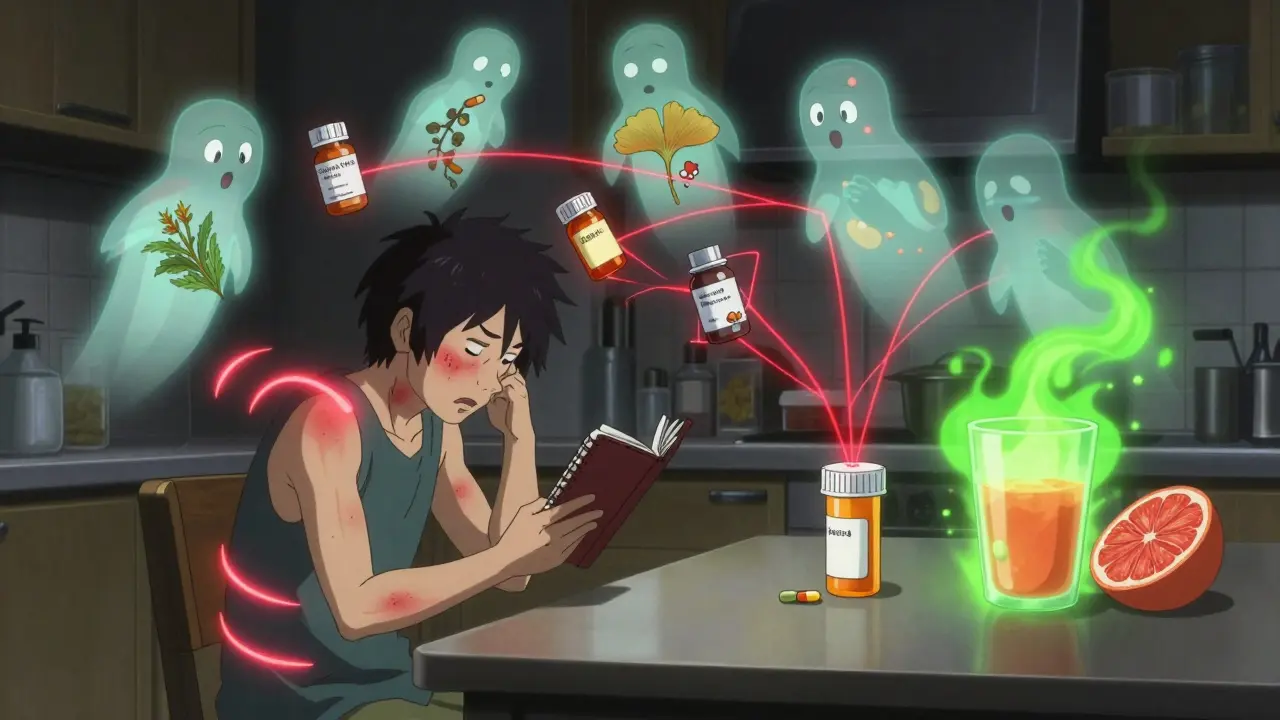
Here’s where things get really tricky. Herbal supplements aren’t regulated like drugs. The FDA doesn’t test them for safety or effectiveness before they hit the shelf. That means a bottle labeled “Echinacea” might contain the right herb. Or it might contain mold. Or a completely different plant. Or heavy metals. You won’t know until you get sick. Echinacea? It’s marketed for colds. But it can trigger asthma attacks, hives, swelling, and muscle pain. Feverfew? Used for migraines. But in animal studies, it caused uterine contractions. Pregnant women? Avoid it. St. John’s Wort? People use it for depression. But it can cause serotonin syndrome-a dangerous spike in serotonin that leads to tremors, high fever, low blood pressure, and even death-especially if you’re already on antidepressants. And the interactions? They’re sneaky. Ginkgo, ginseng, garlic, and chamomile all thin the blood. If you’re on warfarin or aspirin? You’re adding fuel to a fire. One study found that 68% of patients taking herbal supplements didn’t tell their doctor. Why? Because they thought it was “natural.” Natural doesn’t mean safe. It just means untested.
Why Some People React Differently
You take the same pill as your neighbor. She feels fine. You get dizzy. Why? Because your body is different. Your liver processes drugs differently. Your kidneys clear them at a different speed. You might have a genetic variation that makes you a slow metabolizer. Or maybe you’re allergic to a dye in the pill. Or you’re taking another medication that blocks the drug’s path. That’s why side effects aren’t just about the drug. They’re about you. Your age. Your weight. Your other conditions. Your other meds. Even your diet. Grapefruit juice? It can block how your body breaks down statins, blood pressure meds, and some anti-anxiety drugs. One glass can turn a safe dose into a toxic one. And let’s not forget: sometimes, the symptom you think is from the drug? It’s from the illness itself. A rash after starting a new medication? Could be the drug. Or it could be your body reacting to an infection you didn’t even know you had. That’s why doctors ask you to track symptoms-what you felt before, what changed after.What You Should Do
Here’s what actually works:- Always read the label-both active and inactive ingredients. If you’re allergic to sulfites, soy, or lactose, check every time you refill.
- Don’t assume generics are identical. If you’re on a narrow therapeutic index drug, ask your pharmacist to keep you on the same manufacturer.
- Tell your doctor about every supplement, herb, or OTC pill-even if you think it’s harmless. They need the full picture.
- Watch for new symptoms in the first two weeks after starting or switching a drug. That’s when most side effects show up.
- Keep a simple log: date, drug, dose, symptoms. You don’t need to be a scientist. Just write it down.
- If you’re switching from brand to generic and feel worse? Don’t ignore it. Go back to your doctor. It’s not “all in your head.”
The Bottom Line
There’s no one-size-fits-all when it comes to medication. What works for one person can backfire for another. The same drug, in different forms, can cause different side effects. Prescription pills aren’t automatically safer than OTC. Herbal supplements aren’t automatically safer than anything else. The real difference? Oversight. Prescription drugs are tested. OTC drugs are monitored. Supplements? Not so much. That’s why you have to be your own advocate. Ask questions. Read labels. Track changes. Don’t let convenience or cost override your safety.Frequently Asked Questions
Are generic drugs always safe to switch to?
For most medications, yes. But for drugs with a narrow therapeutic index-like warfarin, levothyroxine, and some epilepsy meds-even small changes in how your body absorbs the drug can cause serious problems. If you’re on one of these, stick with the same brand or generic version unless your doctor advises otherwise.
Can herbal supplements really interact with prescription drugs?
Absolutely. St. John’s Wort can reduce the effectiveness of birth control, antidepressants, and HIV meds. Ginkgo and garlic can increase bleeding risk when taken with blood thinners. Echinacea can interfere with liver-metabolized drugs. Most people don’t realize their supplement is interacting with their prescription-until they get sick.
Why do some people have side effects from generics but not brand-name drugs?
It’s usually because of inactive ingredients. A generic might use lactose as a filler, while the brand-name version uses cornstarch. If you’re lactose intolerant, that small difference can cause bloating, gas, or diarrhea. It’s not the active drug-it’s the filler.
Is it safe to take OTC painkillers every day?
No. Daily use of ibuprofen or naproxen can damage your kidneys and increase bleeding risk. Daily acetaminophen can cause liver damage, especially if you drink alcohol or take other meds that affect the liver. These aren’t harmless. They’re medications with real risks.
What should I do if I think a medication is causing side effects?
Don’t stop taking it without talking to your doctor. But do start tracking: when did it start? What symptoms? Did you change anything-dose, time, food, supplements? Bring that info to your provider. Many side effects are treatable or avoidable if caught early.


Rob Turner
February 12, 2026 AT 01:47