
Anticholinergic Burden Calculator
The Anticholinergic Cognitive Burden (ACB) scale measures how much a medication affects brain function. High ACB drugs can cause confusion, drowsiness, and increase dementia risk, especially in older adults. First-generation antihistamines like Benadryl have the highest risk (ACB score 3).
This tool helps you calculate your total ACB score based on the medications you take. If your score is 3 or higher, consult your doctor.
Select Your Medications
Your Anticholinergic Burden Score
Your total anticholinergic burden is low. You can generally continue your medications with caution, but always consult your doctor if you experience unusual drowsiness or confusion.
Common medications that may increase your risk include:
- First-generation antihistamines like Benadryl and Unisom
- Some sleep aids
- Alcohol
- Many opioids
Important: For older adults, even low ACB medications can become risky when combined with other drugs. If you're over 65, consult your doctor about all medications.
Combining antihistamines with other sedating medications can be dangerous - even deadly. Many people don’t realize that the common allergy pill they take for a runny nose or the sleep aid they use occasionally can become a serious risk when mixed with prescription drugs, alcohol, or even over-the-counter pain relievers. This isn’t theoretical. Every year, over 300,000 emergency room visits in the U.S. are tied to drug interactions involving sedating medications, and antihistamines are involved in nearly 15% of those cases.
Why Some Antihistamines Are Riskier Than Others
Not all antihistamines are the same. There are two main types: first-generation and second-generation. The difference isn’t just about how long they last - it’s about how they affect your brain. First-generation antihistamines like diphenhydramine (Benadryl), hydroxyzine, and promethazine were developed in the 1940s. They cross the blood-brain barrier easily and block not just histamine receptors but also acetylcholine receptors. This is why they cause drowsiness, dry mouth, confusion, and blurred vision. On the Anticholinergic Cognitive Burden (ACB) scale - a tool doctors use to measure how much a drug affects brain function - diphenhydramine scores a 3, the highest level of risk. Second-generation antihistamines like loratadine (Claritin), cetirizine (Zyrtec), and fexofenadine (Allegra) were designed to avoid the brain. Thanks to special transporters in the blood-brain barrier, they stay mostly outside the central nervous system. That’s why they’re called "non-drowsy." Their ACB score is 0 or 1. In user surveys, 97% of people taking loratadine reported no drowsiness, compared to 68% of those taking diphenhydramine.What Happens When You Mix Them With Other Sedatives?
The real danger comes when these drugs are combined with other substances that slow down your nervous system. This includes:- Benzodiazepines (like Xanax, Valium, lorazepam)
- Opioids (like oxycodone, hydrocodone, codeine)
- Sleep aids (like zolpidem, doxylamine)
- Alcohol
- Some antidepressants and muscle relaxants
Who’s at the Highest Risk?
Older adults are the most vulnerable. As people age, their liver and kidneys process drugs more slowly. A 70-year-old taking diphenhydramine may have 50-70% less clearance than a 30-year-old. That means the drug builds up in their system, increasing the chance of confusion, falls, and delirium. The American Geriatrics Society has listed first-generation antihistamines on its Beers Criteria - a list of medications that should be avoided in older adults. Why? Because they’re linked to a 54% higher risk of dementia with long-term use, according to a 2015 study in JAMA Neurology. Even short-term use can trigger sudden confusion in people with early Alzheimer’s or Parkinson’s. People taking multiple medications are also at risk. The average Medicare beneficiary takes nearly 8 prescriptions. If one is an anticholinergic like oxybutynin (for overactive bladder), and another is diphenhydramine, the combined burden can push someone into delirium. One 2021 JAMA study found that combining just two high-ACB drugs increased delirium risk by over half.
What About Second-Generation Antihistamines?
If you’re worried about interactions, second-generation antihistamines are your safest bet. Studies show that drugs like bilastine and fexofenadine don’t increase sedation when taken with benzodiazepines - even at high doses. Users report fewer side effects, and the FDA’s adverse event reports for these drugs are dramatically lower. That said, they’re not completely risk-free. Cetirizine (Zyrtec) still has an ACB score of 1. In rare cases, especially in elderly patients or those with kidney problems, it can still cause drowsiness. And if you’re taking cimetidine (Tagamet), which blocks liver enzymes that break down drugs, even second-generation antihistamines might build up in your system.Real Stories, Real Consequences
Online forums are full of warnings. On Reddit’s r/Pharmacy, a top-rated post from 2022 described how someone took 50mg of Benadryl with 1mg of Xanax and ended up in the ER with dangerously slow breathing. Over 80 similar stories followed. GoodRx users gave diphenhydramine just 1.8 out of 5 stars, mostly because of "dangerous drowsiness with other meds." One user on WebMD wrote: "I took Benadryl for allergies and a pain pill for back pain. I woke up on the floor. Couldn’t remember how I got there. My husband called 911." That’s not rare. WebMD’s data shows 41% of people who took diphenhydramine with opioids had severe dizziness requiring medical attention.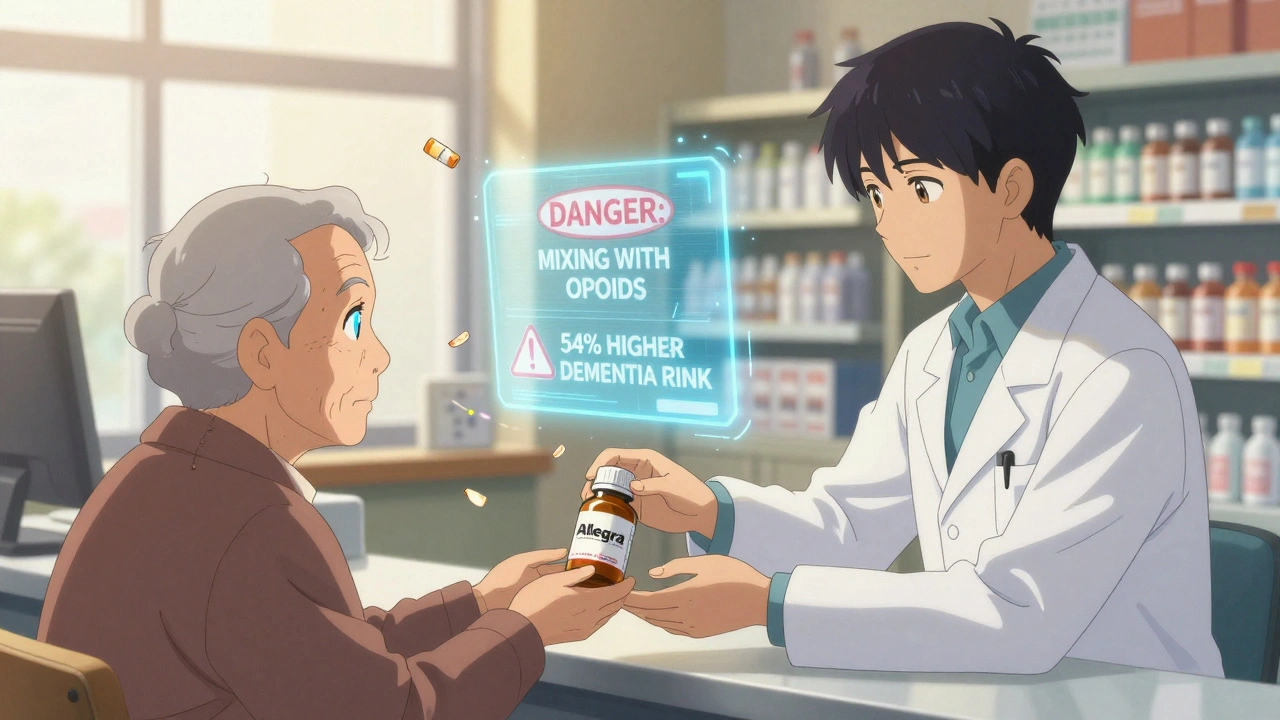
What Should You Do?
If you’re taking any of these, here’s what to do:- Check your meds. Look at every pill in your medicine cabinet - including OTC sleep aids, cold remedies, and allergy tablets. Many contain diphenhydramine or doxylamine without it being obvious.
- Use the ACB scale. The University of Washington has a free online calculator. Just type in your meds, and it shows your total anticholinergic burden. If it’s 3 or higher, talk to your doctor.
- Switch to second-generation antihistamines. If you’re using Benadryl for allergies or sleep, try Claritin, Zyrtec, or Allegra instead. They work just as well for allergies - without the brain fog.
- Talk to your pharmacist. Pharmacists see your full prescription history. Ask them: "Do any of my medications interact with my allergy pill?"
- Never mix with alcohol. Even one drink with diphenhydramine can cause blackouts. BuzzRx documented over 1,200 reports of hospital visits after just one drink with 25mg of Benadryl.
What’s Changing in 2025?
The tide is turning. Since 2018, sales of first-generation antihistamines have dropped 12.7% per year. Second-generation drugs now make up 83% of the U.S. OTC antihistamine market. In 2023, the FDA required stronger warnings on diphenhydramine packaging - bold text that says: "May cause severe drowsiness when combined with alcohol, opioids, or sleep medications." Pharmacies like Kaiser Permanente now use automated alerts that flag dangerous combinations before a prescription is filled. That system cut antihistamine-related ER visits by 34% between 2020 and 2022. Newer antihistamines like levocetirizine (Xyzal) and bilastine are being developed with near-perfect receptor targeting - meaning they block histamine without touching other brain receptors at all. By 2028, experts predict first-generation antihistamines will make up less than 22% of the market, mostly restricted to motion sickness or end-of-life care.Bottom Line
If you’re taking any sedating medication - whether it’s a prescription, OTC sleep aid, or just a glass of wine - avoid first-generation antihistamines like Benadryl, Unisom, or Dimetapp. They’re outdated, risky, and unnecessary for most people. Switch to loratadine, cetirizine, or fexofenadine. They work just as well for allergies. They don’t make you drowsy. And they won’t turn your daily meds into a silent threat. Your brain and your safety are worth more than the 50-cent bottle of diphenhydramine. Choose wisely.Can I take Benadryl with my anxiety medication?
No. Mixing diphenhydramine (Benadryl) with benzodiazepines like Xanax, Ativan, or Klonopin can cause extreme drowsiness, slowed breathing, and even loss of consciousness. Studies show this combination increases sedation by up to 42%. Use loratadine or cetirizine instead - they don’t interact with anxiety meds.
Is Zyrtec safe with other medications?
Cetirizine (Zyrtec) is generally safer than Benadryl, but it still has a low anticholinergic score (1). Avoid combining it with other CNS depressants like opioids, sleep aids, or alcohol - especially if you’re over 65 or have kidney issues. Fexofenadine (Allegra) is the safest option if you’re on multiple medications.
Why do some cold medicines say "non-drowsy" but still have diphenhydramine?
They don’t. If a product says "non-drowsy," it should contain loratadine, fexofenadine, or cetirizine. Diphenhydramine always causes drowsiness. If you see "diphenhydramine" on the ingredient list - even in a "cold and flu" tablet - it will make you sleepy. Always read the label carefully.
Can antihistamines cause dementia?
Long-term use of high-anticholinergic drugs like diphenhydramine is linked to a higher risk of dementia. A 2015 study found people who took these drugs daily for three years had a 54% increased risk. It’s not guaranteed, but the evidence is strong enough that doctors now avoid prescribing them to older adults.
What’s the safest antihistamine for seniors?
Fexofenadine (Allegra) is the safest for seniors. It has an ACB score of 0, doesn’t cross the blood-brain barrier, and isn’t metabolized by the liver. Loratadine and cetirizine are also acceptable, but avoid diphenhydramine, hydroxyzine, and promethazine entirely in older adults.


nikki yamashita
December 11, 2025 AT 13:55