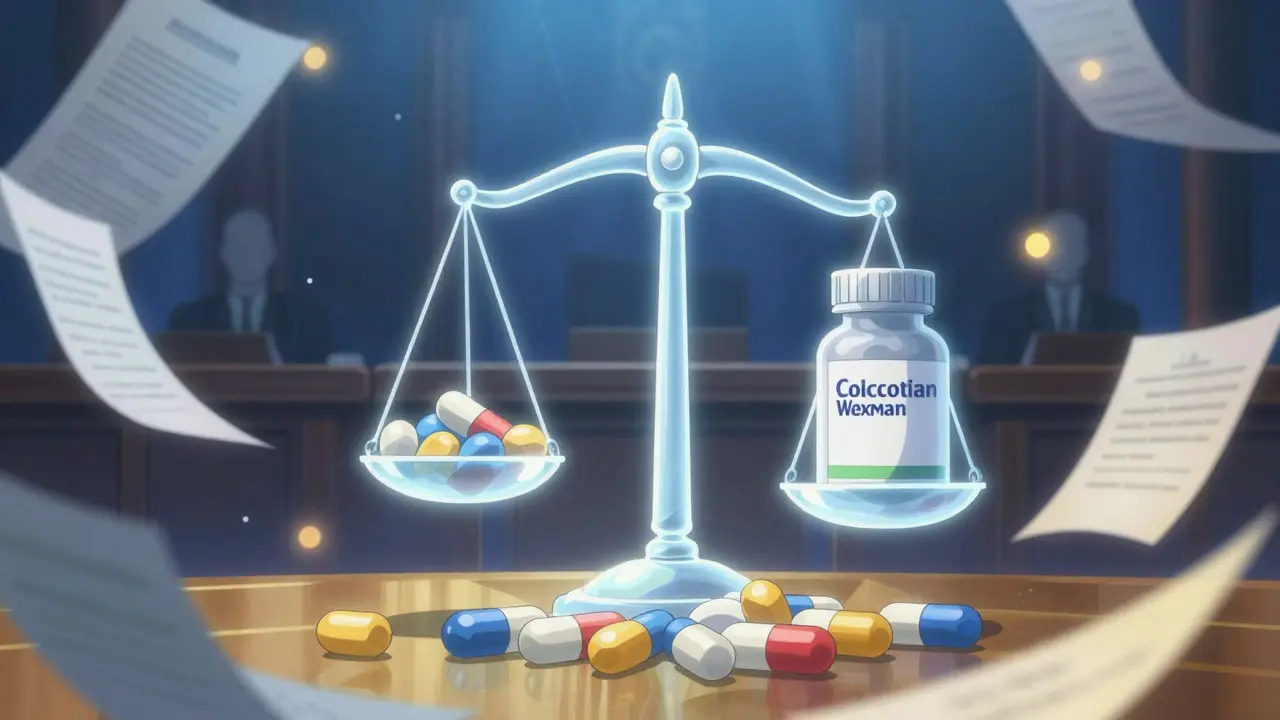
Why do some life-saving medications cost a fortune while others are cheap? The answer often lies in the battle between big pharma and generic manufacturers. It is not just about chemistry; it is about law. Antitrust laws are legal rules designed to prevent monopolies and promote fair competition in the marketplace. In the world of medicine, these laws are the only thing standing between you and sky-high prices for essential treatments.
When a patent expires on a brand-name drug, a generic version should rush in to lower costs. But sometimes, companies find clever ways to block that competition. From secret payments to regulatory tricks, the tactics are sophisticated. Understanding how generic drug markets work under the lens of antitrust enforcement helps explain why your prescription bill looks the way it does.
The Foundation: The Hatch-Waxman Act
To understand the current fight over drug prices, you have to look back to 1984. Before this year, patients faced a dilemma: wait years for generics after patents expired, or rely on expensive branded drugs. The solution was the Hatch-Waxman Act, formally known as the Drug Price Competition and Patent Term Restoration Act. This law created a balance. It gave brand-name companies a little extra time to recoup their research investments (patent term restoration) but opened the door for generics to enter the market sooner by streamlining approval processes.
The key mechanism here is the Abbreviated New Drug Application (ANDA). Instead of running full clinical trials again, generic makers prove their drug is bioequivalent to the original. The first company to file an ANDA with a Paragraph IV certification-claiming the brand’s patent is invalid or won’t be infringed-gets a 180-day head start. This exclusivity period is a massive financial incentive. It turns the race to launch a generic into a high-stakes competition that benefits consumers through lower prices.
The results speak for themselves. According to the Federal Trade Commission (FTC), generic drugs now account for 90% of all prescriptions filled in the U.S., up from just 19% in 1984. Between 2005 and 2014, this competition saved consumers $1.68 trillion. That is not just savings; that is economic stability for millions of households.
The Dark Side: Pay-for-Delay Agreements
If the system works so well, why are there still problems? Because money talks. One of the most controversial issues in pharmaceutical antitrust is "pay-for-delay." Imagine two companies fighting over a patent. Instead of going to court and risking a loss, the brand-name company offers the generic challenger a huge cash payout to stay away from the market. Essentially, they are paying off the competition.
In 2013, the Supreme Court ruled in FTC v. Actavis that these reverse payment settlements could violate antitrust laws if the payments were large and unexplained. The logic is simple: if the generic company thinks its case is strong, why take a settlement? If the brand pays them to leave, it suggests the brand fears losing the monopoly. Since then, the FTC has cracked down hard. For example, Gilead Sciences paid $246.8 million in 2023 to settle allegations that it thwarted generic competition for HIV drugs. These cases send a clear message: keeping generics out through bribes is illegal.
Tactics Beyond Payments: Regulatory Games
Cash isn't the only tool in the playbook. Brand-name manufacturers use various strategies to delay generic entry without breaking the letter of the law, even if they break the spirit of competition.
- Orange Book Listing Abuse: The FDA maintains the "Orange Book," which lists patents related to approved drugs. Companies sometimes list weak or irrelevant patents here. When a generic maker challenges these, it triggers automatic stays on approval, delaying entry for months or years. The FTC took Bristol-Myers Squibb to task in 2003 for improperly listing patents to impede competition.
- Product Hopping: This involves slightly changing a drug's formulation right before a patent expires. By launching a new version (like Nexium replacing Prilosec) and pushing doctors to switch, the old drug loses sales volume. Generics targeting the old drug become less profitable, discouraging them from entering the market. Courts have struggled with this, but regulators view it skeptically.
- Sham Petitions: Some companies file frivolous legal petitions or complaints with the FDA claiming safety issues with generic competitors. These "sham" actions force delays while the courts sort out the nonsense. Teva Pharmaceuticals recently faced FTC action for allegedly using this tactic against generics for its multiple sclerosis drug Copaxone.
- Disparagement: Originator companies may spread misleading information about generic safety or efficacy. They might highlight rare side effects or scientific uncertainties to scare doctors and patients away from the cheaper option. This practice distorts consumer choice based on fear rather than fact.
A Global Perspective on Enforcement
While the U.S. focuses heavily on pay-for-delay, other regions face different challenges. The European Commission has identified misuse of regulatory frameworks as a major issue. In Europe, originator companies sometimes make misleading representations to patent offices to extend protection periods. Others strategically withdraw marketing authorizations in specific countries to prevent generic entry entirely.
China has taken a aggressive stance recently. In January 2025, China issued its Antitrust Guidelines for the Pharmaceutical Sector. These guidelines identify five "hardcore restrictions" that are presumed to violate anti-monopoly laws: price fixing, output restrictions, market division, joint boycotts, and limits on new technology development. Chinese authorities are now using AI to monitor pricing trends and catch collusion through messaging apps and algorithms. As of early 2025, six pharmaceutical cases had been penalized, mostly involving price-fixing agreements.
| Region | Primary Enforcement Focus | Key Legal Mechanism/Case | Recent Development (2023-2025) |
|---|---|---|---|
| United States | Pay-for-delay settlements, sham litigation | FTC v. Actavis (2013) | Gilead $246M settlement; Teva Copaxone case pending |
| European Union | Regulatory abuse, disparagement, withdrawal of authorizations | European Commission Pharma Strategy | €11.9B annual cost of delayed generics cited by EC |
| China | Price fixing, online collusion, algorithmic coordination | Antitrust Guidelines for Pharmaceutical Sector (2025) | AI monitoring of pricing; 6 cases penalized in Q1 2025 |
The Real Cost to Patients
These legal battles are not abstract concepts. They hit your wallet directly. When the first generic enters the market, prices drop by at least 20% within a year. If five generics compete, prices can fall by nearly 85%. Every month of delay means higher costs for everyone.
The Congressional Budget Office estimates that generic competition keeps prescription drug costs 30-90% below branded prices. Without this pressure, patients would pay significantly more. A 2022 Kaiser Family Foundation survey found that 29% of U.S. adults did not take medication as prescribed due to cost concerns. Delayed generic entry directly contributes to this health crisis. It is not just about saving money; it is about access to care.
What You Can Do
As a patient or consumer, you play a role in supporting competition. Always ask your doctor or pharmacist if a generic alternative is available. Insist on it unless there is a medical reason not to. Your demand signals to the market that generics are valued. Additionally, stay informed about news regarding major drug approvals and patent expirations. Public scrutiny keeps regulators accountable and encourages faster generic entry.
Support organizations that advocate for transparent pricing and robust antitrust enforcement. Groups like the FTC and independent patient advocacy networks work tirelessly to expose anti-competitive practices. By understanding the landscape, you empower yourself to make better healthcare decisions.
What is the Hatch-Waxman Act?
The Hatch-Waxman Act, passed in 1984, is a U.S. law that balances the interests of brand-name and generic drug manufacturers. It allows generic companies to skip lengthy clinical trials by proving bioequivalence, speeding up market entry. In exchange, it provides some patent term extensions to brand owners. This framework has led to generics making up 90% of prescriptions today.
Are pay-for-delay agreements illegal?
Yes, they can be. Following the Supreme Court's 2013 ruling in FTC v. Actavis, large, unexplained payments from brand-name companies to generic challengers to delay market entry are considered potentially anti-competitive. Regulators scrutinize these deals closely, and companies have paid hundreds of millions in fines for violating these principles.
How much do generic drugs save consumers?
Generic drugs generate massive savings. Between 2005 and 2014, they saved U.S. consumers $1.68 trillion. Typically, the entry of a generic reduces drug prices by 20-85% compared to the branded version, depending on the level of competition. This makes essential medications affordable for millions of people.
What is product hopping in pharmaceuticals?
Product hopping is a strategy where a brand-name company launches a new version of a drug (e.g., different dosage form) just before its patent expires. They then market aggressively to shift doctors and patients to the new version. This drains sales from the old drug, making it less attractive for generic manufacturers to produce a copy, thus delaying effective competition.
How does China enforce antitrust laws in pharma?
China updated its approach with the 2025 Antitrust Guidelines for the Pharmaceutical Sector. Authorities focus on hardcore restrictions like price-fixing and market division. They also use advanced technology, including AI, to detect collusion via digital platforms and messaging apps. Several cases have already been penalized under these stricter rules.


Alana Frassinelli
July 4, 2026 AT 16:54