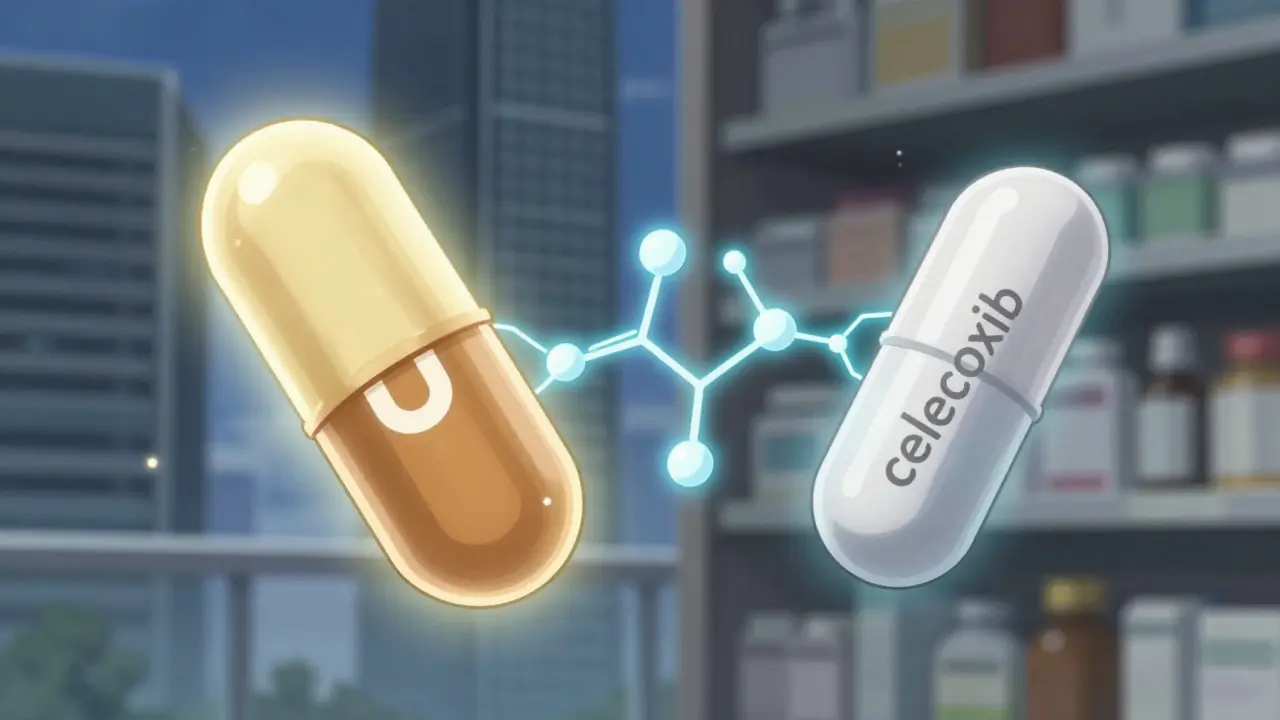
When a brand-name drug loses its patent, it doesn’t just fade away. Instead, many companies launch something called an authorized generic - a version of their own drug sold under a different label, with no brand name, but the exact same ingredients. It’s not a traditional generic. It’s not a knockoff. It’s the same pill, same capsule, same manufacturing line - just without the logo.
What Exactly Is an Authorized Generic?
An authorized generic is made by the original brand manufacturer and sold under a private label. It contains the same active ingredient, same inactive ingredients (fillers, dyes, coatings), and is produced in the same facility as the branded version. The only difference? The packaging doesn’t say "Celebrex" - it says "celecoxib". No FDA approval is needed because it’s marketed under the original New Drug Application (NDA), not a new Abbreviated New Drug Application (ANDA). That means it skips the bioequivalence testing that traditional generics must pass.
This isn’t a loophole. It’s legal. The FDA explicitly states that authorized generics are "considered therapeutically equivalent" to the brand drug. But they’re not listed in the Orange Book - the official FDA directory of approved generics - because they’re not technically generics under regulatory definitions. They’re the original product with a new label.
Why Do Brand Companies Do This?
Patent expiration is a financial earthquake for drugmakers. Once generics enter the market, prices can drop 80% or more. To protect revenue, brand companies began using authorized generics as a strategic tool in the early 2000s. The timing matters. Under the Hatch-Waxman Act, the first generic company to file gets 180 days of exclusivity - meaning no other generics can enter during that time. That’s a golden window.
Here’s the move: the brand company launches its own authorized generic right before or during that 180-day window. Suddenly, the first generic company isn’t the only low-price option. Now there are two. And competition drives prices down - faster and deeper than if only one generic was on the market.
According to a 2022 study in Health Affairs, between 2010 and 2019, there were 854 authorized generic launches. About 70% of them hit the market during or before the 180-day exclusivity period. The Federal Trade Commission found that in markets with authorized generics, prices were 15-20% lower than in markets without them. So yes - consumers benefit from lower prices. But the brand company still keeps a piece of the pie.
Authorized Generics vs. Traditional Generics: The Key Differences
Many people think all generics are the same. They’re not.
- Traditional generics must prove they’re bioequivalent to the brand drug. They can have different inactive ingredients - which sometimes causes issues for sensitive patients. For example, someone on levothyroxine (for thyroid) might react differently to a generic with a different filler.
- Authorized generics have the exact same formulation. No changes. Same color, same shape, same excipients. That’s why they’re often preferred for drugs with a narrow therapeutic index - where tiny differences can lead to big health consequences.
Examples? Greenstone (Pfizer’s authorized generic arm) sells celecoxib - the exact same drug as Celebrex. Prasco makes an authorized generic of Colcrys (colchicine). Watson/Actavis made one for Concerta (methylphenidate ER). All identical to the brand. All sold cheaper.
The Controversy: Is This Fair?
Not everyone sees authorized generics as a win.
The Generic Pharmaceutical Association (GPhA) argues that they’re a tactic to delay real competition. If the brand company launches its own generic, the first generic applicant might not get the full benefit of their 180-day exclusivity. Some companies even delay their own generic launch until the brand’s authorized generic is already on shelves - creating a market that looks competitive but is actually controlled by one player.
Dr. Jerry Avorn from Harvard called it "a sophisticated market manipulation strategy." He’s not wrong. Brand companies aren’t doing this out of charity. They’re protecting profits. But the FTC’s 2011 report concluded that, despite the strategy, consumers still ended up paying less. It’s a paradox: a corporate tactic that accidentally helps patients.
Meanwhile, PhRMA says authorized generics increase choice. And for patients who’ve had bad reactions to traditional generics, they’re a lifesaver. A 2022 Reddit thread from pharmacists showed real cases: patients stabilized on brand-name drugs failed on regular generics - but did fine on the authorized version because the fillers matched exactly.
What Patients and Pharmacists Experience
Confusion is the biggest practical problem.
Patients often don’t know the difference. One review on Drugs.com said: "I got this ‘generic’ but it looks identical to the brand I used before - is this actually generic?" The answer? Yes. And no. It’s the same drug, just sold under a different name.
Pharmacists report that 68% of patients ask about authorized generics, according to US Pharmacist. Many assume "generic" means "different" - so when they get a pill that looks and works exactly like the brand, they’re suspicious. Or worse, they think they’re being tricked.
Pharmacies struggle too. Authorized generics aren’t in the Orange Book, so pharmacy systems don’t always flag them correctly. Billing errors happen. Some pharmacies use software updates - like Epic’s 2021 system change - to highlight authorized generics separately. That cut identification errors by 67%.
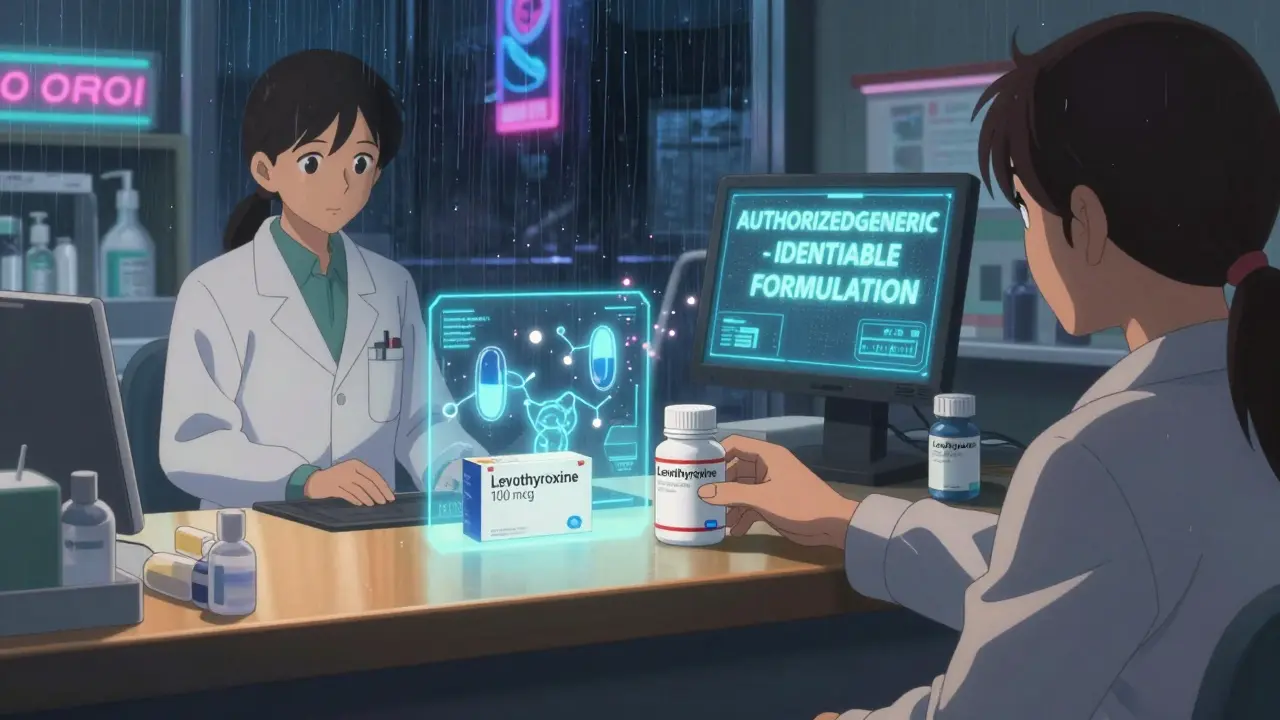
And labeling? The FDA doesn’t require special markings beyond removing the brand name. So a patient might get a white tablet labeled "Levothyroxine 100 mcg" - same as Unithroid - but with no clue it’s the exact same product.
Who Uses Authorized Generics the Most?
Adoption varies by drug type.
They’re most common in central nervous system drugs - like antidepressants, ADHD meds, and thyroid hormones - where inactive ingredients matter. About 67% of these drugs have authorized generics. Why? Because small differences in fillers can throw off blood levels.
Antibiotics? Only 22% have them. Why? Because the active ingredient is the only thing that matters. Fillers don’t affect infection treatment.
And pharmacy benefit managers (PBMs) like Express Scripts and OptumRx actively push authorized generics. Why? Because they’re trusted. Express Scripts found 28% higher utilization of authorized generics compared to traditional ones - patients and doctors prefer them when they know what they are.
The Future: What’s Coming Next?
The FDA updated its authorized generic list in October 2025 - now listing 1,247 products. That’s up from just over 1,000 in 2022. Evaluate Pharma predicts that by 2027, 45% of major branded drugs will have authorized generics launched within 12 months of patent expiry. That’s up from 32% in 2022.
But pressure is building. In 2023, Congress introduced the "Promoting Competition in Pharmaceutical Markets Act," which would ban brand companies from launching authorized generics during the 180-day exclusivity window. If passed, it could change the game.
Some analysts think the strategy will peak. Bernstein Research says the market will saturate by 2027 - as more generics enter and brand companies lose their leverage. Others, like Jefferies, believe authorized generics will keep growing through 2030 because they’re simply too profitable and too useful for patients.
One thing’s clear: authorized generics aren’t going away. They’re a permanent part of the drug market. And whether you see them as a smart business move or a clever loophole, they’re changing how we think about generics - and who really benefits when patents expire.
What Should You Do?
If you’re on a brand-name drug that’s going generic:
- Ask your pharmacist: "Is there an authorized generic for this?" It might be cheaper and more consistent.
- If you’ve had issues with traditional generics - like side effects or loss of effectiveness - try the authorized version. It’s the same drug, no guesswork.
- Don’t assume "generic" means "different." Authorized generics are often the closest thing to the brand you can get - without the brand price.
For prescribers: Consider prescribing by generic name - and let the pharmacy choose the authorized version if available. It’s often the best balance of cost and consistency.
Are authorized generics the same as brand-name drugs?
Yes. Authorized generics contain the exact same active and inactive ingredients as the brand-name drug. They’re made on the same production line, in the same facility, and are chemically identical. The only difference is the label - no brand name, no marketing.
Why aren’t authorized generics listed in the FDA’s Orange Book?
Because they’re marketed under the brand’s original New Drug Application (NDA), not a separate Abbreviated New Drug Application (ANDA). The Orange Book only lists drugs approved under ANDAs. Authorized generics bypass that process entirely, so they’re not included - even though they’re therapeutically equivalent.
Do authorized generics cost less than traditional generics?
Usually, yes - but not always. Authorized generics often cost less than the brand, and sometimes even less than traditional generics, especially during the 180-day exclusivity window. But pricing depends on the market. In some cases, traditional generics drop so low that they’re cheaper. Always compare prices at your pharmacy.
Can I switch from a brand to an authorized generic safely?
Absolutely. Since authorized generics are chemically identical to the brand, switching is safe for nearly all patients. This is especially true for drugs with narrow therapeutic indexes - like thyroid medication or seizure drugs - where even small changes in inactive ingredients can cause problems. Authorized generics eliminate that risk.
Why do pharmacies sometimes confuse authorized generics with traditional generics?
Because many pharmacy systems aren’t set up to distinguish them. Authorized generics aren’t in the FDA’s Orange Book, so they don’t show up as "approved generics" in standard databases. Pharmacists need to manually identify them or rely on updated software (like Epic’s 2021 update) that flags them separately. Without those tools, they can be mistaken for regular generics - leading to patient confusion and billing errors.


Usha Sundar
December 24, 2025 AT 09:29