
Azithromycin Liver Risk & Safety Checker
Assess Your Profile
Select the options that apply to you to estimate your specific risk profile regarding Azithromycin.
Your Assessment
Based on current clinical guidelines
Safety Protocol
Disclaimer: This tool is for educational purposes only and does not constitute medical advice. Always consult a physician before making medication decisions.
Enter your details to see your personalized risk assessment.
It is one of the most prescribed antibiotics in the world. You might have taken it for a sinus infection, pneumonia, or even an STI. It is known for its convenience-a short course, often just three to five days-and its reputation for being gentle on the stomach compared to older drugs. But there is a shadow side to Azithromycin is a semisynthetic macrolide antibiotic widely used for respiratory and skin infections but associated with risks of drug-induced liver injury. Recent data shows it has become one of the top ten causes of drug-induced liver injury (DILI) in large case series. This is not because the drug is inherently toxic to everyone, but because so many people take it. If you are taking this medication, especially if you have existing liver concerns, understanding these risks is crucial.
What Is Azithromycin-Induced Liver Injury?
To understand the risk, we first need to define what happens when the liver reacts badly to this drug. Drug-induced liver injury (DILI) refers to liver damage caused by prescription drugs, over-the-counter medications, or herbal supplements. In the case of azithromycin, this reaction is classified as "idiosyncratic." That means it is unpredictable. It does not happen to everyone, and standard blood tests before starting the drug usually cannot predict who will get sick.
The mechanism is still debated among experts. Some researchers believe it is an immune-mediated hypersensitivity reaction, where your body’s immune system mistakenly attacks liver cells triggered by the drug. Others point to direct toxicity involving oxidative stress. Regardless of the cause, the result can range from mild, temporary enzyme elevations to severe, life-threatening failure requiring a transplant.
| Metric | Value / Finding | Source Context |
|---|---|---|
| Asymptomatic Enzyme Elevation | 1% - 2% (short-term); 5-7% (long-term) | LiverTox Database |
| Clinically Apparent Injury Rate | 1 in 2,500 to 1 in 65,000 prescriptions | Hepatology Study (2016) |
| Typical Onset Time | 1-3 weeks after starting treatment | Clinical Gastroenterology & Hepatology |
| Recovery Rate | 92% resolve within 4-8 weeks | LiverTox Data |
| Severe Outcome Risk | 0.7% progress to chronic liver failure | CTR Journal Case Series |
Symptoms and Warning Signs
The tricky part about azithromycin-induced liver injury is timing. Symptoms rarely appear while you are still taking the pills. In fact, studies show that nearly 90% of patients develop symptoms only after they have finished their course of antibiotics. The typical latency period is one to three weeks after starting treatment, with a mean onset of about nine days post-treatment.
If you notice any of the following symptoms in the weeks after finishing your antibiotic, do not ignore them:
- Jaundice: Yellowing of the skin or whites of the eyes. This occurs in 87% of symptomatic cases and is the most visible sign of liver distress.
- Fatigue: Unexplained, profound tiredness that doesn't improve with rest. Reported in 79% of cases.
- Pruritus: Intense itching without a rash. This happens in 63% of cases and is often a sign of bile buildup.
- Abdominal Pain: Discomfort in the upper right quadrant of the abdomen, where the liver is located. Seen in 52% of patients.
- Dark Urine or Pale Stools: Changes in waste color indicate bile flow obstruction.
Many patients initially mistake these symptoms for a lingering viral infection or side effects from other conditions. One documented case involved a 45-year-old woman who was misdiagnosed with viral hepatitis for three weeks before doctors realized azithromycin was the culprit. Early recognition is vital. If you see these signs, contact your doctor immediately.
Who Is at Higher Risk?
While anyone can experience idiosyncratic DILI, certain groups face higher probabilities or more severe outcomes. Age is a significant factor. Data from the FDA Adverse Event Reporting System (FAERS) indicates that elderly patients (aged 65 and older) represent 38% of severe cases. Older livers may process drugs less efficiently, and age-related changes in immune response can increase susceptibility.
Pre-existing liver disease is another major risk factor. If you already have hepatitis, fatty liver disease, or cirrhosis, your liver has less reserve to handle additional stress. The European Medicines Agency recommends avoiding azithromycin in patients with severe pre-existing liver impairment. Additionally, long-term therapy increases risk. While short courses (3-7 days) carry a low incidence of asymptomatic enzyme elevation (1-2%), long-term use raises this to 5-7%. Patients taking azithromycin for prolonged periods, such as for lung infections in cystic fibrosis, require closer monitoring.
Drug interactions also play a role. A February 2023 FDA safety announcement highlighted a potential interaction between azithromycin and atovaquone (used for babesiosis), which may exacerbate liver injury. Always provide your doctor with a complete list of all medications and supplements you are taking.
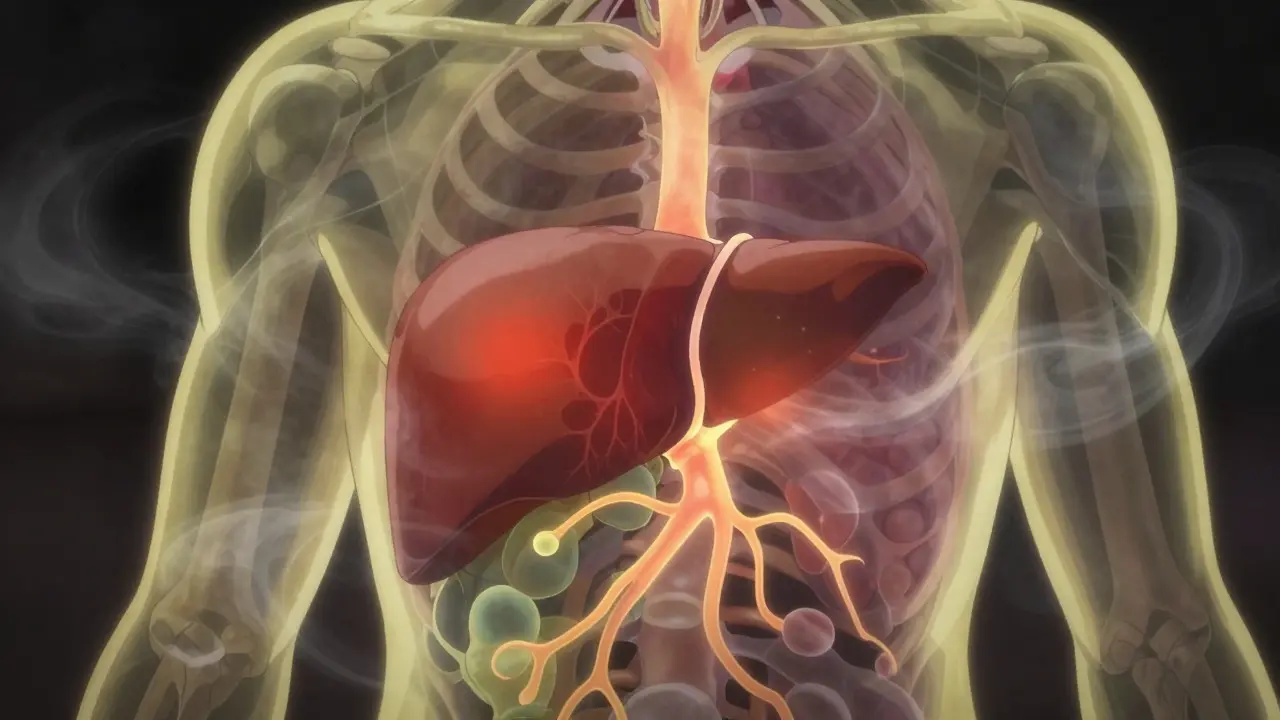
How It Compares to Other Antibiotics
Not all antibiotics hurt the liver equally. Azithromycin belongs to the macrolide class, which includes erythromycin and clarithromycin. All three can cause cholestatic liver injury (blocking bile flow), but their risk profiles differ.
Erythromycin has a higher overall incidence of liver injury (estimated at 1 in 1,000 prescriptions) compared to azithromycin. Clarithromycin sits somewhere in between, with an incidence around 1 in 10,000. However, because azithromycin is prescribed so frequently-accounting for 63% of U.S. macrolide prescriptions-it ends up causing more total cases of DILI than either of its counterparts simply due to volume.
Compared to newer antibiotics like tedizolid, which showed no significant hepatotoxicity in phase 3 trials, azithromycin carries a higher risk. Conversely, it is much safer than older drugs like isoniazid (used for tuberculosis), which causes liver issues in 10-20% of users. For common respiratory infections, alternatives like doxycycline may offer a lower hepatotoxicity profile, though resistance patterns must be considered.
Diagnosis and Management
If you suspect liver injury, your doctor will order blood tests to check liver enzymes. Specifically, they look at Alanine Aminotransferase (ALT), Aspartate Aminotransferase (AST), Alkaline Phosphatase (ALP), and Bilirubin. Azithromycin injury typically presents as a cholestatic or mixed pattern, meaning ALP and bilirubin rise significantly. Median peak values in severe cases include ALP at 4.2 times the upper limit of normal (ULN) and bilirubin at 5.3 mg/dL.
The American Association for the Study of Liver Diseases (AASLD) guidelines recommend immediate discontinuation of azithromycin if ALT exceeds 3x ULN or total bilirubin exceeds 2x ULN. This combination triggers "Hy's Law," a clinical rule that predicts a 10-14% risk of acute liver failure. About 18% of azithromycin DILI cases meet this criterion.
In most cases (92%), stopping the drug leads to full recovery within 4 to 8 weeks. However, in rare instances (0.7%), the injury progresses to vanishing bile duct syndrome or chronic liver failure, potentially requiring transplantation. One tragic case report described a 62-year-old patient who needed a liver transplant after a standard 5-day course for pneumonia. His bilirubin peaked at 28.7 mg/dL six weeks after treatment.

Prevention and Monitoring Strategies
Since you cannot predict who will get sick, prevention focuses on awareness and timely action. Here is a practical checklist for patients and clinicians:
- Disclose History: Tell your doctor if you have any history of liver disease, jaundice, or previous reactions to antibiotics.
- Limit Duration: Use azithromycin only for the shortest effective duration. Avoid unnecessary long-term courses unless supervised by a specialist.
- Monitor Symptoms: Be vigilant for jaundice, itching, or extreme fatigue for up to three weeks after finishing your dose.
- Review Interactions: Check with a pharmacist about potential interactions with other medications, especially those processed by the liver.
- Seek Care Early: If symptoms arise, seek medical attention within seven days. Delayed diagnosis (>14 days) correlates with longer recovery times (median 18 weeks vs. 8 weeks).
For high-risk patients, such as those on long-term therapy, some healthcare systems like Kaiser Permanente mandate liver function test monitoring. For average-risk patients taking a short course, routine blood testing before starting is generally not required due to the low absolute risk, but patient education remains key.
Future Outlook and Alternatives
The landscape of antibiotic prescribing is shifting. With growing awareness of azithromycin's hepatotoxic potential, industry analysts predict a 4.2% annual decline in prescriptions through 2028. Doctors are increasingly turning to alternatives like doxycycline for respiratory infections where efficacy is comparable and liver risk is lower. Research is also exploring protective agents; a 2024 study suggested that Nrf2 activators like sulforaphane might mitigate liver injury, though human trials are still pending.
Despite these concerns, azithromycin remains a vital tool in medicine. Its ability to treat specific pathogens like Chlamydia, where resistance to alternatives is high, ensures it will stay in clinical practice. The goal is not to ban the drug, but to use it wisely. By understanding the risks, recognizing the warning signs, and acting quickly, you can protect your liver while benefiting from this powerful antibiotic.
How common is liver damage from Azithromycin?
Clinically apparent liver injury is relatively rare, occurring in approximately 1 in 2,500 to 1 in 65,000 prescriptions. However, because Azithromycin is one of the most widely prescribed antibiotics globally, it ranks among the top ten causes of drug-induced liver injury (DILI) in absolute numbers. Asymptomatic enzyme elevations are more common, affecting 1-2% of short-term users.
When do symptoms of Azithromycin liver injury appear?
Symptoms typically appear 1 to 3 weeks after starting treatment. Crucially, 89% of cases develop symptoms after the patient has completed the antibiotic course. The average onset is about 9 days post-treatment. Common early signs include fatigue, itching, and jaundice.
Is Azithromycin safe for people with existing liver disease?
Patients with pre-existing severe liver impairment should avoid Azithromycin, as recommended by the European Medicines Agency. Those with mild liver disease should use it with caution and under close medical supervision. The risk of severe injury is higher in individuals with compromised liver function.
What should I do if I suspect liver injury after taking Azithromycin?
Contact your healthcare provider immediately. Do not wait for symptoms to worsen. Your doctor will likely order blood tests to check liver enzymes (ALT, AST, ALP) and bilirubin levels. If elevated, Azithromycin should be discontinued immediately. Most patients recover fully within 4-8 weeks of stopping the drug.
Are there safer antibiotic alternatives to Azithromycin?
Yes, depending on the infection. For many respiratory infections, Doxycycline is an alternative with a lower risk of hepatotoxicity. Tedizolid is a newer antibiotic with minimal liver risk but is reserved for specific resistant bacterial infections. Always consult your doctor to choose the best option based on local resistance patterns and your personal health history.