You’re standing at the pharmacy counter, staring at a bill that feels more like a mortgage payment than a monthly prescription cost. It’s a familiar frustration for millions of people, especially in the United States, where drug prices are notoriously high. You’ve heard whispers about neighbors ordering pills from Canada or Europe for half the price. But is it actually safe? And do you really save money once you factor in shipping and customs?
The short answer is: it’s complicated. While the potential savings are real, the landscape of buying medicines abroad is riddled with regulatory minefields, quality risks, and hidden costs. Let’s break down what the data actually says, so you can decide if international purchasing is right for you.
The Price Paradox: Are Generics Actually Cheaper Abroad?
Here is the twist most people miss. We often assume everything is cheaper overseas. For brand-name drugs, this is largely true. According to a 2022 report by the U.S. Department of Health and Human Services, American consumers pay nearly three times as much for all drugs compared to peers in other OECD countries. However, when we look specifically at generic medications, the picture shifts dramatically.
That same government analysis revealed that while U.S. prices for brand-name originator drugs were over four times higher than in comparison countries, unbranded generics in the U.S. were actually cheaper-about 33% lower than the average in those same foreign nations. Why? Because the U.S. market has massive volume. Pharmacies here fill billions of generic prescriptions, giving them huge negotiating power with suppliers. So, if you’re buying a common generic like atorvastatin (for cholesterol) or metformin (for diabetes), you might not find a better deal abroad. In fact, you might pay more after shipping.
But there are exceptions. Certain specialized generics or newer off-patent drugs may still be significantly cheaper in countries with strict price controls, such as Sweden or the UK. For instance, Swedish pharmaceutical prices with generic competition are reported to be 44% lower than the European average. If your medication falls into this niche category, the math might tip in favor of international sourcing.
| Region | Pricing Mechanism | Relative Cost vs. US | Best For |
|---|---|---|---|
| United States | Negotiated rebates via Pharmacy Benefit Managers | Baseline (High for brands, Low for common generics) | Common maintenance meds (statins, SSRIs) |
| Canada | Patented Medicine Prices Review Board caps | ~32% lower than US retail for equivalents | Brand-name alternatives, specific generics |
| UK/Europe | Reference pricing and mandatory controls | ~47% below US list prices | Complex formulations, newer generics |
| India | Low manufacturing costs, less regulation | Significantly lower upfront cost | Cost-sensitive patients (high risk) |
The Hidden Risks: Quality and Shipping
Saving $50 on a bottle of pills isn’t worth much if those pills don’t work-or worse, make you sick. The biggest concern with importing medicines is quality control. Not every country regulates drugs with the same rigor as the FDA. The World Health Organization notes that while many countries have regulatory authorities, only about 45% have systems robust enough to ensure consistent quality for imported generics.
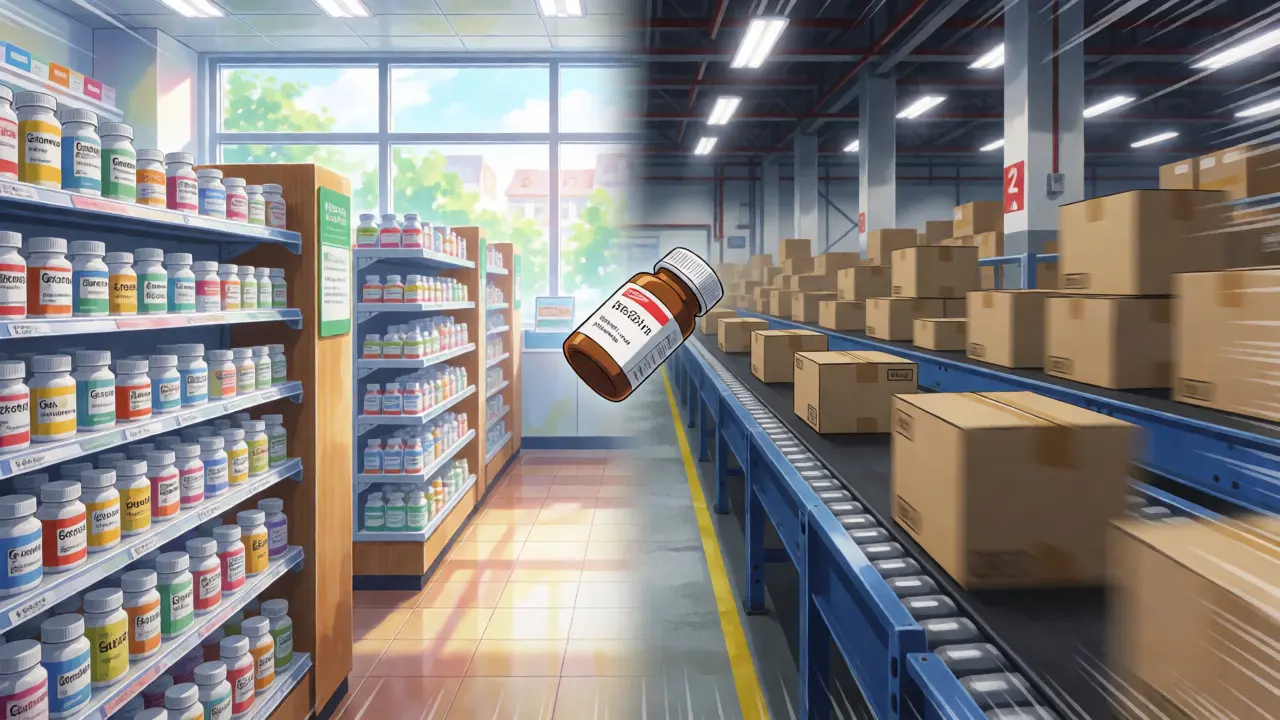
Then there’s the journey itself. Pills aren’t indestructible. They are sensitive to heat and humidity. The International Air Transport Association estimates that 20-25% of temperature-sensitive pharmaceuticals experience "excursions"-meaning they get too hot or too cold-during international shipping. A study highlighted by Harvard researchers suggested that up to 30% potency loss could occur in these scenarios. Imagine taking your antidepressant for six months and realizing the dosage was effectively halved because the package sat on a tarmac in July heat.
Counterfeits are another scary reality. The FDA reports that a significant portion of seized counterfeit drugs enters through international mail, often originating from regions with lax oversight. If you buy from an unverified online pharmacy, you’re gambling that the tablet inside matches the label.
How to Buy Safely: Navigating the Rules
If you still want to explore international options, you need to play by the rules. In the U.S., the FDA technically prohibits the importation of unapproved drugs. However, they exercise "enforcement discretion," meaning they usually won’t stop you if:
- The drug is for personal use (max 90-day supply).
- The drug does not represent an imminent hazard.
- You have a valid prescription.
Don’t just pick a website from a Google ad. Look for accreditation. The National Association of Boards of Pharmacy (NABP) runs the Verified Internet Pharmacy Practice Sites (VIPPS) program. As of mid-2024, fewer than 100 international pharmacies held this seal. That’s a tiny pool, but it’s a good starting point for safety.
Some states have taken matters into their own hands. Florida, Vermont, Colorado, and Maine have launched state-sanctioned importation programs. These initiatives vet pharmacies and handle the logistics, offering a safer middle ground. Early data from Florida shows residents saving an average of $427 per prescription. This is a far cry from the wild west of random websites; it’s a regulated pipeline.
Real User Experiences: What People Say
What does it actually feel like to order meds from abroad? Feedback from online communities paints a mixed picture. On one hand, users report substantial savings. One patient noted saving over $1,000 annually on heart medication by using a Canadian pharmacy accredited by the Canadian International Pharmacy Association. On the other hand, delays are common. Shipping can take three weeks or more, which is risky if you run out of medication before the new batch arrives.
Language barriers also pop up. Nearly a third of users complain about packaging instructions being in a foreign language, making dosage confusing. And if something goes wrong? Returns are a nightmare. Over two-thirds of users found returning defective products difficult or impossible due to complex international policies.

Who Should Consider Buying Abroad?
Not everyone needs to pack their suitcases or wait for a parcel. Here’s a quick decision guide:
- Stick Local If: You take common generics (like lisinopril or sertraline) available at Costco, Walmart, or Amazon Pharmacy. The U.S. generic market is highly competitive, and shipping costs will likely erase any small price difference.
- Consider Abroad If: You rely on a brand-name drug without a cheap generic equivalent, or a specific formulation not widely stocked in the U.S. Also, consider it if you live near a border and can physically walk across to purchase (e.g., driving to Mexico or Canada).
- Be Cautious If: Your medication requires strict temperature control (like insulin or biologics). The risk of spoilage during transit is too high for most casual buyers.
The Bottom Line
Buying medicines abroad can offer relief, but it’s not a magic bullet. For the vast majority of Americans taking standard generics, the U.S. system already provides some of the lowest prices in the world due to sheer volume. The savings narrative is stronger for brand-name drugs or in countries with different healthcare structures. If you do choose to import, prioritize safety over price. Verify the pharmacy, check the shipping conditions, and always consult your doctor before changing sources. Your health is worth more than the $20 you might save on a bottle of pills.
Is it legal to buy prescription drugs from Canada?
Technically, the FDA prohibits importing unapproved drugs, but they often allow personal imports under "enforcement discretion" if the quantity is small (up to 90 days) and for personal use. However, customs agents can still seize shipments, though this is rare for small quantities from reputable Canadian pharmacies.
Are generic drugs from India safe?
India is a major manufacturer of generics, and many facilities meet WHO standards. However, quality varies. Without independent verification, you risk receiving substandard or counterfeit products. Always look for WHO-GMP certification and consider buying from platforms that vet manufacturers rather than direct-from-factory sites.
Why are some generics cheaper in the US than abroad?
The U.S. has a massive volume of generic prescriptions, allowing pharmacy benefit managers to negotiate steep discounts. Additionally, some countries subsidize healthcare differently, keeping list prices low but adding co-pays. For common drugs, the U.S. negotiated net price is often lower than the gross price paid in countries with less efficient distribution networks.
How long does shipping take for international medications?
Shipping times vary widely. From Canada, expect 1-2 weeks. From Europe or Asia, it can take 3-6 weeks. Delays are common due to customs processing. Always plan ahead and never let your current supply drop below a month’s worth when waiting for an international order.
Can I return medicine bought from another country?
Returning medication internationally is difficult and often expensive. Many pharmacies do not accept returns for hygiene reasons unless the product is defective. Check the return policy before ordering, and consider requesting a small trial size first if you are unsure about the supplier.