
Calcium Channel Blocker Interaction & Clearance Checker
Check anything you take regularly that affects CYP3A4.
How long until the drug reaches steady state after starting an interacting regimen. Longer half-lives mean delayed adverse effects.
Educational estimate only — not medical advice. Confirm dosing with your doctor or pharmacist.
Ever felt dizzy or had your heart rate drop unexpectedly after adding a new medication? If you are taking a calcium channel blocker (CCB), it might not be the new drug alone causing the issue. It could be how your body is processing both medicines at once. Calcium channel blockers are a vital class of medications used to treat high blood pressure, chest pain, and irregular heartbeats. They work by relaxing the muscles in your blood vessels and heart. However, their effectiveness and safety depend heavily on how quickly your liver breaks them down. This process, known as metabolic clearance, is where most dangerous drug interactions happen.
Understanding this relationship isn't just academic; it’s a matter of staying safe. About 50 million Americans use these drugs daily. Most people take dihydropyridines like amlodipine, which mainly relaxes blood vessels. Others take non-dihydropyridines like verapamil or diltiazem, which also slow down the heart's electrical signals. The key difference lies in how they interact with your body's enzyme system, specifically CYP3A4. This enzyme acts like a shredder in your liver, breaking down about 90% of these medications. When other drugs block this shredder, levels of the CCB can skyrocket, leading to severe drops in blood pressure or heart rhythm issues.
How Your Body Processes Calcium Channel Blockers
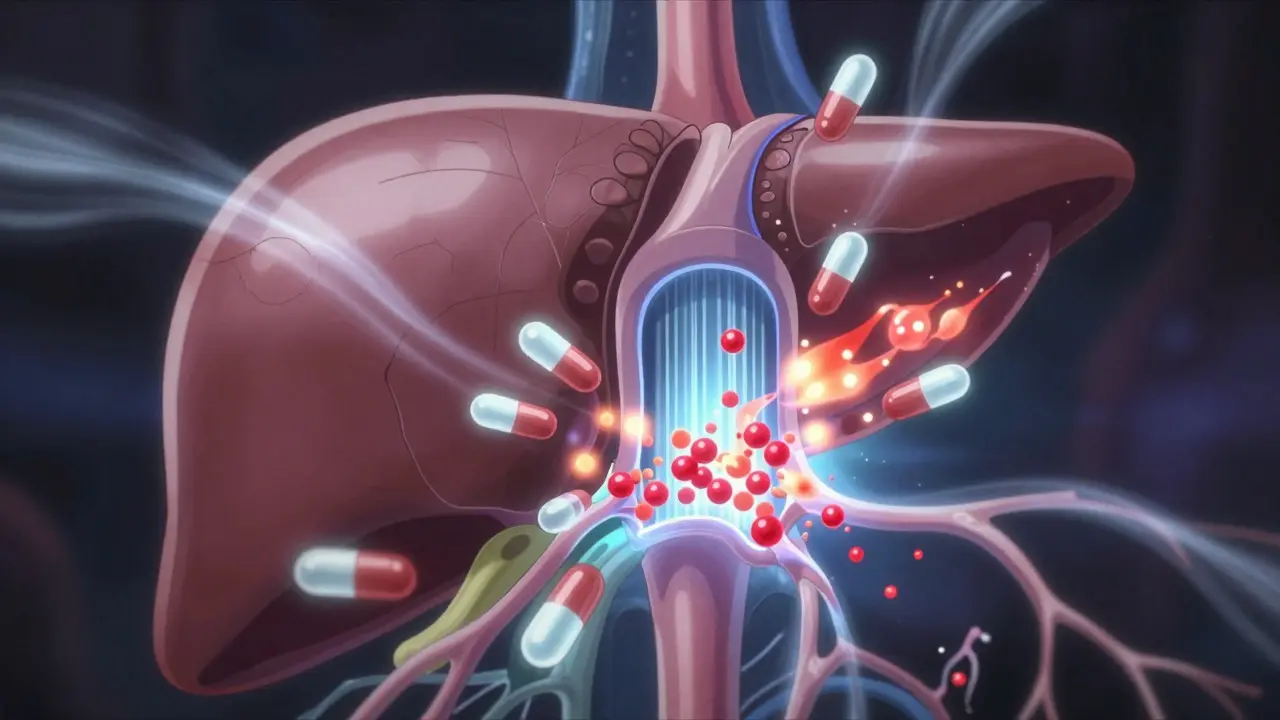
To understand why interactions happen, you first need to see what happens after you swallow a pill. These medications are absorbed well from the gut, but they don't stay in the bloodstream for long in their original form. Instead, they head straight to the liver. Here, the first-pass effect kicks in. The liver processes the drug before it even reaches the rest of your body. Because of this, bioavailability varies wildly between different types of CCBs. For example, felodipine has a low bioavailability of only 15%, meaning 85% is destroyed before it can do any good. In contrast, amlodipine retains about 64% of its active form. This difference matters because it dictates how much of the drug actually ends up working in your system.
The speed at which these drugs leave your body is measured by their half-life. This is the time it takes for the concentration of the drug in your blood to cut in half. Immediate-release nifedipine clears out quickly, with a half-life of just 2 to 5 hours. You need to take it multiple times a day to keep it working. On the other hand, amlodipine hangs around for 30 to 50 hours. This allows for convenient once-daily dosing. But this long duration is a double-edged sword. If something slows down its clearance, the drug builds up over days, not hours. This accumulation is exactly what causes delayed adverse reactions in patients who start taking interacting medications.
The Role of CYP3A4 in Drug Metabolism
The star player in this drama is CYP3A4. This cytochrome P450 enzyme is responsible for metabolizing the vast majority of CCBs. Think of it as the main highway for drug clearance. If that highway gets blocked, traffic jams occur, and drug levels rise dangerously. Research shows that CYP3A4 handles about 90% of the metabolism for dihydropyridines and roughly 70% for verapamil. This heavy reliance makes CCBs particularly vulnerable to interference from other common medications.
Many everyday drugs are strong inhibitors of CYP3A4. Antibiotics like clarithromycin, antifungals like itraconazole, and even some HIV protease inhibitors fit this category. When you combine one of these with a CCB, the enzyme can’t break down the CCB fast enough. Plasma concentrations can increase by 300% to 600%. For a patient with stable blood pressure, this sudden surge can cause severe hypotension, fainting, or bradycardia. This is why pharmacists often flag these combinations as major interactions. It’s not just a theoretical risk; it’s a documented cause of hospital visits for elderly patients managing multiple conditions.
Differences Between Amlodipine, Verapamil, and Diltiazem
Not all CCBs play by the same rules. While they share the same target, their metabolic personalities differ significantly. Amlodipine is generally considered the safest option for patients on multiple medications. It has minimal enzyme-inhibiting properties of its own. This means it doesn't interfere with the metabolism of other drugs as much as its cousins. Studies indicate that only 12% of patients on amlodipine require dose adjustments when combined with moderate CYP3A4 inhibitors. This makes it a go-to choice for complex medical histories.
Verapamil and diltiazem are more complicated. They act as both substrates and inhibitors of CYP3A4. This dual role creates a feedback loop of interaction potential. Verapamil, for instance, inhibits P-glycoprotein, another transport protein in the gut and kidneys. This inhibition can boost the levels of digoxin by 50% to 75%. If you are on both verapamil and digoxin, you are at higher risk for toxicity. Diltiazem is similarly potent. It can increase the exposure of statins like simvastatin by up to 400%, raising the risk of muscle pain and breakdown (myopathy). This is why doctors often avoid combining diltiazem with certain cholesterol-lowering drugs.
| Drug Class | Primary Enzyme | Half-Life | Interaction Risk | Typical Use |
|---|---|---|---|---|
| Amlodipine (DHP) | CYP3A4 | 30-50 hours | Low-Moderate | Hypertension |
| Nifedipine (DHP) | CYP3A4 | 2-5 hours (IR) | Moderate-High | Hypertension/Angina |
| Verapamil (Non-DHP) | CYP3A4/P-gp | 4-12 hours | High | Arrhythmia/Hypertension |
| Diltiazem (Non-DHP) | CYP3A4 | 4-7 hours | High | Atrial Fibrillation |
Common Triggers for Dangerous Interactions
You don't always need a prescription drug to trigger an interaction. Food plays a surprising role here. Grapefruit juice contains compounds called furanocoumarins that inhibit CYP3A4 in the gut wall. This prevents the liver from seeing the full dose of the drug, effectively increasing absorption. For many CCB users, drinking grapefruit juice regularly can mimic the effect of taking a strong inhibitor. Patient forums report frequent cases of unexpected hypotension linked to this habit. If you are on nifedipine or felodipine, this effect is particularly pronounced due to their high first-pass metabolism rates.
Erectile dysfunction medications are another common culprit. Drugs like sildenafil (Viagra) and tadalafil (Cialis) are also metabolized by CYP3A4. When taken with CCBs, especially verapamil, the risk of additive blood pressure lowering increases. One analysis found that 87% of negative reviews regarding hypotension involved the combination of verapamil and ED meds, compared to only 23% with amlodipine. This highlights why choosing the right CCB subclass matters so much if you are likely to use these additional therapies.
Statins represent the third major group. Since both CCBs and statins rely on hepatic metabolism, competition occurs. Diltiazem and verapamil are notorious for boosting statin levels. Simvastatin and lovastatin are the most affected. If you are on diltiazem, your doctor might switch you to a statin that relies less on CYP3A4, such as rosuvastatin or pravastatin, to minimize the risk of muscle side effects.

Managing Risks in Daily Life
So, how do you protect yourself? First, keep a complete list of every medication and supplement you take. This includes over-the-counter drugs and herbal remedies. Bring this list to every appointment. Pharmacists spend an average of 12.7 minutes reviewing each CCB prescription for interactions, but they can only catch what you tell them about.
Second, monitor your blood pressure at home, especially when starting a new medication. Check it within two hours of taking your first dose if you have been advised to watch for interactions. Look for signs of low blood pressure, such as lightheadedness upon standing, blurred vision, or fatigue. If you experience these, contact your healthcare provider promptly rather than waiting for your next scheduled visit.
Third, consider your age and kidney function. Older adults and those with reduced kidney function (eGFR below 60 mL/min) are more susceptible to severe interactions. For these patients, dose reductions are often necessary. Verapamil, for example, may require a 50% dose reduction in patients with moderate renal impairment, whereas amlodipine usually needs no adjustment. Understanding these nuances helps you advocate for the right dosage for your specific body chemistry.
Frequently Asked Questions
Can I drink grapefruit juice while taking amlodipine?
It is generally recommended to limit grapefruit juice intake. While amlodipine is less sensitive to grapefruit juice than some other CCBs like nifedipine, regular consumption can still increase drug levels slightly. To be safe, stick to small amounts occasionally or avoid it entirely if you have a history of low blood pressure.
Which calcium channel blocker has the fewest drug interactions?
Amlodipine is widely considered to have the most favorable interaction profile among CCBs. It has minimal enzyme-inhibiting activity and does not significantly affect the metabolism of most other common cardiovascular drugs. This makes it a preferred choice for patients taking multiple medications.
What should I do if I miss a dose of my CCB?
If you remember a missed dose soon after it was due, take it then. If it is close to the time for your next dose, skip the missed one. Do not double up on doses, as this can spike your blood levels and increase the risk of side effects like hypotension or bradycardia, especially if you are on interacting drugs.
Do antibiotics affect calcium channel blockers?
Yes, certain antibiotics like clarithromycin and erythromycin are strong CYP3A4 inhibitors. They can significantly raise CCB levels. If you are prescribed one of these antibiotics, ask your doctor or pharmacist if you need to temporarily adjust your CCB dose or monitor your blood pressure more closely during the course of treatment.
How long does it take for amlodipine to reach steady state?
Because amlodipine has a long half-life of 30 to 50 hours, it takes about 7 to 8 days to reach steady-state levels in your blood. This means the full therapeutic effect, and any potential interaction effects, may not be apparent until nearly a week after starting or changing your regimen.
Because amlodipine has a long half-life of 30 to 50 hours, it takes about 7 to 8 days to reach steady-state levels in your blood. This means the full therapeutic effect, and any potential interaction effects, may not be apparent until nearly a week after starting or changing your regimen.