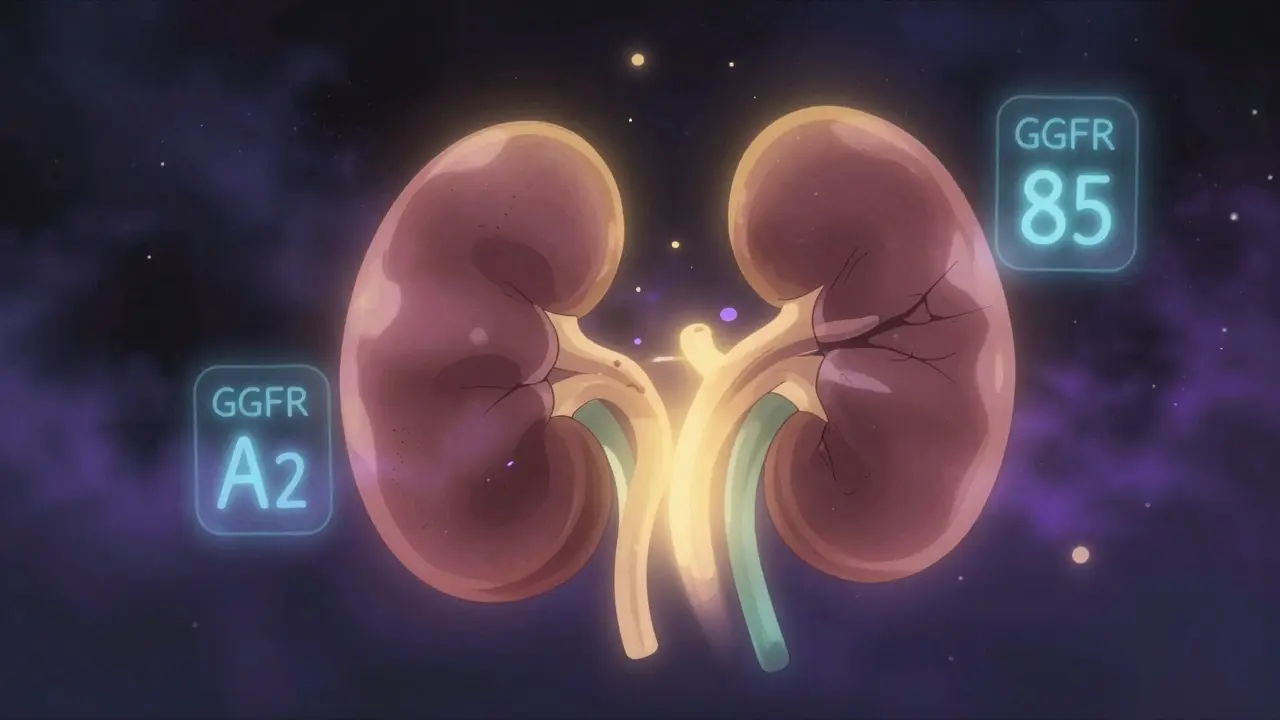
Most people don’t realize their kidneys are failing until it’s too late. That’s because chronic kidney disease (CKD) doesn’t scream for attention. No sharp pain. No fever. Just quiet, slow damage - often unnoticed until the kidneys are barely working. By then, treatment options shrink, costs spike, and life changes forever. But here’s the truth: chronic kidney disease can be caught early - if you know what to look for.
What Exactly Is Chronic Kidney Disease?
Chronic kidney disease isn’t just a dip in kidney function. It’s lasting damage that lasts at least three months. Your kidneys do more than make urine. They filter waste, balance fluids, control blood pressure, and even help make red blood cells. When they’re damaged, all those jobs start to slip. The damage can come from diabetes, high blood pressure, or even genetic conditions. But it doesn’t happen overnight. It creeps in over years, often without symptoms. The medical world uses a clear, science-backed system to track this damage. It’s not just about how well your kidneys are working right now - it’s about how much damage has already happened, and how fast it’s getting worse. That’s why doctors now look at two things: your eGFR and your albuminuria.The Six Stages of CKD: What Your Numbers Mean
Your kidney function is measured by something called eGFR - estimated glomerular filtration rate. It’s calculated from a simple blood test that checks creatinine levels. The higher the number, the better your kidneys are filtering. But eGFR alone doesn’t tell the full story. You also need to check for albumin in your urine - a sign that your kidney filters are leaking. Here’s how the stages break down:- Stage G1 (eGFR ≥90): Your kidneys are filtering normally, but there’s damage - like protein in your urine, abnormal imaging, or scarring from past injury. This stage is often found during routine checks for other conditions.
- Stage G2 (eGFR 60-89): Mild decline. Kidneys still work okay, but damage is confirmed. Many people here have diabetes or high blood pressure. No symptoms yet.
- Stage G3a (eGFR 45-59): Mild to moderate loss. This is where things start to matter. If you have protein in your urine (A2 or A3), your risk of progression jumps. About 1 in 3 people with diabetes in this stage will see their kidneys worsen within 5 years.
- Stage G3b (eGFR 30-44): Moderate to severe. Your kidneys are struggling. At this point, most people start feeling tired, swollen, or having trouble sleeping. Specialist care becomes critical.
- Stage G4 (eGFR 15-29): Severe decline. Your kidneys are working at less than 30% capacity. You’ll likely need to prepare for dialysis or transplant. Symptoms like nausea, itching, and muscle cramps become common.
- Stage G5 (eGFR <15): Kidney failure. Your kidneys can’t keep you alive without dialysis or a transplant. This is the end stage. About 98% of people here will need one of these treatments to survive.
Albuminuria - protein in your urine - adds another layer. It’s ranked A1 (normal), A2 (moderate), or A3 (severe). Someone with Stage G3a and A3 albuminuria has a risk of dying from kidney failure that’s more than five times higher than someone with the same eGFR but no protein loss. That’s why both numbers matter.
How Fast Does CKD Progress?
Not everyone’s kidneys fail at the same speed. Some people stay in Stage G2 for decades. Others drop from G3a to G5 in just a few years. What controls the pace? Diabetes and high blood pressure are the biggest drivers. If your blood sugar is out of control, or your blood pressure stays above 140/90, your kidneys will decline faster. But there’s good news: controlling those two things can slow progression by up to 40%. Medications like ACE inhibitors or ARBs (common blood pressure drugs) don’t just lower pressure - they protect your kidney filters. In one major study, patients with Stage G3a and protein in their urine who took these drugs cut their risk of moving to Stage G4 by 37%. That’s not a small win. That’s life-changing. But here’s the catch: not all eGFR drops mean disease. In older adults, especially over 70, a lower eGFR can just be normal aging. A 65-year-old with eGFR 55 and no protein in urine might not have CKD at all - just older kidneys. That’s why doctors now look at trends, not single numbers. If your eGFR drops more than 5 points per year, that’s a red flag. If it’s stable? Less urgent.
Why Most People Don’t Know They Have It
You might be surprised: 90% of people with CKD don’t know they have it. Why? Because symptoms don’t show up until the damage is severe. By the time you feel tired all the time, your ankles are swollen, or you’re urinating less, your kidneys are already failing. Most people are diagnosed by accident - during a blood test for a knee injury, a routine check-up, or because they’re being screened for diabetes. One patient shared on a kidney forum: "I had no symptoms. My doctor found protein in my urine during a physical for knee surgery. I thought the swelling was from standing at my job as a nurse." That’s the norm. Another patient waited until he felt awful - then his eGFR was at 19. "The doctor said I should have been tested sooner," he said. "But no one connected the dots." The result? People diagnosed late have worse outcomes. They’re less likely to stick with treatment. They’re more likely to need emergency dialysis. And they’re more likely to die prematurely.How to Catch CKD Early - Before It’s Too Late
Early detection isn’t magic. It’s simple. If you’re at risk, get tested. Who’s at risk?- People with diabetes (type 1 or 2)
- People with high blood pressure
- People with heart disease
- People with a family history of kidney failure
- African Americans, Native Americans, or Hispanic populations (higher rates)
- People over 60
What to ask for:
- A serum creatinine test - to calculate eGFR
- A urine albumin-to-creatinine ratio (uACR) - a simple dipstick or lab test
One abnormal result isn’t enough. You need two tests, at least 90 days apart, to confirm CKD. That’s because things like dehydration or infection can temporarily lower eGFR. Real CKD is persistent.
Primary care doctors can handle early stages - G1 and G2. But if your eGFR drops below 60 and you have protein in your urine, you need a kidney specialist. That’s not optional. That’s the standard of care.
Some clinics are using electronic alerts in their systems. When a patient’s eGFR drops below 60 and their urine test shows protein, the system flags it. One study found this simple tool increased correct CKD diagnoses from 42% to 79% in just 18 months. That’s huge.
What Happens After Diagnosis?
If you’re in Stage G1 or G2, your plan is simple: control your blood pressure, manage your blood sugar (if diabetic), stop smoking, and get checked once a year. No drugs needed yet - just vigilance. Stage G3a? That’s the turning point. This is when medications like ACE inhibitors or ARBs become critical. You’ll need to see a nephrologist. Diet changes matter - less salt, less processed food. You’ll start tracking your fluid intake. You might begin avoiding certain painkillers like ibuprofen, which can hurt your kidneys. Stage G3b and beyond? You’re preparing for the future. Dialysis or transplant isn’t a last resort - it’s a plan. You’ll meet with a transplant team. You’ll learn about diet, fluid limits, and how to recognize warning signs. The earlier you start this preparation, the better your outcomes.The Future of CKD Detection
New tools are coming fast. In 2023, the FDA approved the first AI tool - AION nephroTM - that predicts your kidney’s decline over two years with 88.7% accuracy. It looks at 27 different data points: your age, lab results, medications, even your blood pressure history. Soon, genetic testing might tell you if you’re at high risk before any damage shows up. Researchers have already found 17 gene variants linked to faster CKD progression. In five years, a simple blood test could tell you not just if you have CKD - but how fast it’s likely to move. And community screenings are working. In Baltimore, mobile clinics tested over 5,800 people. They found 1,247 cases of CKD - 43% of them in the earliest stages. Most of those people had no idea they were at risk.What You Can Do Today
You don’t need to wait for symptoms. If you’re over 40, or have diabetes, high blood pressure, or a family history of kidney disease:- Ask your doctor for an eGFR test and a urine ACR test
- If you’re diagnosed with early CKD, don’t panic - but don’t ignore it
- Control your blood pressure and blood sugar like your life depends on it - because it does
- Stay away from NSAIDs (ibuprofen, naproxen) unless your doctor says it’s safe
- Drink water, eat real food, avoid processed snacks
CKD isn’t a death sentence. It’s a warning. And like any warning, the sooner you respond, the more control you have.
Can chronic kidney disease be reversed?
Early-stage CKD (Stages G1-G3a) can often be slowed or even stabilized with proper treatment - especially if you control blood pressure, diabetes, and reduce protein in your urine. But once significant scarring occurs, the damage is permanent. The goal isn’t always reversal - it’s stopping further loss.
Is CKD the same as kidney failure?
No. Kidney failure is the last stage - Stage G5. CKD includes all stages, from mild damage to complete failure. Most people with CKD never reach kidney failure if they’re diagnosed early and treated properly.
Do I need a specialist if I’m in Stage G2?
Usually not. Stage G2 can be managed by your primary care doctor with annual check-ups. But if you have protein in your urine, high blood pressure, or diabetes, your doctor may refer you to a nephrologist earlier - especially if your condition is worsening.
Can a healthy diet stop CKD from getting worse?
Yes - but not alone. A low-salt, low-processed-food diet helps reduce pressure on your kidneys and control blood pressure. Avoiding excess protein can also help in later stages. But diet works best when paired with medication, blood sugar control, and regular monitoring.
Why does race matter in CKD risk?
African Americans are 3.5 times more likely to develop kidney failure than White Americans. This isn’t because of biology - it’s because of higher rates of diabetes, high blood pressure, and unequal access to care. New eGFR equations no longer use race as a factor, since it was misleading and unfair.
What’s the difference between eGFR and creatinine?
Creatinine is a waste product your muscles make. Your kidneys filter it out. A blood test measures creatinine levels. eGFR is a math formula that uses your creatinine, age, sex, and sometimes other factors to estimate how well your kidneys are filtering. It’s a better indicator of kidney function than creatinine alone.
Can I still live a normal life with CKD?
Absolutely. Many people with Stage G1-G3 live full, active lives for decades. The key is early detection and consistent management. You may need to adjust your diet, avoid certain meds, and monitor your health closely - but you can still work, travel, and enjoy life.


Katie Schoen
January 5, 2026 AT 16:49