Warfarin & Vitamin K Consistency Tracker
Use this tool to estimate your daily Vitamin K intake. Remember: Consistency (keeping the same amount daily) is more important than total restriction.
Daily Log
| Vegetable | Portion | Amount (μg) | Action |
|---|
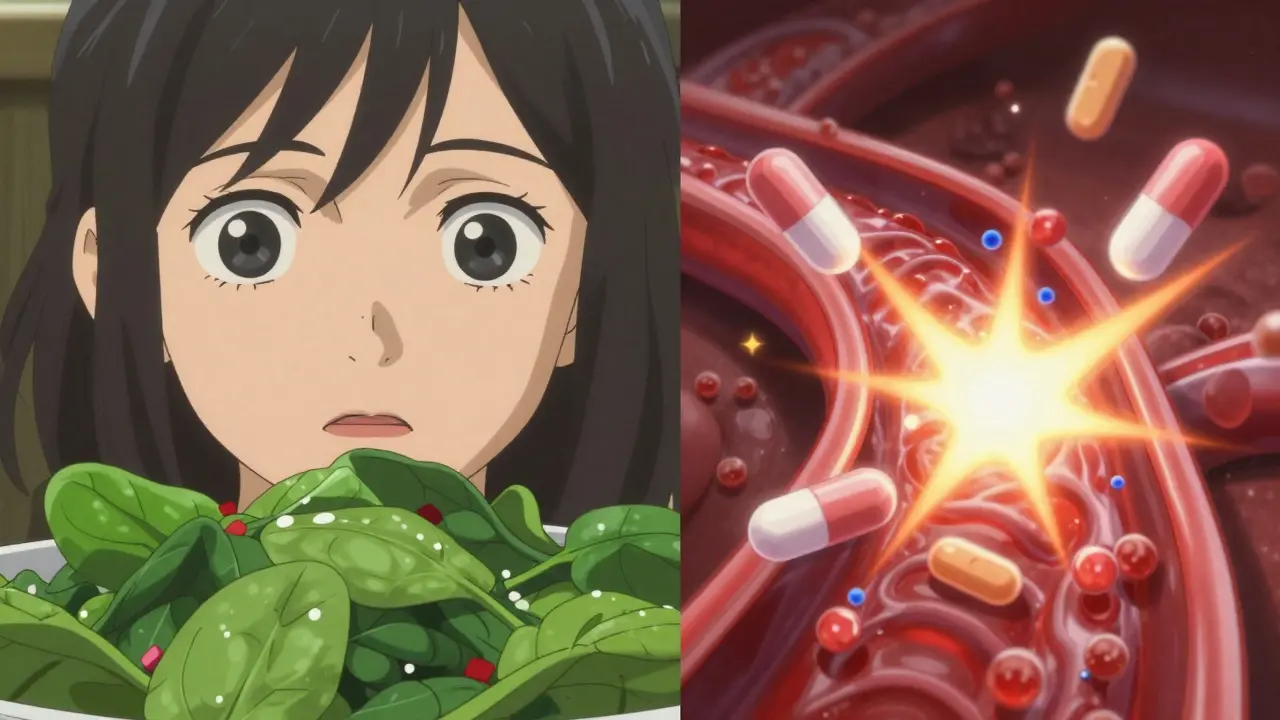
Imagine spending weeks carefully avoiding every single green leaf in your kitchen, only to have one accidental spinach salad send your blood clotting levels spiraling. For years, people taking Warfarin is a widely used oral anticoagulant medication that prevents blood clots by inhibiting vitamin K-dependent clotting factors. Also known by the brand name Coumadin, it requires a delicate balance between the medicine's dose and what you eat., the common advice was "stay away from greens." But here is the reality: you don't have to give up your vegetables. In fact, trying to avoid them entirely often makes your levels more unstable.
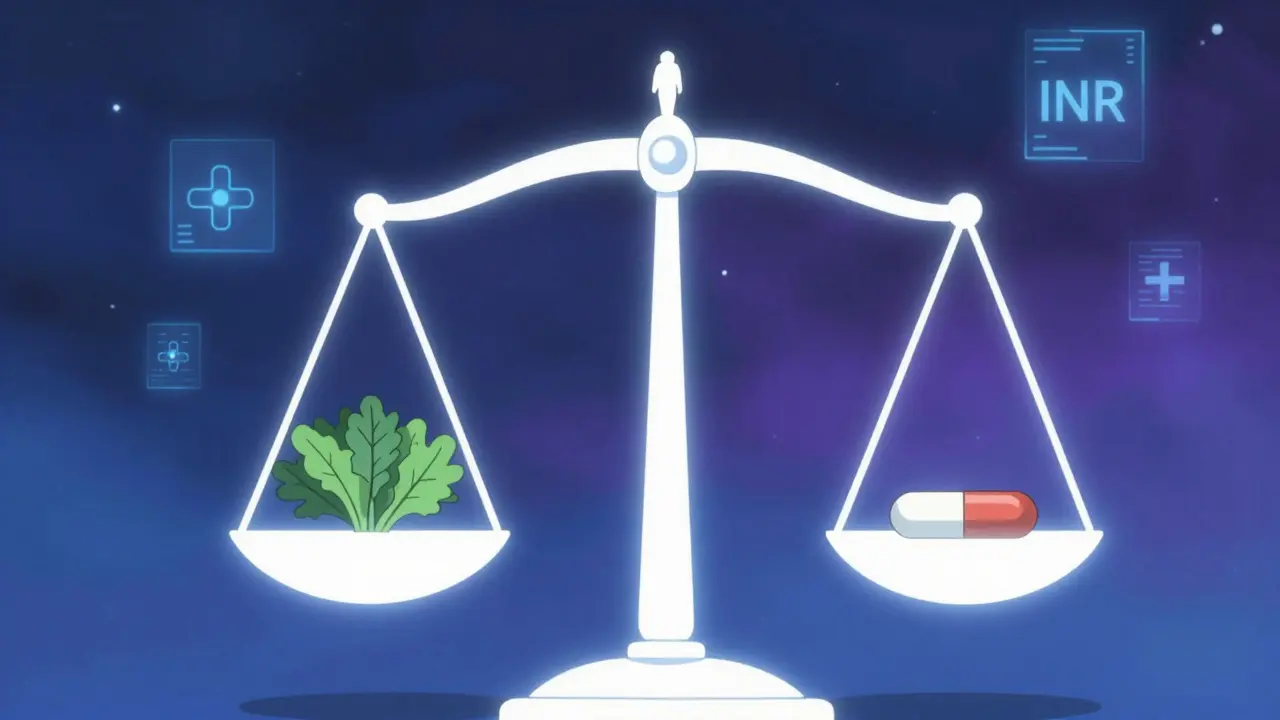
The secret isn't restriction; it's consistency. Whether you love kale or hate it, the goal is to keep your intake roughly the same every day so your doctor can dial in your dose accurately. If you suddenly eat a massive bowl of steamed broccoli after a week of no greens, your blood might clot too quickly. If you suddenly stop eating greens, your blood might become too thin, increasing your risk of bleeding. Let's look at how to handle this balance without losing your mind at the grocery store.
The Tug-of-War Between Vitamin K and Warfarin
To understand why your diet matters, you have to look at how Vitamin K is a fat-soluble vitamin that serves as a critical cofactor for the activation of clotting factors II, VII, IX, and X in the liver works. Warfarin basically blocks the body's ability to use Vitamin K to make clots. When you eat a lot of Vitamin K, you're essentially giving your body a way to bypass the medicine, which makes the Warfarin less effective. This is measured by your INR is the International Normalized Ratio, a standardized measurement of how long it takes your blood to clot .
For most people, the target INR is between 2.0 and 3.0. If your INR drops below this range, your blood is "too thick," and the risk of a clot increases. If it goes too high, you're at risk for internal bleeding. Research shows that a 50% jump in Vitamin K intake can drop your INR by 0.5 to 1.0 units within just a few days. That's a huge swing that can move you from a safe zone into a danger zone very quickly.
Consistency Over Restriction: The Modern Approach
You might still hear some doctors tell you to "avoid all green vegetables." This is outdated advice. Current guidelines from the American Heart Association and the American College of Cardiology explicitly recommend consistency over restriction. Why? Because if you try to eliminate Vitamin K entirely, your body becomes hypersensitive to it. A single serving of greens could then cause a massive, unpredictable crash in your INR.
People who maintain a steady daily intake of about 90-120 μg of Vitamin K-roughly the standard adult requirement-tend to stay in their therapeutic range much more often than those who swing between "no greens" and "salad feast." The trick is to treat your greens like a daily medication: take the same amount at the same time every day.
| Vegetable | Portion (Cooked/Raw) | Vitamin K Content | Risk Level for INR Swing |
|---|---|---|---|
| Cooked Spinach | 1 cup | 889 μg | Very High |
| Cooked Kale | 1 cup | 547 μg | High |
| Cooked Collard Greens | 1 cup | 772 μg | High |
| Cooked Broccoli | 1 cup | 220 μg | Moderate |
| Asparagus | 1/2 cup | 70 μg | Low |
| Green Beans | 1/2 cup | 14 μg | Very Low |
Practical Strategies for a Balanced Plate
How do you actually do this in real life? You don't need a lab scale, but a little planning goes a long way. The goal is to keep your daily variation in Vitamin K intake under 20%. If you're consistently eating a few leaves of spinach every morning, your doctor can adjust your Warfarin dose to account for that specific amount.
Here are a few ways to keep things steady:
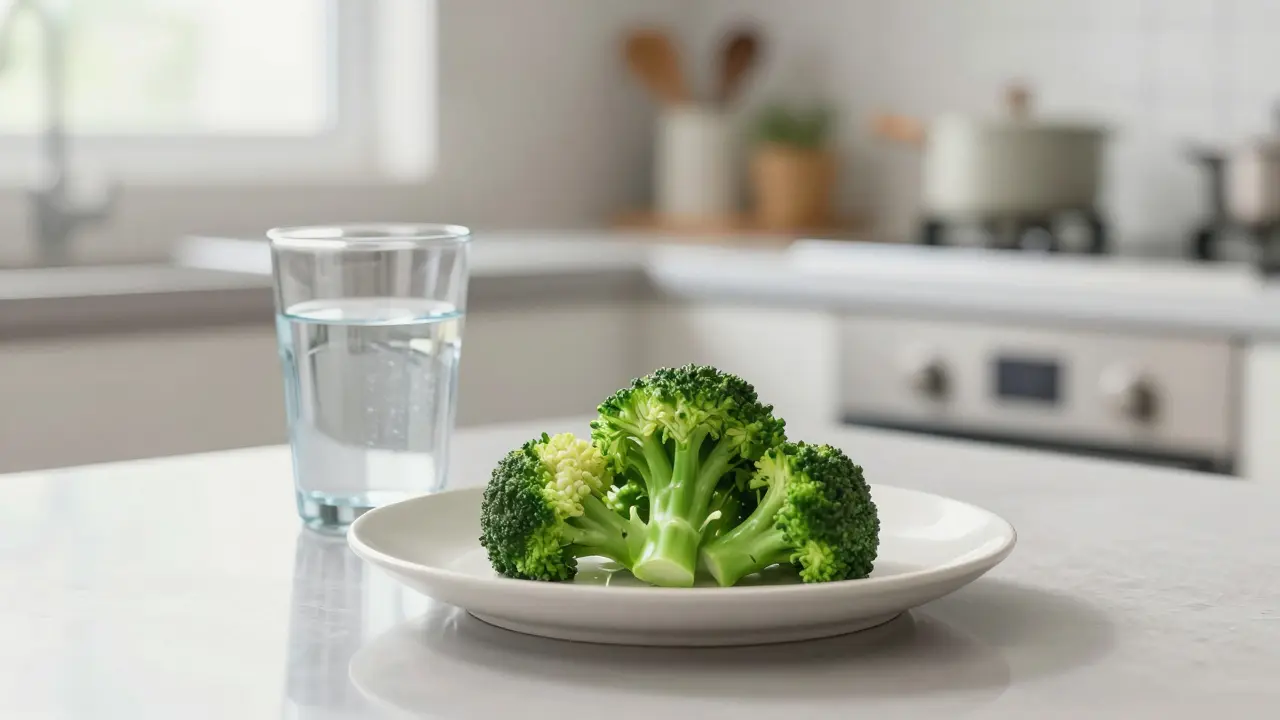
- Pick your "Green of the Week": Instead of mixing five different high-K vegetables in one meal, stick to one. For example, have a small side of steamed broccoli every day for a week. This prevents the "cumulative effect" where several high-K foods push your INR down unexpectedly.
- Watch the cooking method: Cooking changes how much Vitamin K your body absorbs. For instance, raw spinach has about 145 μg per cup, but cooked spinach jumps to 889 μg because the heat breaks down the plant walls and concentrates the nutrient. Don't switch between raw salads and sautéed greens without noting the change.
- Log your intake: You don't need to be obsessive, but a simple food diary or an app like MyFitnessPal can help you spot patterns. If your INR fluctuates, you can look back and see, "Oh, I had three kale salads last Tuesday," which explains the drop.
- Plan for illness: When you're sick, you often eat less. This can actually increase your INR (making your blood thinner) because you've suddenly dropped your Vitamin K intake. If you're struggling to eat solids, let your clinic know, as you might need a temporary dose adjustment.
Hidden Pitfalls and Interaction Warnings
It's not just about the vegetables on your plate. There are several other factors that can throw your balance off. First, be extremely careful with nutritional supplements. Many meal-replacement shakes or multivitamins contain Vitamin K. For example, some popular shakes like Ensure or Boost have around 50-55 μg per serving. While that seems small, it's enough to move the needle if you aren't accounting for it daily.
Another huge factor is antibiotics. When you take antibiotics, they don't just kill the "bad" bacteria; they also wipe out some of the gut bacteria that naturally produce Vitamin K2 is a form of Vitamin K produced by bacteria in the gut and found in fermented foods and animal products . This can reduce your internal Vitamin K levels by up to 70%, which may cause your INR to spike dangerously high. Always tell your doctor you're on Warfarin before starting any new medication.
Finally, consider the alternative. Newer drugs called DOACs is Direct Oral Anticoagulants, such as apixaban or rivaroxaban, which target specific clotting factors and have far fewer food interactions than warfarin (like apixaban or rivaroxaban) don't have these dietary restrictions. However, Warfarin remains the go-to for many because it's significantly cheaper-often costing just a few dollars a month compared to the thousands spent on DOACs-and it's much easier for doctors to reverse in an emergency.
Building a Sustainable Routine
Establishing a consistent dietary pattern usually takes about 8 to 12 weeks. During this time, you'll likely have a few INR tests that aren't quite in range. Don't panic. This is the "tuning" phase. Once your diet is steady and your dose is matched to that diet, you'll find that your TTR (Time in Therapeutic Range) improves significantly.
If you find that your levels are still unstable despite your best efforts, some specialists suggest a last-resort strategy of limiting Vitamin K to under 70 μg per day. But again, this is only for those who can't stabilize with consistency. For the vast majority of people, eating a balanced, predictable amount of greens is the healthiest and safest path.
Can I eat spinach if I am on Warfarin?
Yes, you can. The key is to eat a consistent amount. Instead of eating a giant spinach salad one day and none the next, try eating a small, measured portion every day. This allows your doctor to adjust your medication dose to match your habitual intake.
Why does cooking spinach increase its Vitamin K value?
Cooking concentrates the nutrients and breaks down the plant's cellular structure, making the Vitamin K more available for your body to absorb. For example, a cup of cooked spinach has significantly more absorbable Vitamin K than a cup of raw spinach.
What happens if I suddenly stop eating green vegetables?
If you suddenly cut out Vitamin K, your INR will likely increase, meaning your blood becomes thinner. This increases your risk of bruising or dangerous internal bleeding. Consistency is safer than total avoidance.
Do antibiotics affect my Warfarin levels?
Yes. Antibiotics can kill the gut bacteria that produce Vitamin K2. With less Vitamin K in your system, Warfarin becomes more powerful, which can push your INR too high. You should have your INR monitored more frequently when taking antibiotics.
Is it better to use a food diary or a tracking app?
Both work, but apps like MyFitnessPal or specialized INR trackers provide more precise data on Vitamin K micrograms. A food diary is great for spotting general patterns, but an app helps you maintain that 20% daily variation limit more accurately.