
Why Grapefruit Juice Can Be Dangerous With Your Medications
It’s a healthy drink. Bright, tangy, full of vitamin C. But if you’re taking certain medications, that glass of grapefruit juice could be putting your life at risk. This isn’t a myth or an old wives’ tale. It’s a well-documented, potentially deadly interaction that affects more than 85 prescription drugs. The problem isn’t that grapefruit juice is toxic - it’s that it messes with how your body processes medication. And once it does, the effects last for days.
Back in 1989, Canadian researchers noticed something strange. Patients taking the blood pressure drug felodipine had much higher levels of the drug in their blood than expected - all because they’d had grapefruit juice with breakfast. That discovery, published in the British Journal of Clinical Pharmacology, opened the door to understanding how a common fruit could interfere with medicine in ways no one had predicted.
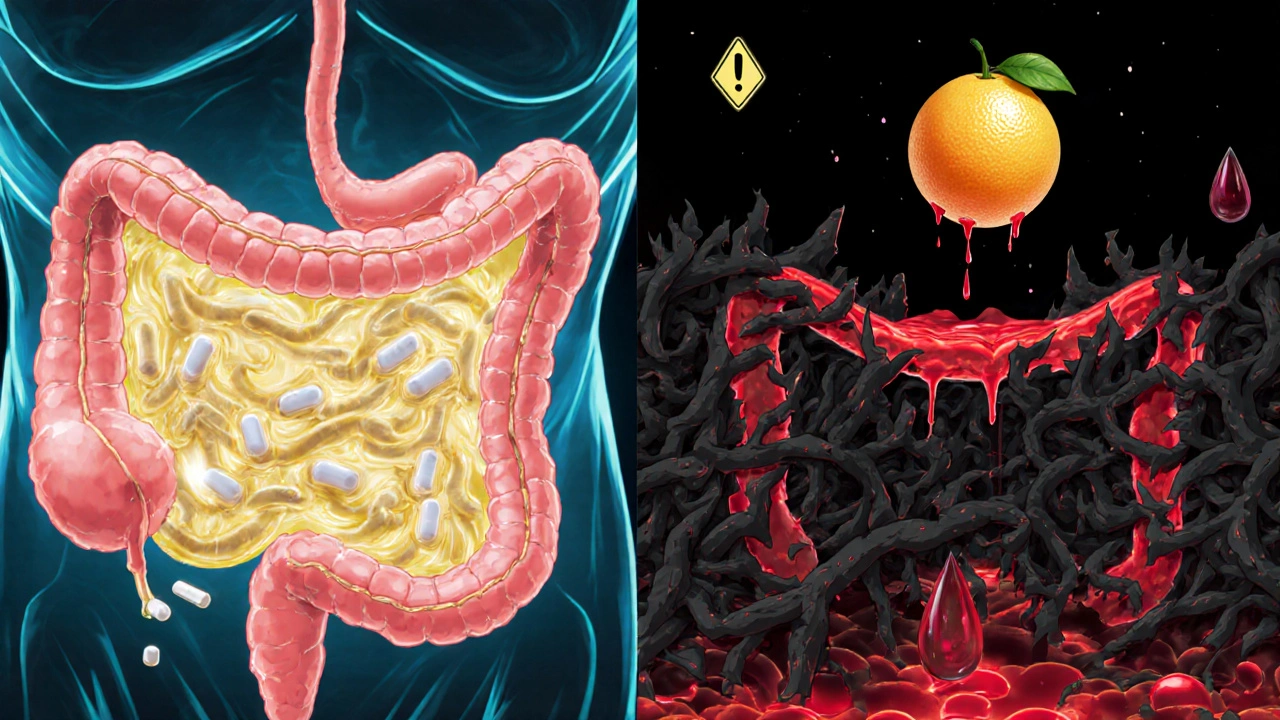
The culprit? Furanocoumarins - natural chemicals in grapefruit, especially in the peel and pulp. These compounds shut down an enzyme in your gut called CYP3A4. This enzyme normally breaks down about half of all oral medications before they even reach your bloodstream. When it’s blocked, your body absorbs way more of the drug than it should. That extra amount doesn’t just make the drug stronger - it can push it into toxic territory.
How Long Does the Effect Last? (And Why Timing Doesn’t Matter)
Many people think they can avoid the interaction by taking their medication at a different time than their grapefruit juice. That’s a dangerous assumption. The inhibition of CYP3A4 isn’t temporary. It’s irreversible. Once the enzyme is blocked, your body has to make new ones - and that takes 24 to 72 hours.
One study showed that a single 200-milliliter glass of fresh grapefruit juice (about 6.7 ounces) reduced intestinal CYP3A4 activity by 47% within just four hours. The effect peaked at 24 hours and didn’t fully recover for three days. That means if you drink grapefruit juice on Monday morning, your system is still vulnerable on Wednesday evening - even if you didn’t touch grapefruit again.
The FDA explicitly warns: “You must avoid consuming grapefruit the whole period that you are on the medication.” There’s no safe window. No “just one glass.” No “I’ll have it after my pill.” If your drug is on the list, the only safe choice is to cut it out completely.
Which Medications Are Most at Risk?
Not all drugs are affected equally. But some carry serious, even life-threatening risks when mixed with grapefruit. Here are the big ones:
- Statins - These cholesterol-lowering drugs are the most common offenders. Simvastatin (Zocor) is especially dangerous. Just one glass of grapefruit juice a day for three days can triple the drug level in your blood. That raises your risk of rhabdomyolysis - a condition where muscle tissue breaks down, releasing toxins that can cause kidney failure. Atorvastatin (Lipitor) is less affected, but still risky. Pravastatin and rosuvastatin? Safe. If you’re on simvastatin and drink grapefruit juice, talk to your doctor about switching.
- Calcium Channel Blockers - Used for high blood pressure and angina. Felodipine (Plendil) sees a five-fold increase in blood levels. Nifedipine (Procardia) jumps by 3.3 times. Amlodipine (Norvasc)? Minimal change. The difference matters. Your doctor can often switch you to a safer option.
- Immunosuppressants - Drugs like cyclosporine (Neoral) and tacrolimus (Prograf) are critical for transplant patients. Grapefruit can increase cyclosporine levels by 50-60%, leading to kidney damage. One wrong glass could mean losing a transplanted organ.
- Antiarrhythmics - Amiodarone (Cordarone), used for irregular heartbeats, can cause dangerous heart rhythms if grapefruit juice raises its concentration even slightly.
- Some Antidepressants and Sedatives - Drugs like triazolam (Halcion) and certain SSRIs can become too potent. Others, like trazodone and zolpidem, show little to no interaction - but don’t assume yours is safe without checking.
The list of affected drugs keeps growing. As of 2023, 43 of these 85+ interactions can cause fatal outcomes. That’s not a small risk. That’s a silent threat hiding in your kitchen.
Not All Citrus Is the Same - What You Can Still Drink
Before you give up all citrus, know this: not every orange or grapefruit relative is dangerous. Seville oranges (the kind used in marmalade) and pomelos contain the same furanocoumarins as grapefruit. So if you’re using marmalade on your toast, you’re still at risk.
But sweet oranges - like navel or Valencia - are safe. So are lemons, limes, and tangerines. The difference is in the genetics. Grapefruit and Seville oranges evolved to produce these enzyme-blocking compounds as a natural defense. Sweet oranges didn’t. That’s why you can enjoy an orange with your pill, but not a grapefruit.
The European Medicines Agency updated its guidance in March 2022 to make this distinction clear. If your pharmacist or doctor tells you to avoid citrus, ask: Which kind? Don’t assume it’s all of them.
Who’s Most at Risk - And Why You Can’t Rely on Memory
Older adults are the most vulnerable group. People over 65 make up 40% of grapefruit juice consumers in the U.S., according to USDA data. And they’re also the ones most likely to be on three to five medications - many of which interact with grapefruit. A 72-year-old taking a statin, a blood pressure pill, and a sleep aid? That’s a perfect storm.
But here’s the problem: most people don’t know they’re at risk. A 2022 survey by the National Community Pharmacists Association found only 38% of patients recalled being warned about grapefruit interactions when their medication was prescribed. That’s not just poor communication - it’s a public health gap.
Pharmacists are trying. A 2021 study showed 89% of community pharmacists now screen for grapefruit interactions when dispensing prescriptions. But if you’re not asking, or if your doctor doesn’t mention it, you might never find out. That’s why you need to take charge.

What You Should Do Right Now
- Check your medication list. Look at every prescription, over-the-counter drug, and supplement. If you’re unsure, write them down.
- Ask your pharmacist. Take your list to your pharmacy. Pharmacists are trained to spot these interactions. They’ll tell you which ones are risky.
- Don’t guess. If you see “grapefruit” on the label, avoid it. Even if you’ve had it before without problems, your body changes. Your liver enzymes change. Your dose might have changed. The risk is unpredictable.
- Ask about alternatives. If you’re on simvastatin, ask if pravastatin or rosuvastatin is an option. If you’re on felodipine, ask about amlodipine. Safer choices exist.
- Keep a written list. Bring it to every appointment - doctor, dentist, ER. It’s your best defense.
There’s no magic pill to reverse the interaction. No antidote. No “just drink less.” The only proven safety measure is complete avoidance.
The Future: Can We Fix This?
Science is working on solutions. In October 2023, the USDA announced that CRISPR-edited grapefruit with 90% less furanocoumarin had completed Phase 1 safety trials. If successful, we might one day have a grapefruit that tastes the same but won’t interfere with your meds.
But that’s years away. Until then, the advice hasn’t changed. Don’t risk it. Your life depends on it.
What If You Accidentally Drank It?
If you had a glass of grapefruit juice and you’re on a high-risk medication, don’t panic - but don’t ignore it either. Monitor yourself. Watch for signs like unexplained muscle pain, weakness, dark urine (signs of rhabdomyolysis), dizziness, irregular heartbeat, or nausea. If you notice any of these, call your doctor or go to urgent care. Don’t wait.
For most people, one accidental glass won’t cause disaster - but it’s a warning sign. From now on, treat grapefruit like a live wire around your meds. Stay away.
Can I have orange juice instead of grapefruit juice with my medication?
Yes, sweet orange juice - like navel or Valencia - is safe. It doesn’t contain the furanocoumarins that block the CYP3A4 enzyme. But avoid Seville oranges and pomelos, as they have the same harmful compounds as grapefruit. Always check with your pharmacist if you’re unsure.
Does grapefruit juice affect all statins the same way?
No. Simvastatin is the most dangerous - even small amounts can triple blood levels. Atorvastatin has a moderate risk, increasing levels by about 1.3 times. But pravastatin and rosuvastatin show no significant interaction. If you’re on simvastatin and drink grapefruit juice, talk to your doctor about switching to a safer statin.
How long after drinking grapefruit juice should I wait before taking my medication?
There’s no safe waiting period. The enzyme inhibition lasts 24 to 72 hours. Even if you take your pill 12 hours after grapefruit juice, the enzyme is still blocked. The only safe approach is to avoid grapefruit entirely for as long as you’re on the medication.
Is grapefruit juice interaction only a problem for older adults?
No. While older adults are at higher risk because they take more medications, anyone on a CYP3A4-metabolized drug is vulnerable. Genetics play a role too - some people naturally have more CYP3A4 enzymes in their gut, making them more sensitive. Age isn’t the only factor. Everyone should check their meds.
Can I have grapefruit if I only take my medication once a week?
No. Even if you take your drug infrequently, grapefruit juice still blocks your gut enzymes for up to three days. If you drink it on Monday and take your pill on Thursday, you’re still at risk. The interaction isn’t about timing - it’s about the lasting effect on your body’s ability to process the drug.
Do grapefruit supplements or extracts have the same risk?
Yes. Grapefruit extract, powder, or supplements contain concentrated furanocoumarins - often more than the juice itself. These products are not regulated like food, so their potency can vary. If your medication warns against grapefruit juice, assume it also applies to any grapefruit supplement.
Why don’t all drug labels mention grapefruit juice?
They should. Since 2014, the FDA has required manufacturers to include grapefruit warnings in prescribing information for affected drugs. But not all labels are updated immediately, and some older medications still lack clear warnings. If your label doesn’t mention grapefruit, ask your pharmacist - they have access to the most current interaction databases.


Jenny Lee
November 18, 2025 AT 17:15