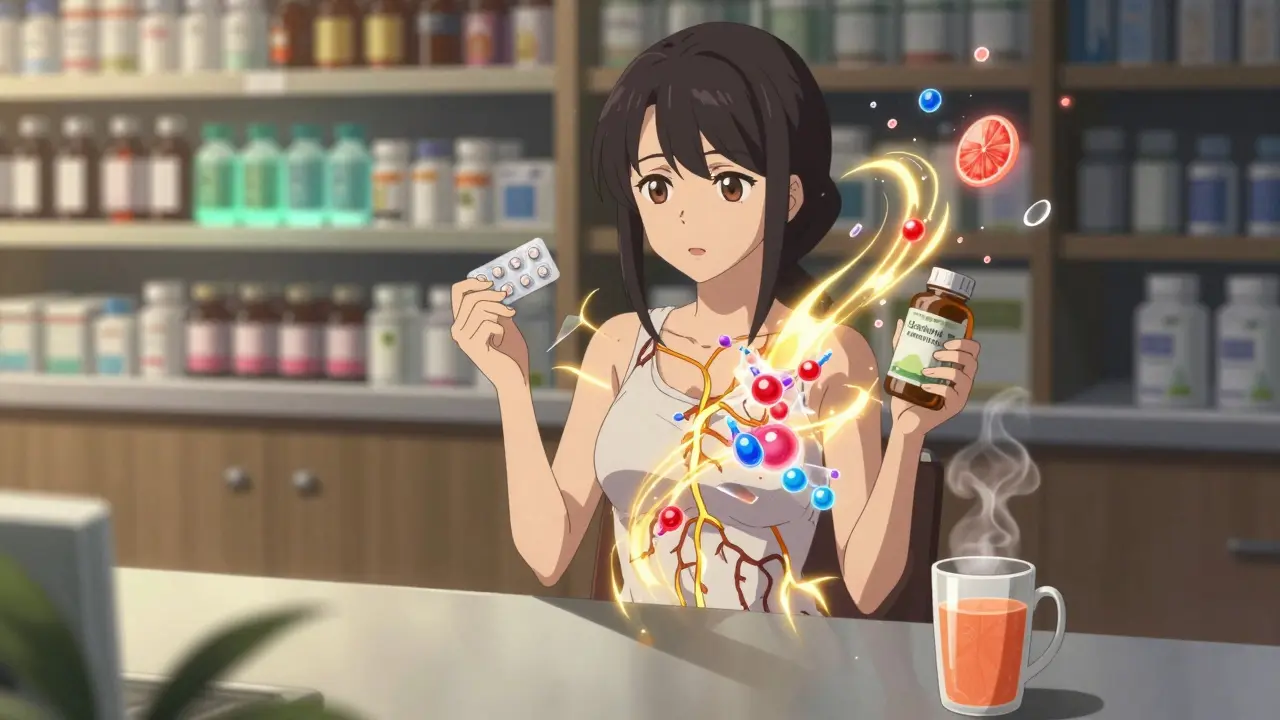
Many women take herbal supplements to support energy, sleep, or hormone balance - but few realize some of these natural products can make their birth control less effective. It’s not a myth. It’s not rare. And it’s not always obvious. If you’re on the pill, patch, or ring, and you’re also taking something like St. John’s wort, grapefruit juice, or even garlic pills, you could be at risk for unintended pregnancy - even if you’ve never missed a dose.
St. John’s Wort Is the Big One
Of all herbal supplements, St. John’s wort is the most dangerous when mixed with hormonal birth control. It doesn’t just slightly reduce effectiveness - it can cut hormone levels in your body by up to half. This isn’t speculation. Multiple clinical studies have shown that women taking 900 mg of St. John’s wort daily along with a standard birth control pill (30 mcg ethinyl estradiol + 150 mcg levonorgestrel) had dramatically lower levels of estrogen and progestin in their blood.
What does that look like in real life? More breakthrough bleeding. More spotting. More confusion. And yes - more risk of pregnancy. One study found that 23% of women using St. John’s wort with birth control experienced breakthrough bleeding, compared to just 5% of those who didn’t. That’s not a coincidence. That’s your body signaling the hormones aren’t working like they should.
The reason? St. John’s wort contains hyperforin, a compound that turns on enzymes in your liver (CYP3A4) and gut (P-glycoprotein) that are designed to flush toxins out of your body. Unfortunately, it doesn’t know the difference between a toxin and your birth control hormones. So it speeds up the breakdown and elimination of both - leaving you with too little hormone to prevent ovulation.
Other Supplements That Can Interfere
St. John’s wort isn’t alone. Several other supplements carry real, documented risks:
- Grapefruit juice - It blocks enzymes that help process birth control hormones. This can cause hormone levels to spike unpredictably, then crash. The result? Unreliable protection and more side effects like nausea or headaches.
- Activated charcoal - If you take it within 4 hours of your birth control pill, it acts like a sponge and absorbs the hormones before they can enter your bloodstream. One dose can wipe out the entire day’s protection.
- Soy isoflavones - Found in soy protein powders, tofu, and supplements, these plant compounds mimic estrogen. They don’t reduce hormone levels like St. John’s wort - they compete with your birth control’s hormones for receptor sites. Think of it like two people trying to sit in the same chair. Your body gets confused, and the contraceptive effect weakens.
- Saw palmetto, alfalfa, flaxseed, and garlic pills - Evidence is weaker here, but case reports and theoretical risks suggest they might interfere with hormone metabolism. Until more research is done, caution is wise.
What’s Actually Safe?
Not all supplements are risky. Many common ones have no known interaction with birth control:
- Ashwagandha - A 2015 study found no effect on the liver enzymes that break down birth control. It’s generally safe, though high doses may cause digestive upset - and if you’re vomiting or having diarrhea, your body won’t absorb your pill properly.
- Probiotics - No interaction found. They work in your gut, but they don’t alter how your liver processes hormones.
- Melatonin - Doesn’t affect birth control directly, but birth control can raise melatonin levels in your body. That might make you feel sleepier than usual.
- Vitamin D, B-complex, magnesium, zinc - These basic vitamins and minerals don’t interfere with hormonal contraception.
- Vitex (chasteberry) - Some studies suggest it may even help balance hormones alongside birth control, especially for women with PMS or irregular cycles.

DIM: The Gray Area
Diindolylmethane (DIM), a compound from cruciferous vegetables like broccoli, is popular for estrogen balance. But here’s the catch: at low doses (50-100 mg), it’s likely fine. At high doses (600 mg+), it may push your estrogen levels down too far - which could weaken birth control’s effect. There’s no clear cutoff, so if you’re taking DIM and your period changes or you start spotting, talk to your doctor. Don’t assume it’s just "normal."
Why This Is So Hard to Track
Unlike prescription drugs, herbal supplements aren’t tested for interactions before they hit store shelves. There’s no FDA review. No standardization. One bottle of St. John’s wort might have 0.3% hyperforin; another might have 1.2%. The same goes for ashwagandha, garlic pills, or soy extracts. Your body reacts differently to each batch.
And most people don’t think to tell their doctor they’re taking supplements. They assume "natural" means "safe." But natural doesn’t mean harmless. St. John’s wort is as potent as the prescription drug rifampin - which is known to cause contraceptive failure. Yet it’s sold next to tea bags and protein powder.

What You Should Do
If you’re on birth control and thinking about starting a supplement - or already taking one - here’s what to do:
- Stop taking St. John’s wort - If you’re on it, stop immediately. Use a backup method (condoms, IUD) for at least one month after quitting.
- Check your grapefruit intake - Even one glass of juice a day can mess with your pill. Switch to orange or apple juice.
- Don’t take activated charcoal - Not even for bloating or detox. It’s too risky.
- Read labels - Look for ingredients like Hypericum perforatum, soy isoflavones, indole-3-carbinol, or garlic extract.
- Talk to your doctor or pharmacist - Bring your supplement bottle with you. Don’t say "I take a few herbs." Show them exactly what’s inside.
There’s no shame in asking. Your birth control is one of the most important medications you take - and it deserves the same care as any prescription.
What About Long-Term Use?
Some supplements are fine for short-term use but risky over time. Ashwagandha, for example, is generally safe for up to three months. But long-term safety data? Lacking. And if you’re taking it daily for years, your liver might start reacting differently. Same with DIM or saw palmetto. The longer you take them, the harder it is to predict how they’ll interact with your hormones.
And if you’ve had a missed period or unexpected bleeding while on a supplement? That’s your body’s alarm bell. Don’t ignore it. Get a pregnancy test. Talk to your provider. Switch your supplement. Or switch your birth control. There’s no reason to gamble with your reproductive health.
The Bottom Line
Herbal supplements aren’t all dangerous. But some - especially St. John’s wort, grapefruit, and activated charcoal - can turn your birth control into a lottery. You can’t see the interaction. You can’t feel it until it’s too late. And unlike missing a pill, this one doesn’t come with a warning label.
The safest approach? Assume every supplement could interfere - until proven otherwise. Ask your doctor before starting anything new. Keep your birth control reliable. Your future self will thank you.
Can I take St. John’s wort with birth control?
No. St. John’s wort significantly reduces hormone levels in birth control pills, patches, and rings. It increases the risk of breakthrough bleeding and pregnancy. Stop taking it immediately if you’re on hormonal contraception, and use a backup method like condoms for at least one month after quitting.
Does ashwagandha affect birth control?
Current research shows ashwagandha doesn’t interfere with the enzymes that break down birth control hormones. It’s generally safe to take together. However, if you experience vomiting or diarrhea from ashwagandha, your body may not absorb your pill properly - which could reduce effectiveness.
Is grapefruit juice safe with birth control?
No. Grapefruit juice blocks enzymes that help your body process birth control hormones. This can cause hormone levels to spike and then drop unpredictably, making your birth control less reliable. Switch to orange, apple, or cranberry juice instead.
Can activated charcoal cancel out birth control?
Yes. Activated charcoal binds to medications in your gut and prevents absorption. If you take it within 4 hours of your birth control pill, it can stop the hormones from entering your bloodstream. Avoid activated charcoal entirely if you’re using hormonal contraception.
What supplements are safe to take with birth control?
Probiotics, vitamin D, B-complex, magnesium, zinc, melatonin, and vitex (chasteberry) have no known interactions with hormonal birth control. Ashwagandha is also considered safe at standard doses. Still, always check with your doctor before starting any new supplement.
Why don’t supplement labels warn about birth control interactions?
Herbal supplements aren’t required to undergo the same safety testing as prescription drugs. They’re sold as dietary supplements, so manufacturers don’t need to prove they’re safe with medications - or even list potential interactions. That’s why you have to ask your doctor, not rely on the label.
What should I do if I’ve been taking St. John’s wort and birth control together?
Stop the St. John’s wort immediately. Use condoms or another form of contraception for at least one month. Schedule a check-up with your doctor. If you’ve had unprotected sex during this time, take a pregnancy test. Don’t wait for a missed period - early testing is more accurate.
Can DIM make birth control less effective?
At low doses (50-100 mg), DIM is unlikely to affect birth control. But at high doses (600 mg+), it may lower estrogen levels enough to reduce contraceptive effectiveness. If you’re taking DIM and notice spotting, irregular periods, or other changes, talk to your doctor and consider lowering the dose.


Carlos Narvaez
December 24, 2025 AT 15:05