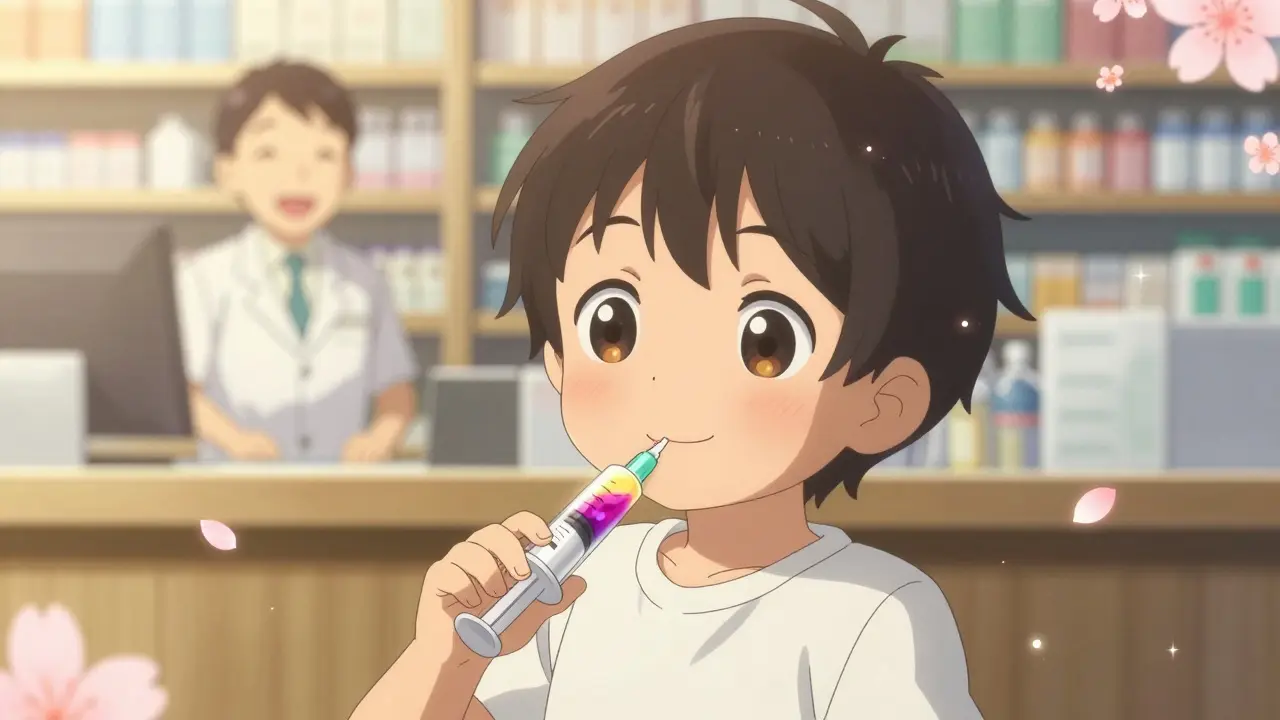
Every parent knows the struggle: your child is sick, the doctor prescribed liquid medicine, and now you’re in a battle every time you try to give it to them. Spit out. Cried. Refused. Again. It’s not just about being stubborn - it’s about taste. And taste is a huge reason why kids stop taking their meds. But there’s a simple, proven fix that’s quietly changing how families handle this daily stress: flavoring services.
Flavoring services let pharmacists add kid-friendly flavors to liquid medications that taste bitter, chemical, or just plain awful. It’s not magic. It’s science. And it works. Studies show that when kids can’t stand the taste of their medicine, up to 76% of them don’t take it as directed. But when that same medicine is flavored? Non-compliance drops to just 20%. That’s not a small change. That’s a life-changing shift in how well a treatment works.
Why Taste Matters More Than You Think
Medicines aren’t candy. They’re not supposed to taste good. But for kids, especially those under 10, the flavor is everything. If it burns, tastes metallic, or leaves a sour aftertaste, their brain says: nope. And parents? They’re left trying to force it down, mix it with juice, or hide it in applesauce - all of which can mess with how the medicine works.
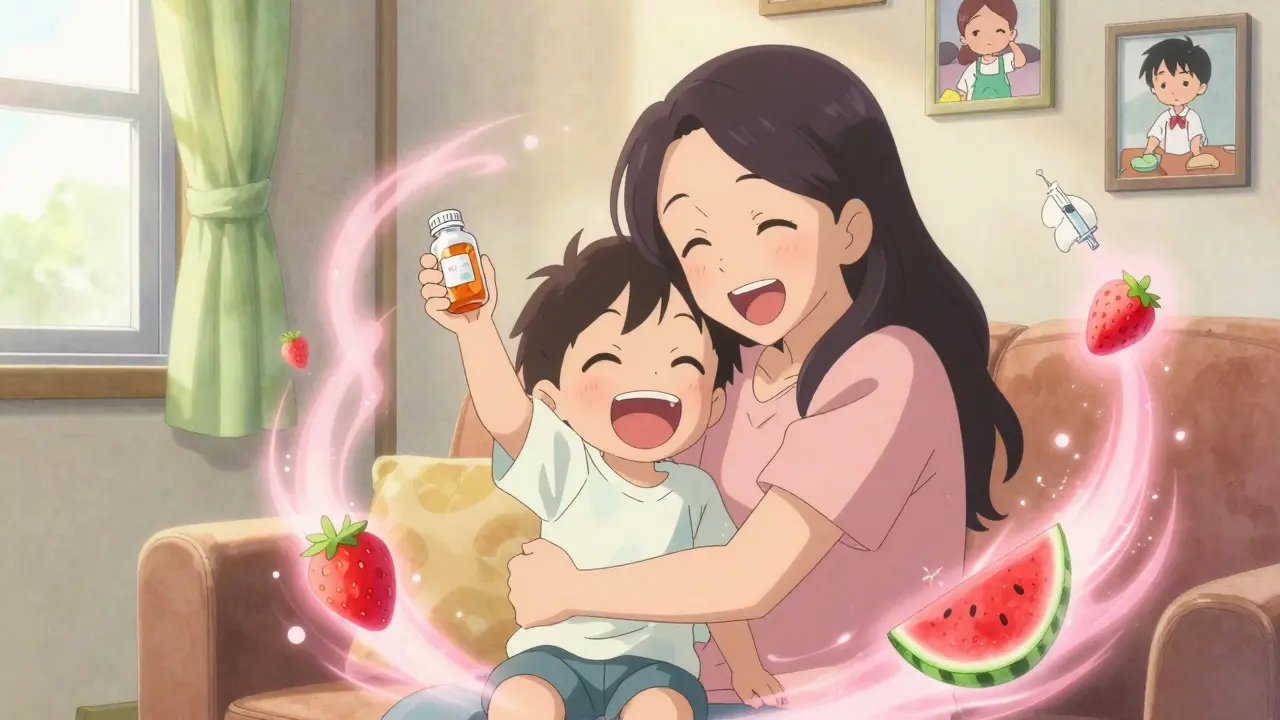
A 2017 study found that over half of all medication adherence problems in children came down to taste. One mom in Bristol told me her 4-year-old would scream and push the syringe away every time. She tried honey, yogurt, even ice cream. Nothing worked. Then she asked the pharmacist to flavor the amoxicillin. Bubblegum. The next day? Her child asked for his medicine. Not because he liked being sick. Because it tasted like a treat.
This isn’t anecdotal. The National Community Pharmacists Association found that when flavoring was used, compliance jumped from 53% to over 90%. That means more kids finish their antibiotics. Fewer get reinfected. Fewer end up back in the ER. And fewer parents lose sleep over daily medicine battles.
How It Works - Simple, Safe, and Fast
Here’s how it actually happens at the pharmacy:
- You bring in a prescription for a liquid antibiotic - say, Augmentin or azithromycin.
- The pharmacist checks if the medicine can be flavored (most can).
- You pick a flavor from a short list: grape, strawberry, bubblegum, watermelon, or orange.
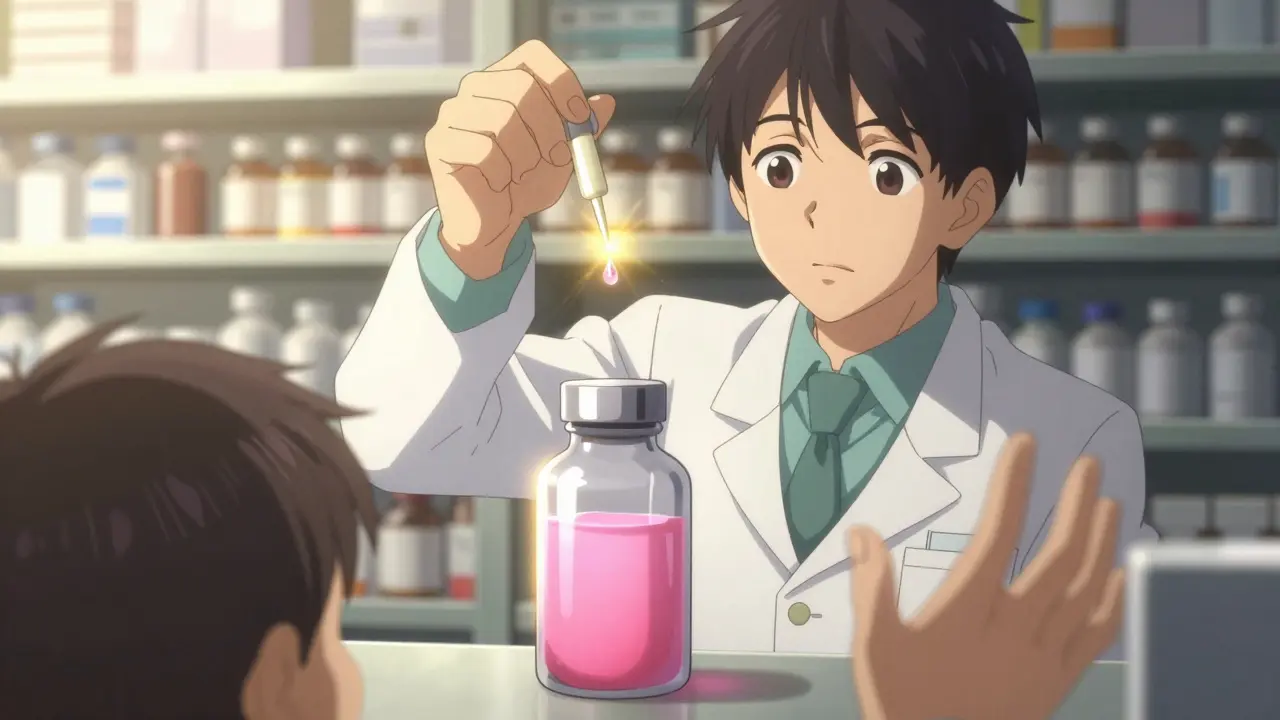
- They add a tiny drop of flavoring agent - dye-free, sugar-free, and safe for allergies - directly into the bottle.
- They shake it, label it, and hand it over. Total time: under two minutes.
The flavoring doesn’t change the dose. It doesn’t weaken the medicine. It doesn’t interact with other drugs. It just hides the bad taste. FLAVORx, the most widely used system, has been tested for over a decade. It’s used by Intermountain Healthcare, CVS, Walgreens, and hundreds of independent pharmacies across the U.S. And in 2023, Intermountain started charging just $1.50 per prescription - less than a candy bar.
What Medicines Get Flavored? Top 5
Not every liquid medicine needs flavoring. But some are notorious for being terrible. Here are the top five that pharmacists most often re-flavor:
- Augmentin - The classic antibiotic. Bitter. Metallic. A nightmare for kids.
- Amoxicillin - The most prescribed pediatric antibiotic. Often tastes like chalk and metal.
- Azithromycin - Used for ear infections. Has a strong chemical aftertaste.
- Cefdinir - Another common antibiotic. Often described as “sour and burning.”
- Clindamycin - Used for skin infections and strep. Known for a lingering bitter finish.
And the top flavors? Grape wins every time. Then bubblegum. Then strawberry and watermelon. Orange is a solid backup. These aren’t random choices. They’re based on real surveys of thousands of kids. One study found that 87% of children preferred grape or bubblegum over unflavored.
What Parents Say - Real Stories
At Germantown Pharmacy in Mississippi, they let kids pick their own flavor. One boy chose bubblegum for his amoxicillin. His mom said: “He used to cry when he saw the bottle. Now he runs to the medicine cabinet. He says it’s like a lollipop.”
Another parent in Ohio wrote: “I didn’t even know this service existed. We struggled for weeks. Then my pharmacist mentioned it. We tried strawberry. My daughter took it without a fuss. For the first time, she finished her full course. I cried.”
These aren’t rare cases. FLAVORx surveys show that 92% of parents who used the service said they’d recommend the pharmacy to others. And 78% said they’d switch pharmacies just to get this service.
Why It’s Better Than Home Tricks
So many parents try to fix bad-tasting medicine at home. Mix it with juice? Hide it in pudding? Put it in a sippy cup? Sounds smart. But it’s risky.
Here’s why:
- Mixing with juice can change how the medicine is absorbed. Some antibiotics lose effectiveness when mixed with citrus.
- Food can delay absorption. That means the medicine doesn’t hit the bloodstream when it should.
- Some medicines need to be taken on an empty stomach. Mixing with food ruins that.
- And if the child doesn’t finish the whole cup? You’ve given them an incomplete dose.
Flavoring at the pharmacy? No risks. No guesswork. Just a safe, consistent dose - with a taste kids actually like.
Limitations and What Doesn’t Work
Flavoring isn’t a cure-all. Some medicines can’t be flavored. Thick suspensions, certain antifungals, or drugs with unstable pH levels might react poorly. Pharmacists check for this before adding anything.
Also, flavoring doesn’t help with chewable tablets or pills. Those need different solutions - like coated tablets or dissolvable forms. In one African study, kids were 91% compliant with prepacked tablets but only 42% with liquid versions. That tells us: formulation matters too.
And while most kids love grape or bubblegum, some develop strong preferences. One girl refused her next antibiotic because it was strawberry instead of bubblegum. Pharmacists now warn: if a child gets attached to a flavor, switching meds might require re-flavoring to match.
Why Pharmacies Are Adopting This Fast
This isn’t just about kids. It’s about outcomes. And money.
When kids don’t finish antibiotics, infections come back. That means more doctor visits. More ER trips. More antibiotics prescribed again. That costs the healthcare system billions.
Pharmacies that offer flavoring see more repeat customers. More referrals. More trust. Intermountain Healthcare rolled it out in 2023 and reported higher patient satisfaction scores across pediatric clinics. Pharmacists say parents are more likely to come back for refills, immunizations, and even advice.
And now, with value-based care models growing, hospitals and insurers are rewarding pharmacies that improve adherence. Flavoring? It’s one of the cheapest, easiest ways to do it.
What’s Next?
Flavoring services are becoming standard. But experts aren’t stopping there.
Dr. Michael Bartlett, who first noticed how badly kids reacted to a grape-flavored cancer med back in 2011, is now working on next-gen taste-masking tech. Not just flavoring - but actual molecular solutions that block bitterness receptors in the mouth.
Meanwhile, the FDA still calls palatability “a key factor in successful therapeutic intervention.” And with more than 27% of studies linking taste to non-adherence, this isn’t going away.
The future? More flavors. Better compatibility. And eventually, flavoring built into the drug itself - not just added at the pharmacy.
Frequently Asked Questions
Can any liquid medicine be flavored?
Most liquid medications can be flavored, but not all. Pharmacists check the formulation before adding flavoring. Thick suspensions, some antifungal liquids, or drugs with unstable chemical properties may not be suitable. Always ask your pharmacist - they’ll test compatibility before proceeding.
Is flavoring safe for kids with allergies?
Yes. Leading systems like FLAVORx use dye-free, sugar-free, nut-free, and gluten-free flavoring agents. They’re designed to be safe for common allergies. Always confirm with your pharmacist that the flavoring is allergen-free, especially if your child has known sensitivities.
How much does it cost?
At most pharmacies, it costs $1.50 per prescription. Some independent pharmacies offer it for free as a service. It’s one of the lowest-cost interventions in pediatric care - and one of the most effective.
Can I choose more than one flavor?
Usually, you pick one flavor per prescription. But if your child needs multiple medications, each can be flavored differently. Many parents choose bubblegum for one antibiotic and grape for another to avoid confusion.
Do pharmacies in the UK offer this?
Currently, flavoring services like FLAVORx are most common in the U.S. In the UK, some private pharmacies and pediatric clinics offer custom flavoring, but it’s not yet a standard service. NHS prescriptions rarely include it. However, demand is growing, and UK pharmacists are beginning to explore similar programs.
What if my child refuses to take it even after flavoring?
Sometimes, even good flavoring doesn’t solve everything. If taste isn’t the only issue - maybe the medicine causes nausea, or your child has sensory sensitivities - talk to your pediatrician. Other options include switching to a chewable, dissolving tablet, or using a different formulation. Flavoring helps, but it’s not the only tool.
Final Thought
Medicine isn’t supposed to be fun. But for kids, taking it shouldn’t be a trauma. Flavoring services don’t change the science. They change the experience. And that’s what makes all the difference.


Chris Bird
March 10, 2026 AT 18:34