
Switching from a brand-name drug to a generic can save you hundreds of dollars a year. But if you don’t talk to your pharmacy before the switch, you might end up confused, anxious, or even at risk. You’re not alone. Many people notice the new pill looks different-smaller, white instead of blue, no logo-and panic. Others get a prescription filled, then find out their insurance won’t cover it anymore. Or worse, they start feeling off after the switch and don’t know why.
The good news? Most generic drugs work just as well as the brand name. The FDA requires them to have the same active ingredient, strength, and how fast they enter your bloodstream. In fact, 9 out of 10 prescriptions in the U.S. are filled with generics. But that doesn’t mean you should just accept the change without asking questions.
Know What’s Changing-and What’s Not
When your pharmacy switches your medication to a generic, the active ingredient stays the same. If you were taking Lipitor (atorvastatin), you’ll now get atorvastatin from a different manufacturer. That’s it. The drug does the same job. But everything else can change: the color, shape, size, markings, and even the inactive ingredients like dyes or fillers.
These differences don’t affect how the drug works for most people. But for some medications-like levothyroxine (for thyroid), warfarin (a blood thinner), or certain epilepsy drugs-even tiny changes in how the body absorbs the drug can matter. That’s why it’s not just about the pill looking different. It’s about how your body reacts to it.
One 2021 study in JAMA Internal Medicine found that nearly 1 in 10 patients switching from brand to generic antiepileptic drugs had a seizure after the switch. That’s rare, but it happens. And if you’re one of those people, you need to tell your pharmacist immediately.
Start Talking Before the Switch
Don’t wait until you show up at the pharmacy and the pill looks unfamiliar. Start the conversation at least 30 days before your current prescription runs out. Call your pharmacy or schedule a quick chat with your pharmacist. Ask:
- Is my medication switching to a generic?
- Which generic manufacturer will be supplying it?
- Will my insurance cover it without prior authorization?
- Are there any special instructions for this switch?
Some insurance plans require you to try the generic first. Others let you stay on the brand name-but only if your doctor writes a letter saying it’s medically necessary. If you’ve had problems with generics before, now’s the time to say so. Pharmacists can flag your record so they don’t automatically substitute.
Medicare Part D plans must give you a 90-day window to continue your brand-name drug if you’re new to the plan. Use that time to talk to your doctor and pharmacist. Don’t assume the switch is automatic.
Ask About Patient Support Programs
Many generic drug makers offer free or discounted programs to help with the transition. If you’re switching from a high-cost brand drug like Keppra (levetiracetam) to a generic, the manufacturer of the generic might have a savings card or co-pay assistance program. Ask your pharmacist: “Does the generic company offer any help with costs?”
Some programs even send you a starter kit with sample pills so you can test how you feel before committing to a full refill. That’s especially helpful if you’ve had bad reactions in the past.
Also, check if your pharmacy offers medication synchronization. This means all your prescriptions are set to refill on the same day each month. It’s not just convenient-it reduces the chance of missing a dose during a transition. One study found it improved adherence by 27%.
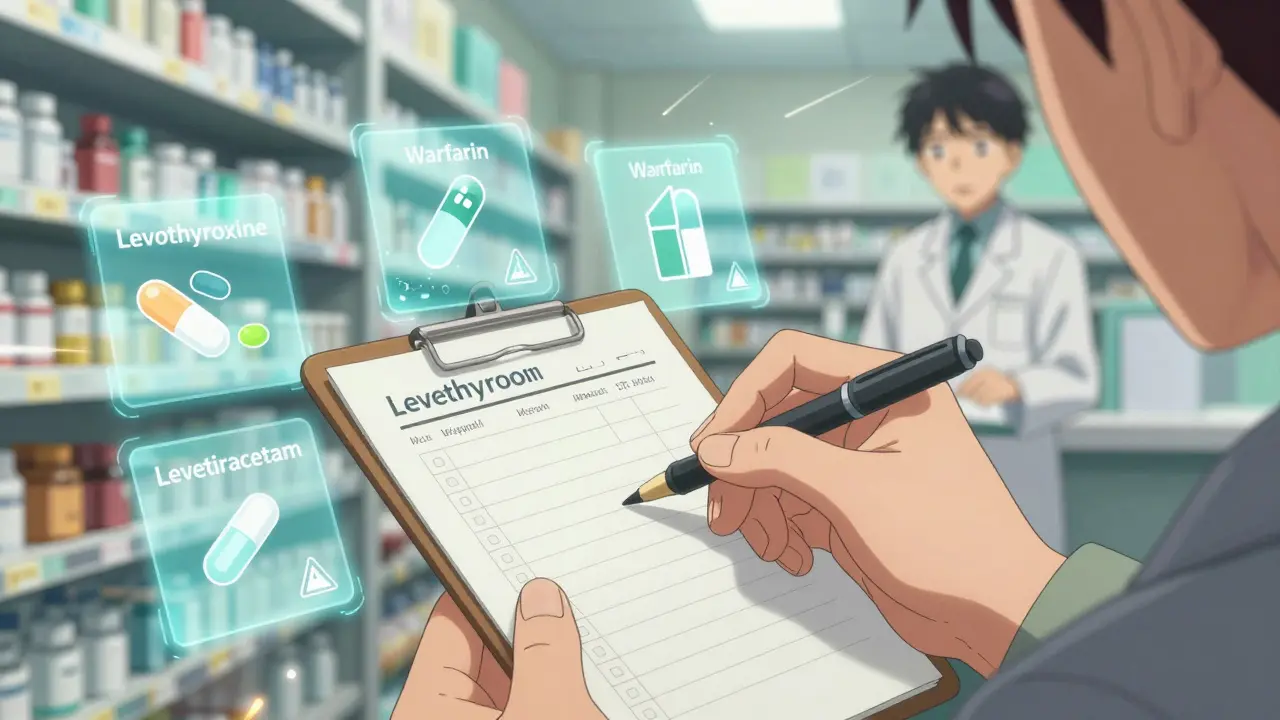
What to Do If You Feel Different After the Switch
Some people notice side effects after switching: dizziness, nausea, headaches, or changes in mood. Others feel like the medication isn’t working as well. This doesn’t mean the generic is bad. It could be the inactive ingredients. Maybe the new version has a different filler that affects how fast your body absorbs the drug.
Here’s what to do:
- Write down exactly what you’re feeling and when it started.
- Call your pharmacy. Don’t wait. Pharmacists are trained to spot these issues.
- Ask if you can switch to a different generic manufacturer. Not all generics are made the same. One brand might use cornstarch; another uses lactose. If you’re sensitive to one, another might work fine.
- If the problem continues, ask your doctor for a letter to your insurer to stay on the brand name.
One Reddit user, u/MedConcern87, switched from brand-name Keppra to a generic and had increased seizures. After talking to their pharmacist, they found out the generic had a different coating that delayed absorption. Switching to a different generic brand fixed it.
Know Your Rights During Transitions
Since August 2023, federal rules let you transfer your prescriptions electronically between pharmacies without needing your doctor to re-authorize it. That’s huge. If your pharmacy runs out of your generic, or you move, you can now get your prescription moved quickly-no phone calls to your doctor needed.
Also, if your insurance denies coverage for your brand-name drug and you need it, your pharmacist can often override the denial right at the counter. They just need a note from your doctor saying the generic won’t work for you. You don’t have to wait days for paperwork.

Keep a Medication List-Every Time You Visit
Bring a written list of every medication you take-name, dose, why you take it-to every pharmacy visit. Include over-the-counter drugs, vitamins, and supplements. Many people forget they’re taking ibuprofen or melatonin, but those can interact with your new generic.
Pharmacists use this list to check for interactions. If you’re on warfarin and start a new generic, your pharmacist will want to know if you’ve changed anything else. Even a new multivitamin can affect how your blood thinner works.
Keep this list updated. Use your phone’s notes app. Write it on a sticky note. But don’t rely on memory. During a transition, small mistakes can have big consequences.
Why This Matters More Than You Think
Generic drugs save the U.S. healthcare system over $370 billion a year. That’s money that keeps premiums lower and makes medicine affordable for millions. But that system only works if patients and pharmacists communicate clearly.
If you stay silent after a switch and feel worse, you might stop taking your meds. That’s when hospital visits and emergencies happen. If you speak up, you can fix it before it becomes a crisis.
Most people-78% according to a Healthline survey-don’t notice any difference after switching. But that 22% who do? They’re the ones who need to be heard. Your pharmacist isn’t just filling a prescription. They’re your medication safety net.
Final Tip: Don’t Be Afraid to Ask
Pharmacists hear the same questions every day. They’ve seen patients panic over a different-colored pill. They’ve helped people switch back to brand names when needed. They’re not judging you. They’re there to help.
Next time you pick up a prescription and the pill looks unfamiliar, don’t just take it. Say: “I’ve never seen this one before. Can we talk about it?” That’s all it takes.
Generic drugs are safe. They’re effective. But they’re not magic. They need your voice to work right.


Moses Odumbe
December 18, 2025 AT 12:18