Key Takeaways for Quick Reference
- Prioritize Risk: Store life-saving meds (like Narcan or EpiPens) where staff or caregivers can grab them instantly, but out of reach of children.
- Watch the Temp: Keep refrigerated meds between 2°C-8°C (36°F-46°F) and room temp meds between 20°C-25°C (68°F-77°F).
- Use the Right Gear: For high-risk drugs, use a dedicated medicine safe or a lockbox with a known, accessible code.
- Audit Regularly: Check expiration dates and lock functionality every few months.
Designing Your Storage Strategy by Environment
Not every setting requires the same level of security. A hospital ER and a living room have very different risks. If you apply a "one-size-fits-all" approach, you'll either end up with a security breach or a delayed response time that could cost a life.At Home: The Family Balance
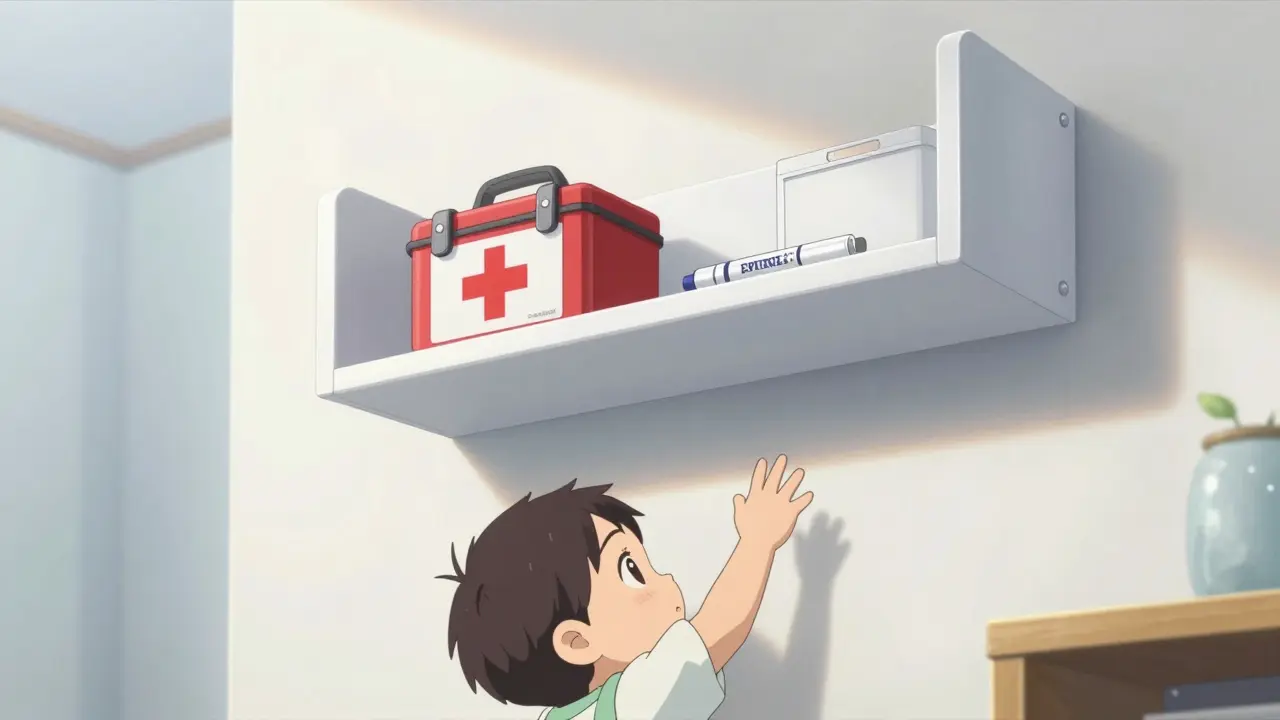
For most people, the biggest threat is accidental pediatric poisoning. The EPA suggests using locked cabinets or dedicated medicine safes. However, if you have a child with a severe allergy, locking an EpiPen in a timed safe is a bad idea. Instead, use "high-access, high-altitude" storage. This means a shelf that is physically impossible for a child to reach but requires no key for an adult to access. Avoid the common trap of storing meds in the bathroom. The humidity from the shower can degrade the chemical integrity of many drugs. A cool, dry closet is almost always a better bet.Professional Settings: EMS and Clinics
In the field, security gets more technical. According to NVERS guidelines from May 2024, medications in EMS vehicles must be kept in lockable cabinets. The key here is the "authorized personnel" rule. Access codes or keys should be restricted to supervising practitioners to prevent diversion-the theft of medication for personal use. In hospitals, the Joint Commission emphasizes a risk-based approach. For example, in an ICU, certain "code drugs" might be kept in plain sight if a licensed nurse is always present. But if a department isn't staffed 24/7, those same drugs must be behind a lock. This flexibility ensures that a nurse doesn't waste ten seconds fumbling with a keypad while a patient is crashing.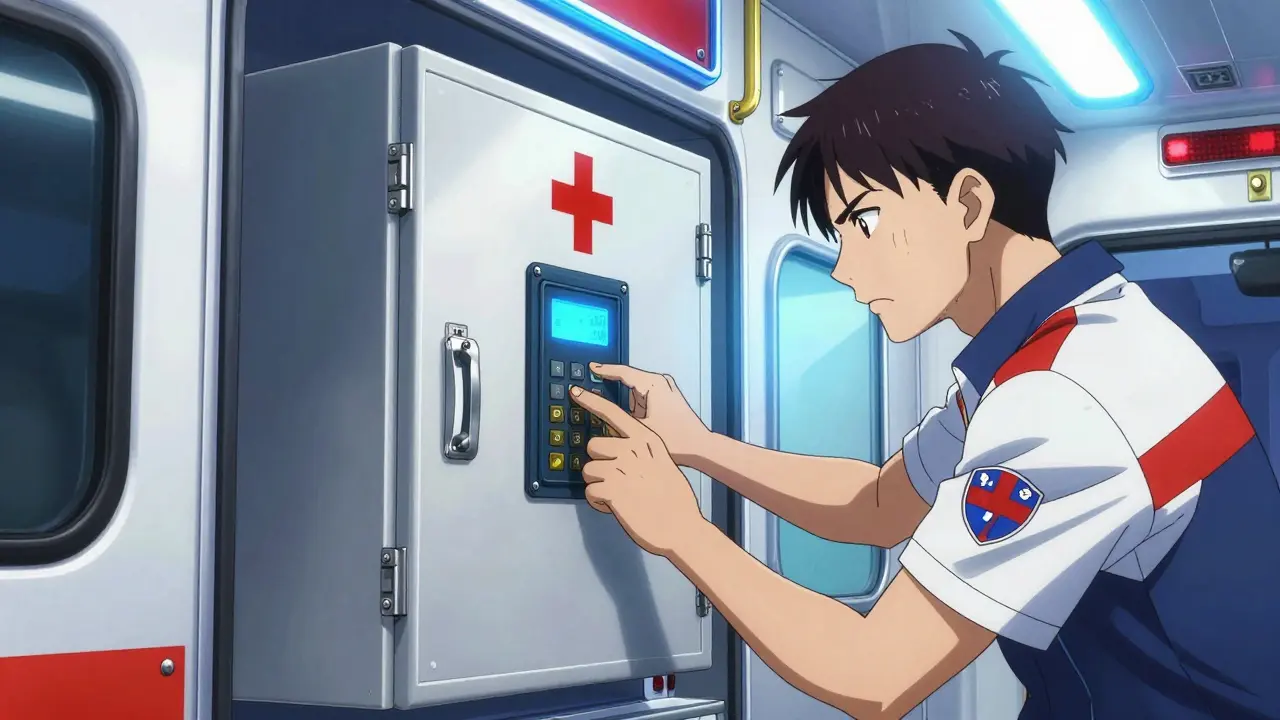
The Invisible Enemy: Temperature and Stability
Security isn't just about locks; it's about maintaining the drug's potency. If a medication gets too hot or too cold, it can become useless or even dangerous. This is a huge issue for EMS providers, where 32% of agencies have reported temperature swings during extreme weather.| Storage Type | Required Range (Celsius) | Required Range (Fahrenheit) | Common Use Case |
|---|---|---|---|
| Refrigerated | 2°C to 8°C | 36°F to 46°F | Insulins, certain vaccines |
| Controlled Room Temp | 20°C to 25°C | 68°F to 77°F | Most tablets and capsules |
| Allowable Excursion | 15°C to 30°C | 59°F to 86°F | Short-term transport/storage |
Preventing Diversion and Accidental Misuse
Diversion is a serious problem in healthcare. In 2022, the DEA reported over 5,000 incidents of controlled substance theft. To stop this, you need more than just a lock; you need a system of accountability.- Tamper-Evident Seals: Use breakable plastic seals on emergency boxes. If the seal is broken, you know someone has accessed the meds, and you can inventory the contents immediately.
- Separation of Schedules: For those handling controlled substances, Schedule II drugs should be stored separately from other medications. This reduces the risk of a "grab and go" theft where a thief takes everything in one box.
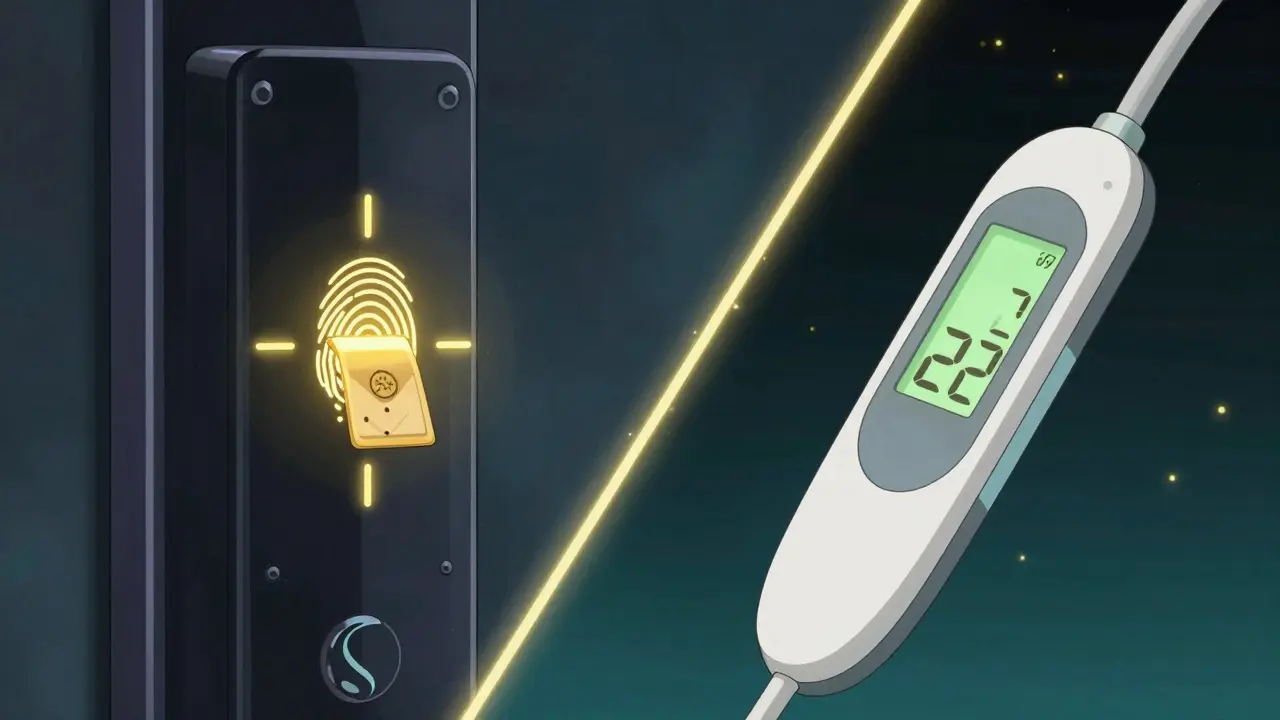
- Electronic Tracking: Many hospitals now use electronic cabinets that require a fingerprint or badge swipe. This creates a digital paper trail of exactly who accessed which drug and when.
Common Pitfalls to Avoid
One of the biggest mistakes people make is over-securing their medications. A 2022 National EMS Survey found that over 17% of providers experienced delays in patient care because the security protocols were too cumbersome. If it takes three minutes to unlock a box during a cardiac arrest, the security system has failed its primary purpose. Another common error is ignoring the "countertop habit." The CDC's PROTECT Initiative warns against leaving medicines out on kitchen counters "just for a few minutes." In a household with children, a few minutes is all it takes for a tragedy to happen. Put the medicine away every single time, even if you're planning to use it again in an hour.Future-Proofing Your Storage
We're moving toward "smart" storage. AI-powered systems are starting to appear in healthcare facilities that can adjust access protocols in real-time based on the level of risk or the urgency of the situation. For the home user, this means looking for smarter lockboxes that might alert your phone if they've been opened unexpectedly. Regardless of the technology, the gold standard remains a personalized risk assessment. Ask yourself: Who is the most likely person to get into this? How fast do I need this drug in a worst-case scenario? If you can answer those two questions, you can build a system that is both bulletproof and lightning-fast.Should I keep my EpiPen in the refrigerator?
It depends on the manufacturer. While some suggest refrigeration, the American Heart Association generally recommends storing epinephrine auto-injectors at room temperature for immediate use. Check your specific product label, but avoid extreme heat (above 40°C/104°F) as it can break down the medication.
What is the best way to store medications in a child-proof way without a lock?
The best non-lock method is "vertical storage." Place medications on a high shelf or in a locked cabinet that is physically out of the reach of children. However, ensure that all adult caregivers in the home know exactly where this location is so there is no delay during an emergency.
How often should I check my emergency medication kits?
You should conduct a full inventory and expiration check every three to six months. This ensures that no drugs have expired and that the security mechanisms (locks, seals, and batteries for electronic locks) are still functioning perfectly.
What is medication diversion and how do I prevent it?
Diversion is the illegal distribution or use of prescription drugs for purposes other than those intended. You can prevent it by using substantially constructed cabinets with locked doors, maintaining strict access logs, and using tamper-evident seals on emergency drug boxes.
Is a plastic bin sufficient for emergency meds?
For non-controlled substances in a low-risk environment, a bin can work if it's stored on a high shelf. However, for controlled substances or high-risk environments, the DEA and other health authorities require substantially constructed cabinets or lockable containers to prevent theft and tampering.


Joshua Nicholson
April 15, 2026 AT 02:01