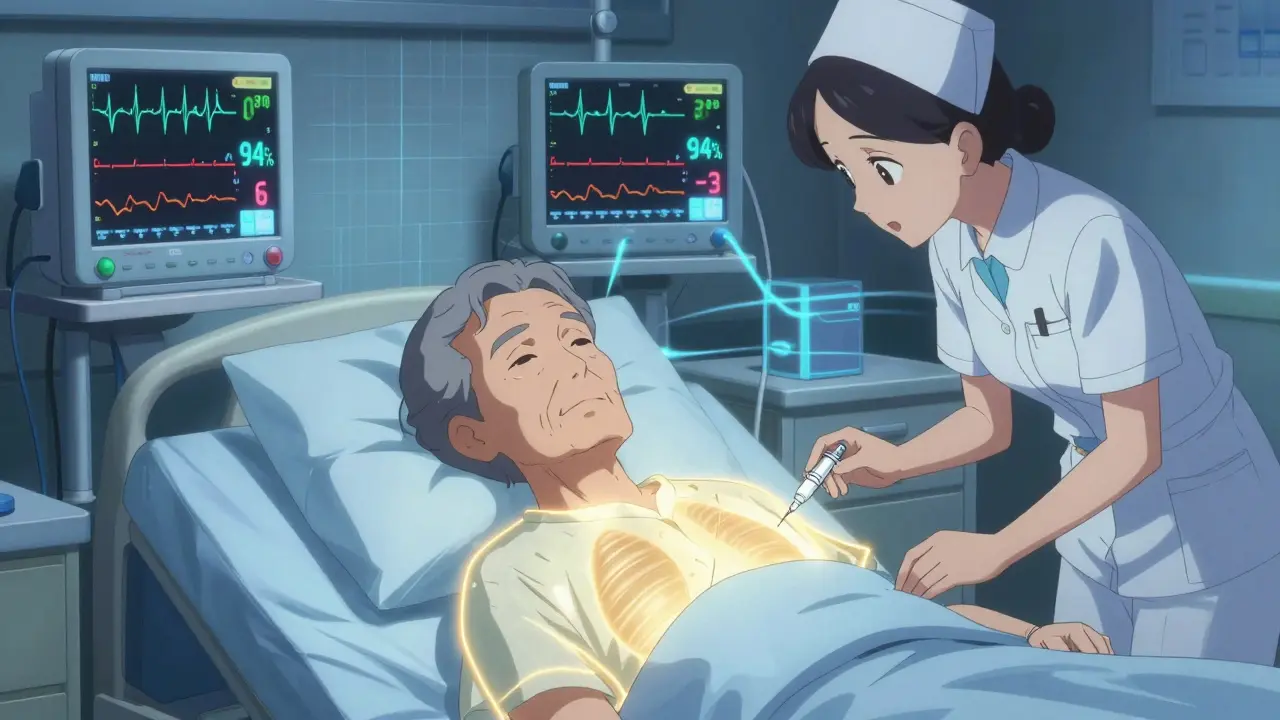
Every year, over 200,000 adverse events related to sedatives and opioids happen in U.S. healthcare settings. Seniors make up 65% of those cases - not because they take more medicine, but because their bodies process it differently. A 78-year-old on a standard adult dose of morphine might seem fine at first, but their breathing could slow to dangerous levels without warning. That’s why monitoring for over-sedation isn’t optional - it’s life-saving.
Why Seniors Are at Higher Risk
As we age, our bodies change in ways that make sedatives and painkillers much more dangerous. The liver processes drugs 30-50% slower between ages 20 and 80. Kidneys clear medications at a rate that drops by 0.8 mL/min/1.73m² every year after 40. The blood-brain barrier becomes more permeable, letting more drug into the brain. These changes mean a dose that’s safe for a 40-year-old can be deadly for someone over 70.Even more concerning: seniors often don’t show obvious signs of trouble. They may not groan, flail, or appear confused. Instead, their breathing quietly slows - sometimes to fewer than 8 breaths per minute. That’s called respiratory depression, and it’s the leading cause of death in opioid-related overdoses among older adults.
What to Watch For: Early Warning Signs
Don’t wait for unconsciousness. By then, it’s too late. Look for these early red flags:- Slowed breathing - fewer than 8 breaths per minute, or irregular patterns like long pauses between breaths
- Unresponsiveness - doesn’t open eyes when called, doesn’t respond to gentle shoulder tap
- Bluish lips or fingertips - a late sign, but still critical
- Drop in alertness - suddenly sleepy, hard to wake, confused about time or place
- Low blood pressure - below 90 mmHg systolic, especially if sudden
- Heart rate below 50 or above 100 beats per minute
These signs often appear together. One alone might be normal. Three? That’s a warning.
The Gold Standard: Continuous Multimodal Monitoring
Intermittent checks every 15 or 30 minutes? That’s outdated. Studies show it misses 78% of dangerous events. The only reliable approach is continuous, multi-parameter monitoring.Here’s what’s required:
- Pulse oximetry - tracks oxygen levels. Alarm should trigger at SpO2 below 90%. But beware: if the patient is on supplemental oxygen, SpO2 can stay at 94% even while breathing dangerously slow. This is called “silent hypoxia.”
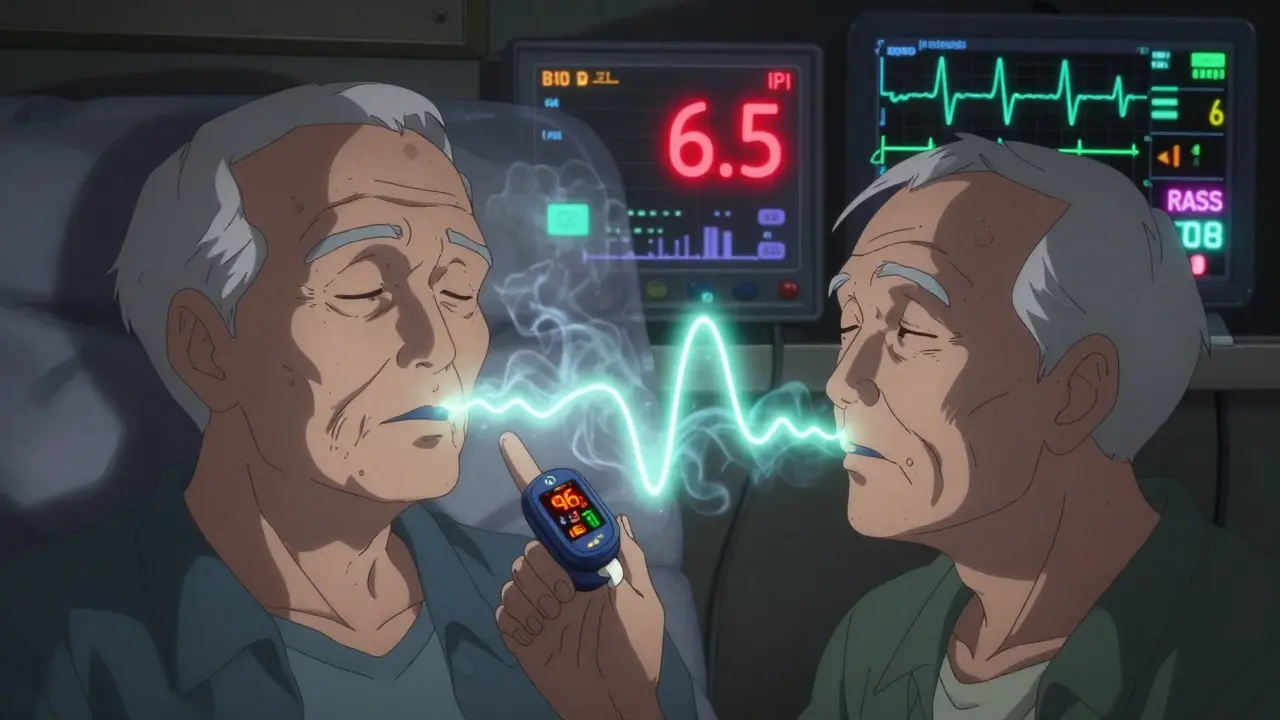
- Capnography - measures carbon dioxide (EtCO2) in exhaled breath. Normal range: 35-45 mmHg. A drop below 30 mmHg or a flat line means no breathing. Capnography detects respiratory arrest 12-14 minutes earlier than pulse oximetry alone.
- ECG monitoring - watches heart rhythm. Heart rate below 50 or above 100 is a red flag.
- Non-invasive blood pressure (NIBP) - check every 5 minutes. Systolic pressure below 90 mmHg signals trouble.
- Level of consciousness - use the Richmond Agitation-Sedation Scale (RASS). A score of -2 means moderate sedation. -3 or lower? Immediate action needed.
The Integrated Pulmonary Index (IPI) combines all four of these (EtCO2, respiratory rate, SpO2, heart rate) into a single score from 1 to 10. A score below 7 means intervention is needed - and it’s been shown to predict trouble 12.7 minutes before oxygen levels drop.
Why Capnography Is Non-Negotiable
Some facilities still skip capnography because it’s “too expensive” or “too complicated.” But data doesn’t lie. In a 2020 study of 387 seniors undergoing sedation, capnography caught 92% of apnea events. Pulse oximetry alone caught only 67% - and even then, only after oxygen levels fell.And here’s the kicker: 87% of respiratory arrests in seniors happened during times when capnography wasn’t being used. That’s not coincidence. That’s preventable.
Capnography isn’t just for hospitals. It’s now affordable enough for outpatient clinics. The FDA-approved Opioid Risk Monitoring System (ORMS), introduced in 2023, automatically pauses opioid infusions when breathing slows below 8 breaths per minute. In trials, it cut respiratory depression in seniors by 58%.
Common Mistakes That Kill
Even with the right tools, mistakes happen. Here are the top three:- Assuming SpO2 = safety - If a senior is on oxygen, their SpO2 can look perfect while they’re barely breathing. Always check breathing rate with capnography.
- Ignoring irregular breathing - Seniors often have irregular patterns due to COPD, heart failure, or just aging. That doesn’t mean capnography is wrong - it means you need to interpret waveforms with context.
- Over-relying on machines - A 2004 report from NCEPOD showed 28% of monitoring failures happened because staff trusted the numbers too much. A machine showing 92% SpO2 doesn’t mean “all clear.” You still need to watch, listen, and touch.
Practical Tips for Caregivers and Nurses
If you’re caring for a senior on sedatives:- Start low, go slow - Use this formula to adjust doses: Standard dose × (1 - 0.005 × (age - 20)). For a 75-year-old, that’s roughly 65% of the adult dose.
- Use hydrocolloid dressings - Continuous monitoring electrodes can tear fragile skin. These special pads reduce skin injury by 67%.
- Train staff on RASS - The Richmond Agitation-Sedation Scale is simple: -5 = unarousable, -4 = deep sedation, -3 = moderate, -2 = light sedation. Anyone can learn it in under an hour.
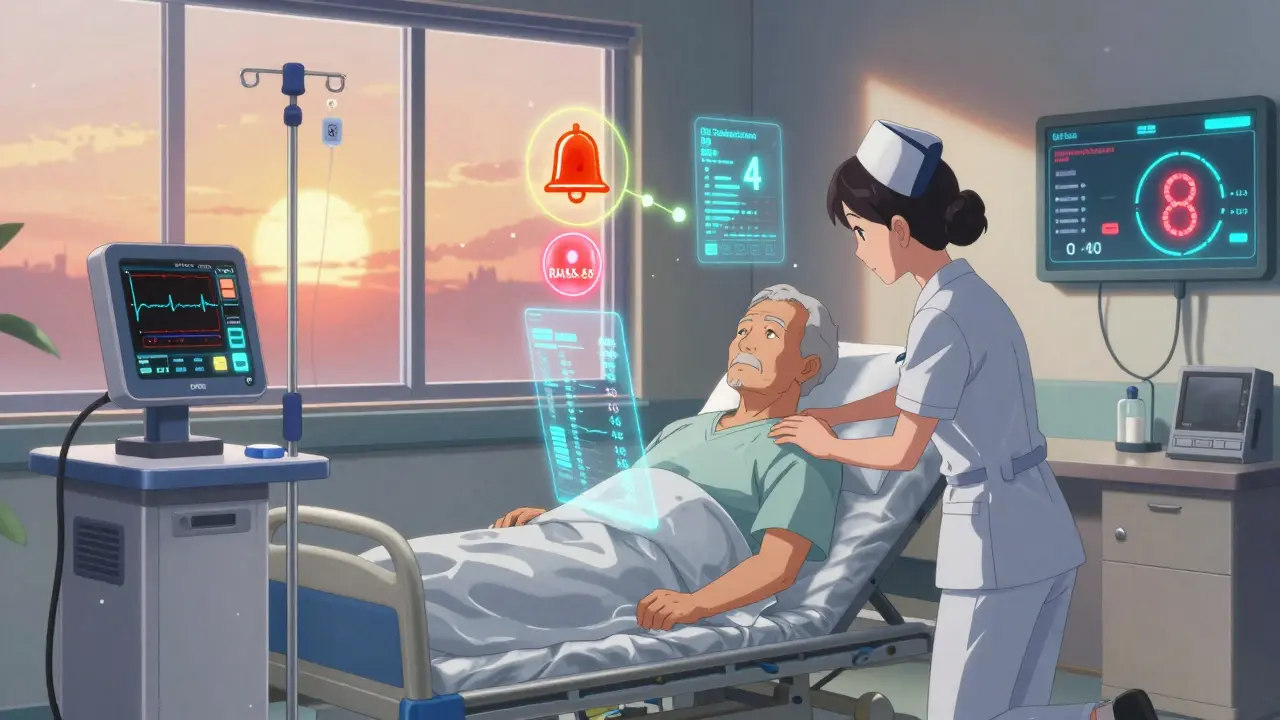
- Never leave a senior alone - Even with alarms, a 1:1 nurse-to-patient ratio is still the safest standard.
What Facilities Should Be Doing
Hospitals and clinics must meet two federal standards:- The Joint Commission NPSG.02.02.01 - Requires individualized sedation plans for high-risk patients, including seniors.
- CMS Condition of Participation §482.52(c) - Mandates continuous monitoring of oxygenation, ventilation, and circulation during moderate sedation.
Yet in 2022, only 42% of outpatient endoscopy centers used continuous capnography. That’s unacceptable. Seniors aren’t getting the same safety standards as younger patients - and they shouldn’t have to.
What’s Next: Smarter Monitoring
The next wave of monitoring uses machine learning. The American Society of Anesthesiologists is testing a new version of the Modified Early Warning Score (MEWS) that predicts respiratory depression 20 minutes before it happens - with 94% accuracy. These systems will soon integrate with electronic health records to auto-adjust doses based on age, weight, and kidney function.But technology alone won’t fix this. The 2023 NCEPOD report reminds us: “Technology cannot compensate for inadequate staffing.” No algorithm replaces a trained person watching, listening, and acting.
Final Takeaway
Monitoring seniors for over-sedation isn’t about checking boxes. It’s about recognizing that aging changes how medicine works. A dose that saved a 50-year-old’s life could end an 80-year-old’s. The tools exist. The guidelines are clear. What’s missing is consistent, continuous, multimodal monitoring - and the will to use it.If you’re a family member, ask: “Are they using capnography?” If you’re a provider, demand it. Because in this case, the difference between life and death isn’t a new drug - it’s a simple, proven monitor.
What are the earliest signs of over-sedation in seniors?
The earliest signs include breathing slower than 8 breaths per minute, unresponsiveness to voice or touch, a drop in alertness (like not recognizing family), and heart rate outside 50-100 bpm. These often appear before oxygen levels drop, especially if the patient is on supplemental oxygen.
Why is capnography better than pulse oximetry for seniors?
Capnography detects carbon dioxide levels in exhaled breath, which drops as soon as breathing slows - even before oxygen levels fall. Pulse oximetry can stay normal for minutes while a senior is dangerously hypoventilating, especially if they’re on oxygen. Capnography catches trouble 12-14 minutes earlier.
Can I use a home pulse oximeter to monitor my elderly parent?
A home pulse oximeter only shows oxygen levels - not breathing rate or depth. It won’t catch silent hypoxia or early respiratory depression. For seniors on opioids or sedatives, continuous capnography and clinical assessment are required. Home devices are not sufficient for safety.
How much should I reduce a senior’s sedative dose?
Use this formula: Standard adult dose × (1 - 0.005 × (age - 20)). For a 75-year-old, that’s about 65% of the normal dose. Always start with the lowest possible dose and increase only if needed, under close monitoring.
Is it safe to give opioids to seniors at all?
Yes - but only with strict monitoring. Seniors can safely receive opioids if doses are adjusted for age, and if continuous capnography, pulse oximetry, and clinical observation are used. The risk isn’t the drug - it’s the lack of monitoring.
What should I do if I notice signs of over-sedation?
Stop the medication immediately. Call for help. Ensure airway is open. If available, use a reversal agent like naloxone (Narcan) for opioids. Continue monitoring until breathing and consciousness return to normal. Never assume the person will “wake up on their own.”


Monica Warnick
February 7, 2026 AT 11:17