
Swallowing pills can feel impossible for some people - not because they’re being stubborn, but because their body truly can’t do it. Around 15% of older adults living at home and up to 68% of nursing home residents struggle with swallowing, a condition called dysphagia. This isn’t just about discomfort. When you can’t swallow pills, you stop taking your medicine. And that leads to worse health, more hospital visits, and even death in serious cases. The good news? There are real, safe ways to get your meds down without risking your health.
Why Swallowing Pills Is Harder Than You Think
Many assume that if you can eat food, you can swallow pills. But that’s not true. Swallowing a tablet is a complex, coordinated muscle movement. It involves your tongue, throat, and esophagus working together. When nerves are damaged - from stroke, Parkinson’s, ALS, or even after head and neck surgery - those signals get mixed up. The result? Food or pills get stuck, coughed up, or worse, breathed into the lungs. A 2023 study found that nearly half of all pill modifications - like crushing tablets or opening capsules - were done incorrectly. Some medications lose their effectiveness when crushed. Others become dangerous. Blood pressure pills, slow-release painkillers, and antidepressants can cause overdose or drop in effectiveness if tampered with. Even something as simple as opening a capsule and mixing it with applesauce can change how the drug works in your body.Stop Crushing Pills - Try These Instead
Crushing or opening pills should be your last resort. Before you do it, ask these three questions:- Is this medicine still necessary?
- Is there a liquid, chewable, or dissolvable version?
- Can I switch to a patch, injection, or suppository?
- Paracetamol (acetaminophen) is available as orodispersible tablets that dissolve on the tongue.
- Levothyroxine (for thyroid) can be taken as a liquid.
- Some blood pressure meds are now in orally disintegrating tablets (ODTs) that melt in seconds.
- Insulin, testosterone, and certain pain medications can be given as injections or patches.
Swallowing Techniques That Actually Work
If you must take a pill whole, try these proven methods:The Lean Forward Method - Place the capsule on your tongue. Take a medium sip of water. Tilt your chin down toward your chest. Swallow. This opens the throat and lets the pill slide in. Clinical studies show this works for 75% of people who previously couldn’t swallow capsules.
The Pop Bottle Method - Put the pill on your tongue. Close your lips tightly around a flexible plastic water bottle. Take a drink using suction (like you’re drinking through a straw). The suction pulls the pill down with the water. Works best with tablets.
The Two-Sip Method - Take a sip of water, hold it in your mouth, place the pill on your tongue, then swallow. The water helps coat the pill and reduces friction.
For children, try mixing pills with yogurt or applesauce - but only if the pill isn’t time-released. Some parents find giving a small sip of milk first helps make the throat slippery. For adults, a small ice chip before swallowing can numb the throat and trigger the swallow reflex.
What to Avoid - And Why
Don’t use thick liquids like juice or milk unless your speech therapist says it’s safe. Thick liquids can make some people choke more. Thin liquids like water are better for those at risk of choking. But if you’re at risk of aspirating (breathing in food), thicker liquids help the pill stay together and move safely. Never mix crushed pills with hot food. Heat can break down medications. Avoid carbonated drinks - they make you burp and can push the pill back up. And never take pills with dry bread or a cracker. It’s a common trick, but it increases the chance the pill gets stuck.Feeding Tubes and Medication - A Careful Balance
If you use a feeding tube, giving pills through it is possible - but risky. Many pills clog tubes or react with formula. Always:- Use liquid or crushable versions if available.
- Give one drug at a time.
- Flush with at least 10ml of water between each medication.
- Check for interactions - some antibiotics don’t mix with tube feeds.
Technology Is Changing the Game
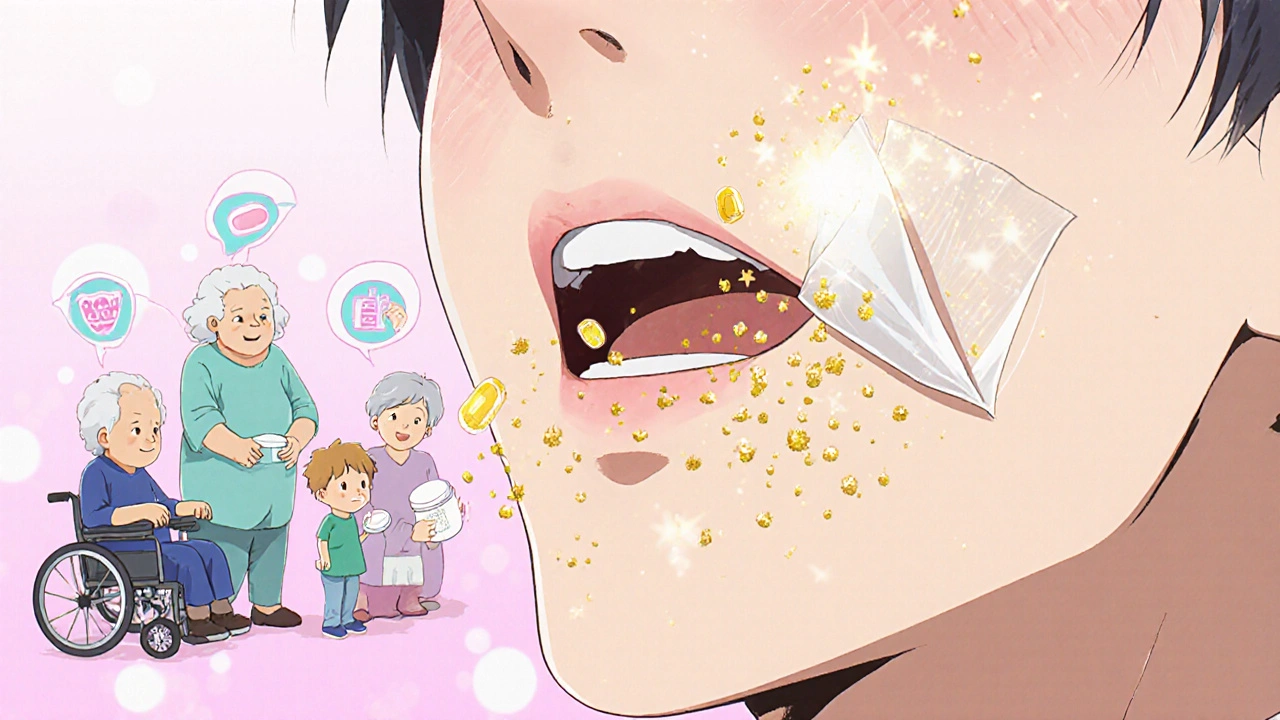
New forms of medication are making life easier. Dissolvable films - like VersaFilm - stick to the inside of your cheek and release medicine without swallowing. A 2023 study showed 85% of patients with moderate dysphagia could use them successfully. Other innovations include:- Mini-tablets (smaller than a grain of rice) that are easier to swallow.
- Effervescent tablets that dissolve in water and taste better than liquid meds.
- Smart pill dispensers that remind you and show you how to take it safely.
Work With Your Care Team
No one person can fix this alone. You need:- Your doctor - to review if every pill is still needed.
- Your pharmacist - to find safer formulations.
- Your speech therapist - to teach you swallowing techniques.
- Your caregiver - to help with routines and spot warning signs.
What to Do Next
Start today:- Make a list of every pill you take - name, dose, reason.
- Call your pharmacist. Ask: “Is there a liquid, dissolvable, or patch version of this?”
- Ask your doctor: “Can any of these be stopped?”
- Practice the lean forward method with water and a placebo pill (like a sugar pill or vitamin).
- If you’re still struggling, ask for a referral to a speech therapist who specializes in swallowing.
Can I crush my pills if I can’t swallow them?
Only if your pharmacist or doctor says it’s safe. Many pills - especially extended-release, enteric-coated, or capsule forms - can become dangerous when crushed. Crushing can cause overdose, reduce effectiveness, or irritate your stomach. Always check before you crush anything.
Are there medicines that come in liquid form?
Yes. Many common medications - including blood pressure pills, thyroid meds, antidepressants, and pain relievers - are available as liquids or oral solutions. But not all are. Ask your pharmacist to check if a liquid version exists for each of your prescriptions.
What’s the best way to swallow a capsule?
Try the lean forward method: Place the capsule on your tongue, take a medium sip of water, tilt your chin down toward your chest, then swallow. This technique works for 75% of people who’ve struggled with capsules, according to clinical observations from the University of Michigan.
Can swallowing problems be treated?
Yes. Speech and language therapists can teach you swallowing exercises, posture adjustments, and techniques to make swallowing safer. They can also recommend thickened liquids or modified food textures if needed. Treating dysphagia doesn’t just help with pills - it helps with eating and drinking too.
Why do some pills taste bad when crushed?
Many pills have coatings to protect the drug or control how it’s released. When crushed, those coatings break open and release bitter or chemical-tasting ingredients. That’s why some people gag or refuse to take crushed meds. Switching to a different formulation - like a liquid or dissolvable tablet - often solves the taste problem.


Margo Utomo
November 16, 2025 AT 11:08