
When you pick up a prescription at the pharmacy, you might see a pop-up on the screen or hear a beep from the system. It says: "Allergy Alert: Penicillin". You think, "I never had a reaction to penicillin." But the system won’t let you leave without clicking "Confirm" or "Override." What does this alert really mean? And why does it keep showing up even when you’ve taken the medicine before without issue?
Pharmacy allergy alerts are meant to protect you. But too often, they’re more of a nuisance than a safety net. In fact, more than 90% of these alerts are triggered by cross-reactivity concerns-not because you’ve actually had a true allergic reaction. And yet, clinicians override them over 95% of the time. That’s not because they’re careless. It’s because most alerts are wrong.
What Exactly Is an Allergy Alert?
An allergy alert is a digital warning built into the electronic systems pharmacies and hospitals use to dispense medications. When a doctor prescribes or a pharmacist fills a drug, the system checks your medical record against a database of known drug allergies. If there’s a match-or even a suspected match-it throws up a red, orange, or yellow alert.
These systems rely on commercial knowledge bases like First DataBank, which map out how drugs relate to each other. For example, if you’re labeled as allergic to penicillin, the system might warn you about amoxicillin (a close relative), or even cephalosporins like cefdinir-even though the real risk of cross-reactivity is less than 2% for newer cephalosporins.
There are two main types of alerts:
- Definite allergy alert: Your record says you had a reaction to a specific drug, or a drug in the same class.
- Possible allergy alert: The system suspects a cross-reaction based on chemical similarities, even if you’ve never reacted to that exact drug.
Here’s the problem: most people don’t know the difference. And neither do the systems.
Why Are So Many Alerts Wrong?
Let’s say you had a stomachache when you were 8 and your mom called it a "penicillin allergy." That note got entered into your chart decades ago. Now, at 42, you’re prescribed amoxicillin for a sinus infection. The system flags it. You’ve never had a rash, swelling, or trouble breathing-but the alert still pops up because the system sees "penicillin" and says "danger."
This isn’t rare. A 2019 study found that only 10% of documented "drug allergies" are true immune-mediated reactions. The rest are side effects-nausea, dizziness, headaches-or just misremembered events.
Even worse, many systems don’t ask for details. They just let you pick "allergy" from a dropdown. No description. No severity. No date. So if you had a mild rash after amoxicillin in 2010, the system treats it the same as someone who went into anaphylactic shock.
That’s why pharmacists and doctors have learned to ignore them. A 2022 survey found that 63% of pharmacists say more than half of the allergy alerts they see are clinically irrelevant. One nurse practitioner in a Mayo Clinic clinic told a reporter she gets up to 17 alerts for a single vancomycin order-just because someone wrote "penicillin allergy" in 1998 for a stomach bug.
How to Actually Read an Allergy Alert
Don’t just click "OK" and move on. Take two seconds to ask yourself:
- What’s the exact drug mentioned? Is it the one you’re being prescribed now? Or a related one?
- What was the documented reaction? Did you get hives? Swelling? Trouble breathing? Or just nausea? True allergies involve your immune system. Nausea from metformin? That’s a side effect, not an allergy.
- When did it happen? Most real allergic reactions happen within minutes to hours after taking the drug. If it happened 20 years ago and you’ve taken similar drugs since without issue, the alert is likely outdated.
- Is this a class alert? If you’re allergic to penicillin, does that mean you can’t take any antibiotic that sounds like it? Not necessarily. Cross-reactivity with newer cephalosporins is rare. Same with NSAIDs-just because you reacted to ibuprofen doesn’t mean you can’t take naproxen.
Look for color codes. Epic’s system uses:
- Yellow = Mild reaction
- Orange = Moderate
- Red = Severe
- Black = Life-threatening
Cerner’s system is similar but uses icons instead. If the alert says "anaphylaxis" but your reaction was "stomach ache," it’s misclassified. Don’t assume the system got it right.
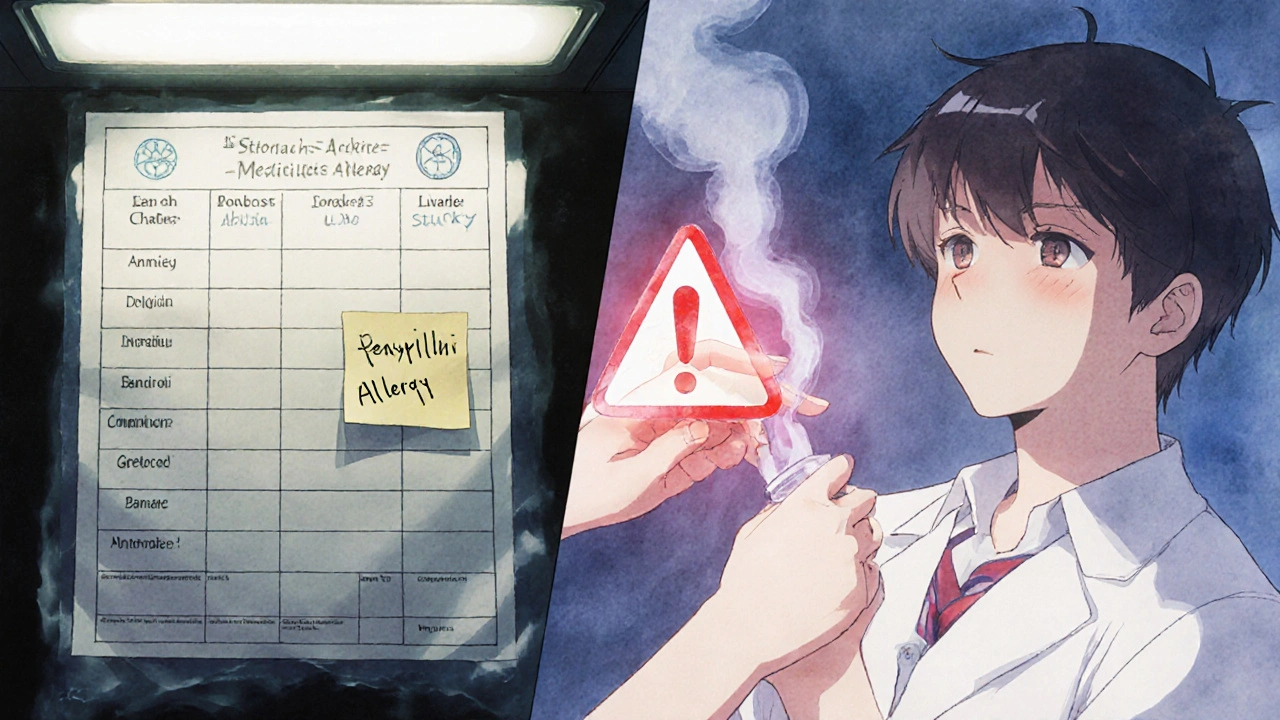
What to Do When You See an Alert
Here’s what works in real life:
- Ask the pharmacist: "Why is this alert here? What reaction was documented?" Most pharmacists can pull up your full history.
- Check your own records: If you’ve seen a specialist or had testing done (like a penicillin skin test), ask if that information is in your chart.
- Don’t override without knowing why: If you’re unsure, say, "Let me check with my doctor." A few minutes of clarity can prevent a bad reaction-or stop you from being denied a needed medication.
- Update your allergy list: If you’ve taken a drug since the alert was added and had no reaction, tell your doctor. Ask them to remove or modify the note.
At Johns Hopkins Hospital, they introduced a simple rule: every time a patient says "I’m allergic to X," the provider must write down what the reaction was, when it happened, and how severe it was. Within six months, accurate allergy documentation jumped from 39% to 76%.
Why This Matters for You
Ignoring alerts isn’t the answer. But blindly trusting them is just as dangerous.
If you’re labeled as allergic to penicillin but you’ve taken amoxicillin five times without issue, you might be unnecessarily avoiding a safe, cheap, effective antibiotic. That could lead to being prescribed stronger, more expensive, or more toxic drugs instead.
On the flip side, if you truly had anaphylaxis after a drug, and the system doesn’t flag it because the note was vague, you could be at risk.
The goal isn’t to eliminate alerts. It’s to make them accurate.
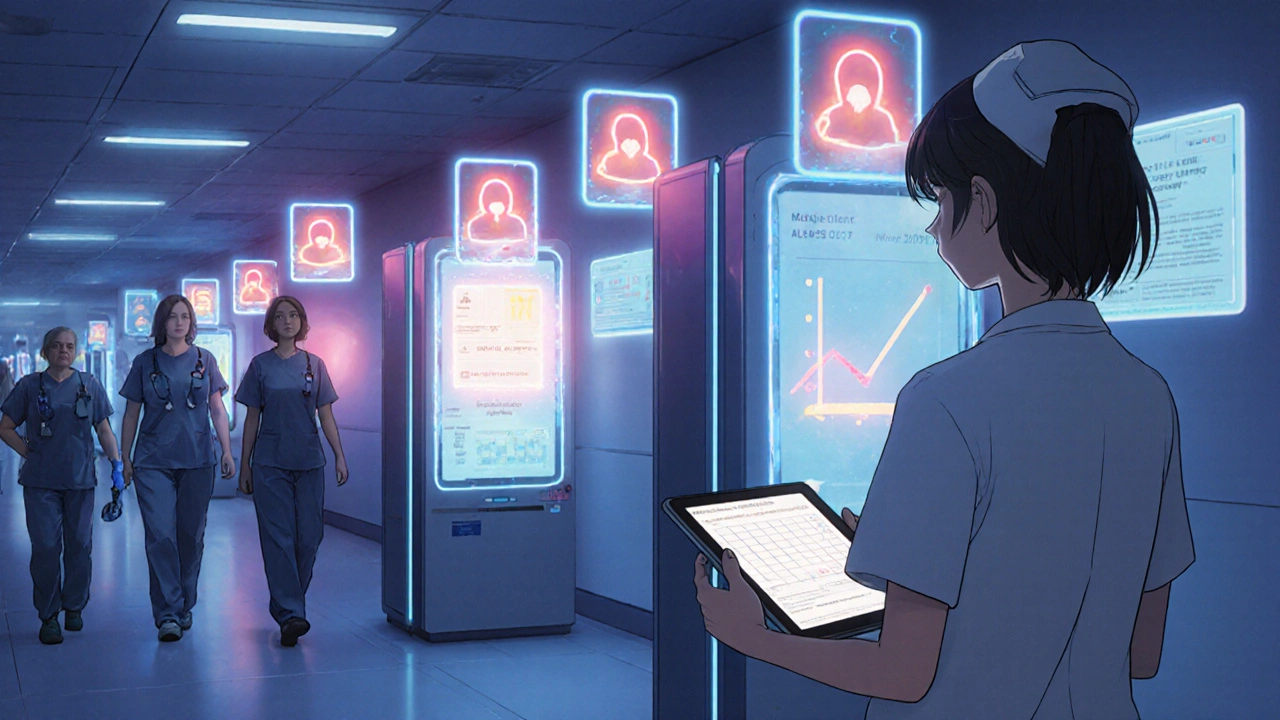
What’s Changing in 2025?
Big changes are coming. EHR systems like Epic and Oracle Health are now using machine learning to predict which alerts are likely to be false. Epic’s 2023 update, called "Allergy Relevance Scoring," looks at your past behavior-how often you’ve taken similar drugs without issue-and reduces alerts accordingly.
Some hospitals now require patients to describe their reaction in their own words during check-ins. Others integrate results from allergy testing directly into the system. If you’ve had a penicillin skin test and it came back negative, that result can now auto-remove the alert.
By 2026, experts predict 70% of major EHR systems will use risk-stratified alerts-meaning only high-risk reactions (like anaphylaxis) will trigger loud, mandatory warnings. Mild reactions or vague histories will generate quiet reminders, not red flashing screens.
This isn’t just tech progress. It’s a cultural shift. The old system assumed every "allergy" label was a threat. The new one asks: "Is this really an allergy? And how dangerous is it?"
Bottom Line: Be Your Own Advocate
You don’t need to understand EHR databases. But you do need to know your own history.
Keep a simple list: Drug name, reaction, date, severity. If you’re unsure, write "I’m not sure"-but don’t just say "allergy."
When you go to the pharmacy, if an alert pops up, pause. Ask: "Why is this here? Is this really me?"
Most alerts are noise. But the right one could save your life. Don’t ignore them all. Don’t trust them blindly. Learn to read them. And help make them better.


satya pradeep
November 18, 2025 AT 00:38