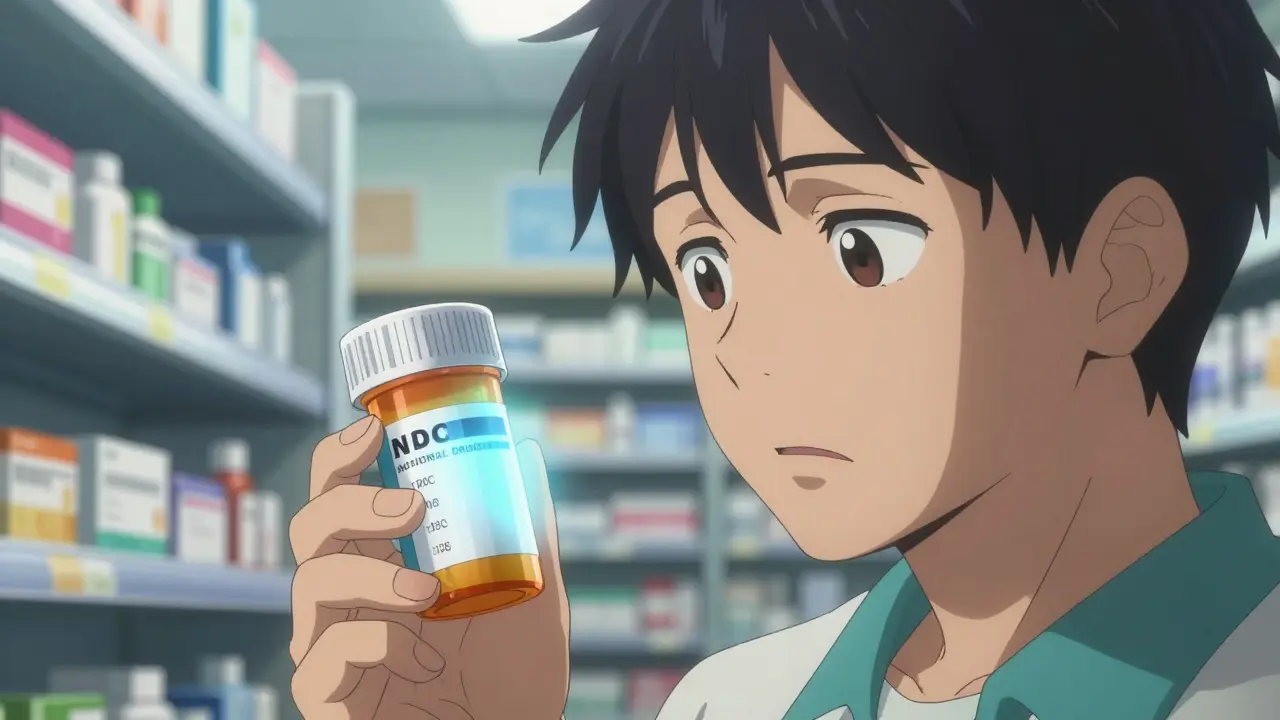
Imagine picking up a prescription for blood pressure medication, only to realize later that you were given the wrong strength. It’s a terrifying thought, but it happens more often than we’d like to admit. The difference between a safe dose and a dangerous one is often hidden in a string of numbers on the bottle label. This isn’t just about reading labels; it’s about understanding the National Drug Code (NDC), which is a unique identifier assigned to every medication product in the United States. Knowing how to decode this number can be the difference between a correct treatment and a preventable error.
You don’t need a degree in pharmacology to understand these codes. In fact, mastering the basics of NDC verification is one of the most practical skills you can develop for your own health safety. Whether you are a patient checking your meds or a healthcare worker double-checking an order, this guide will walk you through exactly what those digits mean and how to use them to confirm you have the right drug.
What Is the NDC Number and Why Does It Matter?
The NDC is not just a random barcode. It is a standardized system created by the Food and Drug Administration (FDA) to track drugs from the manufacturer to the patient. Think of it as the social security number for medications. Every single finished drug product-whether it’s a prescription pill, an over-the-counter cream, or a liquid antibiotic-must have an NDC.
Why should you care? Because generic names can be confusing. Two different manufacturers might make the same drug, but with slightly different inactive ingredients or packaging sizes. The NDC removes the guesswork. It tells you exactly who made it, what it is, and how much is in the package. According to data from the FDA’s National Drug Code Directory, there are over 150,000 active listings. Without this code, tracking recalls or verifying authenticity would be nearly impossible.
Breaking Down the Three Segments of an NDC
An NDC number looks like a jumble of digits, usually separated by hyphens. But if you know where to look, it tells a clear story. The code is divided into three distinct segments. Let’s break them down using a real-world example.
1. The Labeler Code (Who Made It?)
The first segment identifies the company responsible for the drug. This could be the original manufacturer, a repacker, or a distributor. The FDA assigns these codes. For instance, if the first part of the code is 00002, that points to a specific pharmaceutical company. There are roughly 3,500 active labeler codes in circulation. If you’re expecting a brand-name drug but see a labeler code for a generic manufacturer, that’s a red flag worth investigating.
2. The Product Code (What Is It?)
This is the most critical part for patient safety. The second segment specifies the active ingredient, the strength, and the dosage form. So, a 10mg tablet and a 20mg capsule of the same drug will have different product codes. In our example, if the middle segment is 4465, it might correspond to a specific strength and type of capsule. If the prescription calls for 20mg but the product code matches a 10mg formulation, you’ve caught a major error before it reaches your body.
3. The Package Code (How Much Is There?)
The final segment tells you about the commercial packaging. It indicates the size and type of container. A code ending in 01 might mean a bottle of 100 capsules, while 02 could indicate a blister pack of 30. This helps ensure you’re getting the quantity you paid for and prescribed.

The Confusing Part: Different Formats
Here is where things get tricky. You might notice that NDCs don’t always look the same length. They can appear in three different formats:
- 4-4-2 format: Four digits for the labeler, four for the product, two for the package.
- 5-3-2 format: Five digits for the labeler, three for the product, two for the package.
- 5-4-1 format: Five digits for the labeler, four for the product, one for the package.
All three are valid 10-digit codes found on physical bottles. However, when it comes time to bill insurance or enter the drug into a hospital system, the standard changes. Most billing systems require an 11-digit format known as 5-4-2. This means you often have to add zeros to the beginning of a segment to stretch it to the required length. For example, a 5-3-2 code becomes 5-4-2 by adding a zero to the start of the product code. It’s a technical detail that trips up many new pharmacy technicians, but it’s crucial for accurate record-keeping.
| Format Type | Labeler Digits | Product Digits | Package Digits | Total Digits |
|---|---|---|---|---|
| 4-4-2 | 4 | 4 | 2 | 10 |
| 5-3-2 | 5 | 3 | 2 | 10 |
| 5-4-1 | 5 | 4 | 1 | 10 |
| Billing Standard (5-4-2) | 5 | 4 | 2 | 11 |
Step-by-Step: How to Verify Your Medication
Now that you know the anatomy of the code, here is how to use it. Follow these steps every time you pick up a new prescription or check inventory.
- Locate the NDC: Find the number on the bottle, vial, or box. It is usually printed near the barcode. Look for the sequence of numbers separated by hyphens.
- Identify the Format: Count the digits between the hyphens. Is it 4-4-2? 5-3-2? Write this down or keep it in mind.
- Check the Labeler: Does the first segment match the manufacturer listed on your prescription slip? If your doctor prescribed Brand X, but the labeler code belongs to Generic Maker Y, ask questions.
- Verify the Product Code: This is the safety check. Cross-reference the middle segment with the expected strength and form. If you need a 500mg tablet, ensure the product code corresponds to that specific specification.
- Confirm the Package Size: Check the last segment. Did you pay for 30 pills but receive a code indicating a bottle of 100? Or vice versa?
- Use a Lookup Tool: Don’t rely on memory. Use the FDA’s free National Drug Code Directory online or via mobile app. Enter the full NDC to see the official description. This confirms the drug name, strength, and manufacturer instantly.

Common Pitfalls and How to Avoid Them
Even experienced professionals make mistakes. Here are the most common errors and how to sidestep them.
Mixing Up Product and Package Codes
Because the segments change length depending on the format, it’s easy to misread where one segment ends and the next begins. A digit meant for the product code might be mistaken for the package code. Always count from the left. The labeler is always first. The package is always last. The product is in the middle.
Ignoring Inactive Ingredients
The NDC identifies the drug product, but it doesn’t list every inactive ingredient (like fillers or dyes). If you have allergies to lactose or gluten, checking the NDC alone isn’t enough. You must also read the detailed ingredient list on the packaging or consult your pharmacist.
Dealing with Discontinued Codes
Manufacturers sometimes discontinue old NDCs and issue new ones for the exact same drug, often due to packaging changes. If your lookup tool says “inactive,” don’t panic. Check if there is a newer NDC for the same manufacturer and product. Approximately 8,500 codes were deactivated in the FDA Directory in late 2023 alone.
The Future of NDC Verification
The system is evolving. The FDA has announced plans to standardize all NDCs to a 12-digit format by 2025. This move aims to eliminate the confusion caused by the varying 10-digit formats. The new standard will expand the labeler code to six digits, providing more room for growth and reducing interpretation errors. While this transition may cause short-term headaches for pharmacies updating their software, it promises long-term gains in accuracy and supply chain security.
For now, however, the current rules apply. Understanding the existing 10-digit structure is essential. As technology advances, tools like electronic tracing under the Drug Supply Chain Security Act (DSCSA) are making it easier to track drugs from factory to shelf. But the human element remains vital. No algorithm can replace the careful eye of a person verifying the code against the prescription.
Where can I find the NDC number on my medication?
The NDC is typically printed on the label of the medication container, such as a bottle, vial, or tube. It is often located near the barcode and appears as a series of numbers separated by hyphens (e.g., 12345-6789-01). If you cannot find it, check the outer carton or box, as it is also required there.
Why does my NDC have 10 digits but the pharmacy system uses 11?
Physical labels use a 10-digit format, but billing and insurance systems require an 11-digit format (5-4-2). To convert, zeros are added to the beginning of the segment that is too short. For example, a 5-3-2 format becomes 5-4-2 by adding a zero to the product code. This ensures consistency across electronic health records and claims processing.
Can I use the NDC to check for drug interactions?
No, the NDC identifies the specific product (manufacturer, strength, package) but does not provide clinical data on interactions. To check for interactions, use the drug name (generic or brand) along with other medications you are taking, via a reliable drug interaction checker or by consulting your pharmacist.
What if the NDC on my bottle doesn't match the prescription?
Do not take the medication. Contact your pharmacist immediately. A mismatch could indicate a dispensing error, such as the wrong strength or manufacturer. Pharmacists can verify the intended drug and correct the mistake before any harm occurs.
Is the NDC the same worldwide?
No, the NDC is specific to the United States. Other countries use different identification systems, such as the GTIN (Global Trade Item Number) or national drug codes managed by local health authorities. If you are traveling abroad, the NDC may not be recognized by local pharmacies.


Brett Webster
June 11, 2026 AT 09:17