
Every year, millions of people take prescription drugs safely. But for some, a medication can cause unexpected, even dangerous side effects. If you or someone you know has had a bad reaction to a drug, reporting it to the FDA isn’t just helpful-it’s critical. These reports help the agency spot hidden dangers, update warnings, and sometimes pull dangerous drugs off the market. The system isn’t perfect, but it only works if people speak up.
What Counts as an Adverse Event?
An adverse event is any harmful or unintended reaction that happens after taking a medication. It doesn’t have to be proven to be caused by the drug. Even if you’re not sure, if it happened after you started taking it, it counts. This includes:- Severe allergic reactions like anaphylaxis
- Liver damage, kidney failure, or heart rhythm problems
- Unusual bleeding, seizures, or mental health changes
- Birth defects in babies whose mothers took the drug during pregnancy
- Drug interactions that weren’t listed on the label
- Even death-if you think a medication played a role
The FDA defines these events broadly because they’re looking for patterns. One report might seem minor. But if 50 other people report the same issue, it becomes a red flag.
Who Should Report?
Anyone can report. You don’t need to be a doctor. If you’re a patient, a family member, a caregiver, or a healthcare provider, your report matters.Pharmaceutical companies are legally required to report serious adverse events within 15 days. But they don’t see everything. Many reactions happen outside clinical trials. That’s where you come in.
Healthcare professionals are encouraged to report, especially for serious cases. In fact, reports from doctors include more clinical details-lab results, dosages, medical history-which makes them far more useful. Studies show reports from providers are 73% more likely to trigger a safety review than consumer reports alone.
How to Report: Step-by-Step for Patients and Families
If you’re a patient or family member, here’s how to do it right:- Write down the details while they’re fresh. Include the name of the drug (brand and generic), dosage, how long you took it, and when the reaction started. If you stopped the drug, note when.
- Collect supporting documents. Take photos of the prescription label, pill bottle, and packaging. If you have lab results, ER reports, or hospital discharge summaries, keep them handy.
- Go to the FDA’s MedWatch website. Visit www.fda.gov/medwatch. Click on "Report a Problem." You’ll see Form 3500.
- Fill out the form online. You’ll need:
- Patient’s age and gender
- Drug name and dose
- Exact description of the event (what happened, when, how bad)
- Outcome (did the person recover? Was there hospitalization?)
- Your contact info (optional but helpful)
There’s a 3,000-character limit for the description. Be specific. Don’t just say "I felt sick." Say: "After taking 20mg of lisinopril for 10 days, I developed swelling in my lips and throat within 2 hours of the second dose. Went to ER. Diagnosed with angioedema. Treated with epinephrine. Symptoms resolved in 4 hours."
You can save your progress for up to three days using a unique Report ID. If the system times out (a common complaint), just log back in and pick up where you left off.
Upload photos of the medication and any medical records if prompted. This isn’t required, but it increases the report’s value.
How to Report: For Healthcare Professionals
If you’re a doctor, nurse, or pharmacist, your report carries more weight. Use the same MedWatch Form 3500, but add these key details:- Medical history and comorbidities
- Lab values (e.g., ALT, creatinine, INR)
- Timing of drug administration versus symptom onset
- Dechallenge and rechallenge data (if applicable)
- Any other medications the patient was taking
Reports with this level of detail are 68% more likely to trigger a safety signal investigation. If the event was life-threatening, make sure to mark it as "serious." The FDA prioritizes those.
Some professionals use EHR-integrated reporting tools, but the MedWatch form remains the official channel. If your hospital has a safety reporting system, use it-but still submit to the FDA separately. Hospitals don’t always forward reports.
What Happens After You Submit?
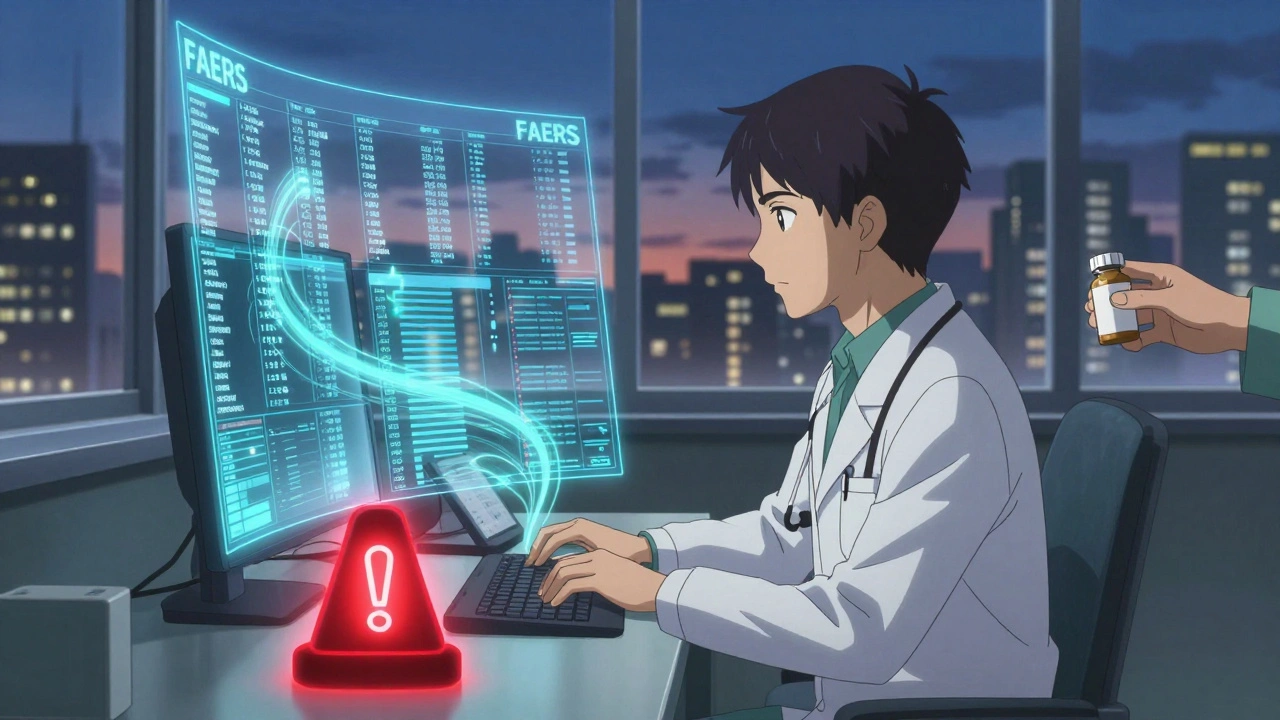
You won’t get a confirmation email. There’s no automated reply. That’s frustrating, but it’s normal. The FDA doesn’t have the staff to respond to every report.Reports go into the FDA Adverse Event Reporting System (FAERS), a database with over 30 million entries. Trained analysts use statistical tools to find patterns. If a drug shows up repeatedly with the same side effect, it gets flagged.
For example, in 2018, dozens of reports of aortic aneurysms linked to fluoroquinolone antibiotics led to a "Black Box" warning-the strongest safety alert the FDA can issue.
Some reporters do get contacted. Consumer advocate Jane Doe reported her daughter’s anaphylaxis to penicillin and received a follow-up call from an FDA safety evaluator within 10 days asking for lab results. That kind of follow-up is rare, but it happens.
What the FDA Can’t Do
It’s important to understand the limits. The FDA doesn’t:- Confirm that a drug caused the reaction
- Provide medical advice or treatment
- Investigate individual cases
- Remove drugs immediately
They only detect patterns. A single report won’t change anything. But 500 reports? That’s how warnings get added, dosages get restricted, or drugs get pulled.
Also, underreporting is huge. Experts estimate only 1% to 10% of all adverse events are reported. That means for every serious reaction you hear about, dozens more go unnoticed.
Common Problems and How to Avoid Them
Many people give up because the system feels broken. Here’s what goes wrong-and how to fix it:- System times out. Save your report as a draft. Use a stable internet connection. Don’t wait until the last minute.
- Don’t know if it’s "expected." If you’re unsure, report it anyway. The FDA assumes all spontaneous reports are potentially related. You don’t need to be an expert.
- Too much detail. Don’t leave out key facts. Include timing, dosage, and outcome. The more specific, the better.
- Thinking it’s "not serious enough." Even if the person recovered, if it was scary or required medical care, report it. The FDA needs to know how often these events happen.
One physician on Reddit spent 45 minutes filling out a report for a Stevens-Johnson syndrome case-only to have the system crash. He had to start over. Don’t let that stop you. Just save your work.
Why This Matters
The FDA doesn’t test drugs forever. Clinical trials involve thousands of people. Real-world use involves millions. Side effects that show up in 1 in 10,000 patients won’t be caught until the drug is out there.That’s why your report matters. In 2022, FAERS processed 2 million reports. Of those, 1.3 million came from healthcare providers, 400,000 from consumers, and 500,000 from manufacturers. The consumer reports? They’re the ones that catch things companies miss.
When the FDA added a warning about heart valve damage linked to fenfluramine, it was because of patient reports-not clinical trials. When they updated labels for metformin to warn about vitamin B12 deficiency, it was because of long-term patient reports.
Without you, these signals stay hidden.
What’s Changing in 2025?
The FDA is upgrading its systems. In 2024, they started using AI to scan reports for patterns. Natural language processing can now pull key details from free-text descriptions-something that used to take weeks for a human to do.They’re also working with electronic health record systems to automatically pull adverse event data from hospitals and clinics. By 2025, this could increase reporting rates by 300%.
But until then, the system still relies on you. The FDA has only one safety reviewer for every 18,000 reports. That’s why your detailed, well-written report makes all the difference.
Final Tips
- Report early. Don’t wait months or years.
- Be specific. Use dates, names, doses, symptoms.
- Include photos of the medication.
- Even if the person recovered, report it.
- If you’re unsure whether it’s related, report it anyway.
- Encourage others to report. One person’s story can save thousands.
Reporting an adverse event isn’t just about your experience. It’s about protecting the next person who takes that same pill.
Do I need to be a doctor to report an adverse event to the FDA?
No. Anyone can report-patients, family members, caregivers, or consumers. You don’t need medical training. The FDA encourages reports from all sources, especially from people who experience side effects firsthand. While healthcare professionals provide more detailed reports, patient reports are essential for catching unexpected reactions.
How long does it take for the FDA to act on a report?
There’s no set timeline. The FDA receives over 2 million reports a year. Each report goes into a database and is analyzed for patterns. A single report won’t trigger action. But if dozens or hundreds report the same issue, the FDA uses statistical tools to flag it. Once a safety signal is detected, it can take weeks to months for the agency to review data and decide on actions like labeling changes or warnings.
What if I don’t know if the drug caused the reaction?
Report it anyway. The FDA assumes all spontaneously reported adverse events are potentially related to the drug. You don’t need to prove causation. If the reaction happened after taking the medication, it’s worth reporting. The agency’s job is to find patterns-not to determine individual causes.
Can I report an adverse event from a drug I took years ago?
Yes. The FDA accepts reports for events that happened at any time, even years after taking the drug. However, reports are most useful when they include accurate details about timing, dosage, and symptoms. The sooner you report after the event, the more reliable the information. But even old reports can help identify long-term risks.
Is my report confidential?
Yes. The FDA protects the privacy of reporters and patients. Personal identifying information is removed before reports are made public. The FAERS database is available to researchers and the public, but names, addresses, and contact details are not included. You can choose to provide your contact info if you want to be reached for follow-up, but it’s optional.
What if the FDA doesn’t respond to my report?
That’s normal. The FDA doesn’t respond to individual reports due to the volume they receive. Your report is added to a database of millions. Action only happens when multiple reports point to the same issue. Don’t take silence as inaction. Your report is still contributing to public safety-even if you never hear back.
Can I report a side effect from an over-the-counter (OTC) medication?
Yes. The FDA’s MedWatch system accepts reports for all medications, including over-the-counter drugs, supplements, and vaccines. Even if a product doesn’t require a prescription, it can still cause serious reactions. Reporting OTC side effects helps the FDA update labels and warn the public.
How do I know if my report was received?
The FDA does not send confirmation emails or receipts for MedWatch reports. Once you submit the form successfully, you’ll see a message saying your report was received. Save the Report ID that appears on screen-it’s your only proof of submission. If the system times out, log back in and check your saved drafts.
Next Steps
If you’ve experienced a side effect, don’t wait. Fill out the form today. If you’re helping someone else, help them document it. If you’re a healthcare provider, make reporting part of your routine. Every report adds to the puzzle. And together, they protect millions.Medication safety isn’t just the job of regulators. It’s a shared responsibility. Your voice matters.


Andrea Beilstein
December 11, 2025 AT 00:48