
When you pick up your prescription, you might notice a surprise: the pill looks different. Maybe it’s a different color, shape, or has a weird logo on it. You might even feel a little worried-is this the same medicine as before? You’re not alone. Most people assume brand-name drugs are stronger, safer, or more effective. But here’s the truth: in nearly every case, the generic version works just as well. The real difference? The price. Generics can cost 80-85% less. So why do so many patients still hesitate? It’s not about science. It’s about communication.
What Exactly Is a Generic Drug?
A generic drug isn’t a copycat. It’s a legal, FDA-approved version of a brand-name medication. The FDA requires generics to have the same active ingredient, strength, dosage form, and route of administration as the original. That means if your brand-name pill contains 10 mg of lisinopril, the generic has exactly 10 mg of lisinopril. No more, no less. The FDA also demands that generics be bioequivalent. That’s a fancy way of saying your body absorbs the medicine at the same rate and to the same extent as the brand-name version. Studies show generics vary by only 3.5% on average in how quickly they enter your bloodstream-well within the FDA’s 20% safety margin. So if the brand works for you, the generic will too. The only differences? Appearance and inactive ingredients. Because of trademark laws, generics can’t look identical to the brand. That’s why your blue oval pill became a white oval pill. Inactive ingredients-like dyes, fillers, or flavorings-can change too. These don’t affect how the drug works, but they can cause rare allergic reactions in sensitive people. That’s why it’s important to tell your doctor if you’ve ever had a reaction to a pill’s color or coating.Why Do Brand-Name Drugs Cost So Much More?
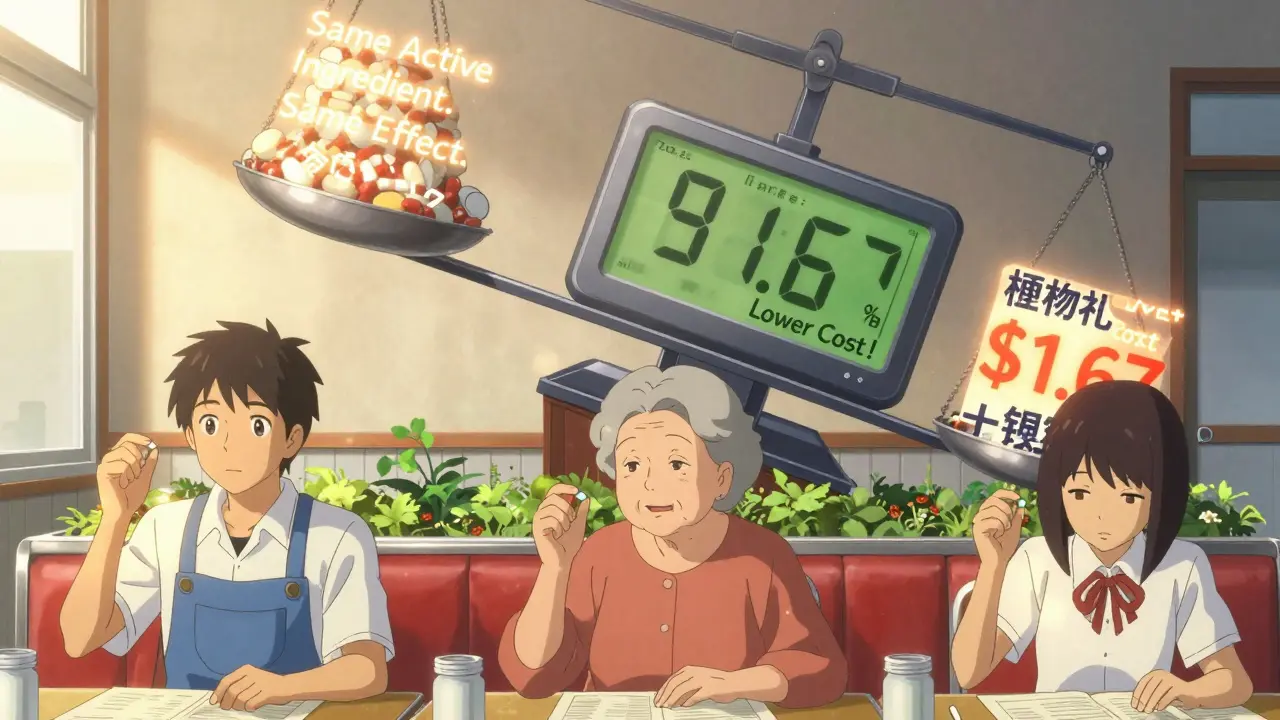
Brand-name drugs start with a patent. That gives the original company a monopoly for up to 20 years. During that time, they recover the cost of research, clinical trials, and marketing. That’s why a 30-day supply of Lipitor might cost $300. Once the patent expires, other companies can make the same drug. They don’t have to repeat expensive trials. They just prove their version works the same way. That’s why the generic version of Lipitor might cost $12. The savings aren’t small. Between 2007 and 2016, generic drugs saved the U.S. healthcare system over $1.67 trillion. Today, nine out of every 10 prescriptions filled are for generics. But here’s the twist: even though generics make up 90% of prescriptions, they account for only about 25% of total drug spending. Brand-name drugs, despite being prescribed far less often, still drive 75% of the cost. That’s why your doctor might suggest switching. Not because they’re cutting corners-but because they want you to take your medicine without skipping doses because of the price.When Might You Need the Brand-Name Version?
Most of the time, generics are fine. But there are exceptions. Some medications have a narrow therapeutic index. That means the difference between a helpful dose and a harmful one is very small. Examples include warfarin (a blood thinner), levothyroxine (for thyroid), and certain seizure medications like phenytoin. In these cases, even tiny changes in how your body absorbs the drug can matter. Some patients report feeling different after switching between generic manufacturers. A 2016 study in the New England Journal of Medicine noted minor fluctuations in blood levels when switching warfarin generics. But here’s the key: those changes were small, and most patients didn’t have worse outcomes. The FDA still says approved generics are safe for these drugs. If you’ve been stable on a brand-name version for years, and switching causes you anxiety or physical symptoms, tell your doctor. They can write “dispense as written” on your prescription. That tells the pharmacy not to substitute. But don’t assume you need the brand unless you’ve actually had a problem.
How to Start the Conversation With Your Doctor
You don’t need to wait for your doctor to bring it up. Be direct. Here’s what to say:- “Is there a generic version of this medication?”
- “Will the generic work just as well for my condition?”
- “Are there any reasons I should stay on the brand-name version?”
- “I’m having trouble affording this-can we switch to something cheaper?”
What to Do If You Notice a Difference After Switching
Sometimes, people feel different after switching. Maybe you’re more tired. Maybe your headaches came back. It’s natural to blame the generic. But before you assume the medicine changed, consider this: the nocebo effect. The nocebo effect is the opposite of the placebo effect. Instead of feeling better because you believe a treatment works, you feel worse because you believe it won’t. A Kaiser Permanente study found that 17% of patients worried when they got a generic pill. But after a pharmacist explained it was the same drug, 92% were satisfied. If you truly feel worse:- Track your symptoms. Write down when they started, how bad they are, and what else changed (sleep, diet, stress).
- Check with your pharmacist. They can confirm the generic was approved by the FDA and explain any ingredient changes.
- Give it time. Your body may need a few weeks to adjust.
- If symptoms persist, talk to your doctor. They can switch you back-or try a different generic brand.
What the Law Says About Generic Substitution
In most states, pharmacies are required by law to substitute a generic unless your doctor says “do not substitute” or “dispense as written.” That means if your prescription says “Lisinopril 10 mg,” and there’s a generic, the pharmacy must give you the generic unless told otherwise. That’s why you might get a different pill every time you refill. It’s not random. It’s legal. If you don’t like that, ask your doctor to write “dispense as written” on your prescription. Or, better yet, ask them to prescribe the generic by name from the start.What to Do If You Can’t Afford Your Medication
If your brand-name drug is too expensive, you have options:- Ask your doctor for a generic.
- Use apps like GoodRx or SingleCare to compare prices at local pharmacies. You can often save $45 or more per prescription.
- Ask about patient assistance programs. Many drugmakers offer free or low-cost meds to people with low income.
- Call your pharmacy. Sometimes they’ll match online prices or have a discount program.
Final Thoughts: Trust the Science, Not the Brand
Your doctor isn’t trying to sell you something expensive. They want you to get better. And the best way to do that is to take your medicine consistently. Generics make that possible. The FDA, Harvard Medical School, the American Pharmacists Association, and countless studies all agree: generics are safe, effective, and identical in performance to brand-name drugs. The only real difference is the price tag. So next time you get a prescription, ask: “Is there a generic?” Don’t assume the brand is better. Ask for proof. And if your doctor says no, ask why. Your health-and your wallet-will thank you.Are generic medications as safe as brand-name drugs?
Yes. The FDA requires generic drugs to meet the same strict standards for safety, quality, strength, purity, and effectiveness as brand-name drugs. They use the same active ingredients and must prove they work the same way in the body. Millions of people take generics every day without issues.
Why do generic pills look different from brand-name ones?
U.S. trademark laws prevent generic drugs from looking identical to brand-name versions. So manufacturers change the color, shape, size, or markings. But these changes only affect appearance-not how the medicine works. The active ingredient is the same.
Can switching to a generic cause side effects?
Rarely. Most side effects are caused by the active ingredient, which doesn’t change between generic and brand. But some people react to inactive ingredients like dyes or fillers. If you notice new symptoms after switching, talk to your doctor or pharmacist. It could be a harmless reaction-or a sign you need a different version.
Are there any drugs where generics don’t work as well?
For most drugs, generics work just as well. But for a small group called narrow therapeutic index drugs-like warfarin, levothyroxine, or certain seizure meds-some patients report feeling different after switching. Even so, studies show most people do fine. If you’re on one of these drugs and feel unstable after switching, tell your doctor. They can decide if staying on the brand is necessary.
Can I ask my doctor to prescribe the generic version directly?
Absolutely. You can ask your doctor to write the prescription using the generic name instead of the brand name. For example, ask for “lisinopril” instead of “Zestril.” This ensures the pharmacy fills it with the generic unless you specifically request otherwise.
Why do some doctors still prescribe brand-name drugs?
Some doctors prescribe brand-name drugs out of habit, lack of awareness about generics, or because they’ve had a patient report issues after switching. Others may be influenced by pharmaceutical reps. But the data is clear: generics are just as effective. If your doctor recommends the brand, ask why-and whether cost is a factor you can discuss together.
How do I know if my pharmacy is giving me the right generic?
All FDA-approved generics are safe. But if you notice a sudden change in how you feel after switching to a different generic brand, it could be due to inactive ingredients. Ask your pharmacist to confirm the manufacturer and check if it’s the same one you’ve used before. If you’re concerned, your doctor can request a specific generic brand.


Lauren Wall
January 22, 2026 AT 22:14