
Managing medications at home for older adults isn’t just about popping pills on time. It’s about avoiding dangerous interactions, preventing hospital trips, and keeping seniors safe and independent. When someone is taking five or more medications - which is common for seniors - mistakes happen. Missed doses, double dosing, confusing brand and generic names - these aren’t small errors. They lead to falls, hospitalizations, and even death. That’s where home health services for medication management come in. These aren’t just helpers showing up to hand out pills. They’re trained professionals who organize, verify, and monitor every medication to keep seniors out of the ER.
What Home Health Medication Management Actually Does
Home health nurses and aides don’t just remind someone to take their medicine. They do the heavy lifting behind the scenes. First, they create a complete, up-to-date list of every medication - not just the prescriptions, but also over-the-counter drugs, vitamins, and supplements. This list includes the brand name, generic name, dosage, why it’s prescribed, and any known side effects. This isn’t just paperwork. It’s a safety net.
Next, they check for problems. Are two different doctors prescribing the same drug? Is a blood thinner conflicting with a new painkiller? Are there medications on the list that no longer make sense for the patient’s current condition? These are the kinds of red flags that family members miss because they’re not trained to spot them. According to MedPro’s 2022 analysis, professional medication management reduces adverse drug events by 60% compared to self-management.
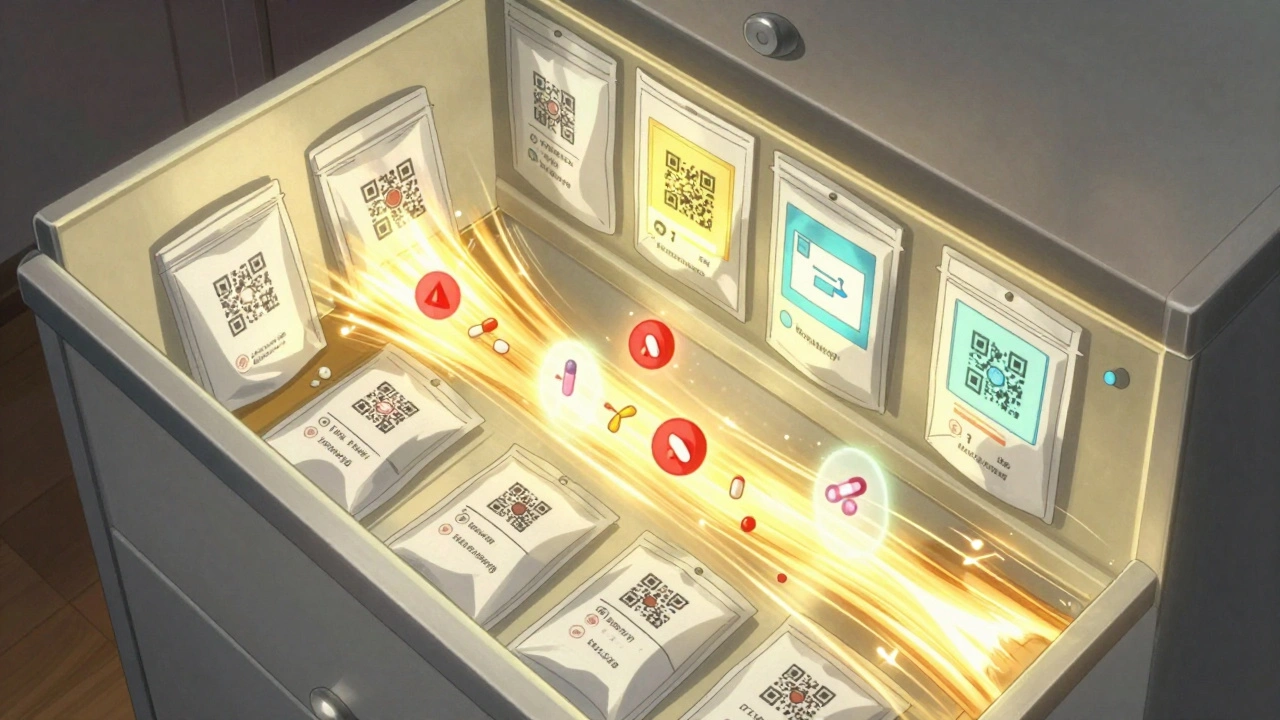
They also track when pills are taken. Some services use smart pill dispensers with alarms and locks. Others use daily pouches labeled with the time and day - like Phoenix Home Care’s WellPack system. These pouches cut missed doses by up to 45%, according to the Caregiver Action Network. For patients who need help swallowing pills or remembering complex schedules, this isn’t a convenience - it’s lifesaving.
Who Qualifies for These Services?
Not everyone can walk into a home health agency and get help right away. Medicare Part A covers home health medication management only if the patient meets specific criteria: they must be homebound, under a doctor’s care, and need skilled nursing or therapy services. That means if someone is still able to go to the grocery store or visit a neighbor, they might not qualify - even if they’re struggling with their meds.
That’s where private home care agencies come in. Companies like Clarest and Phoenix Home Care offer medication management as a standalone service. These aren’t covered by Medicare, but they’re often paid for through long-term care insurance, Veterans Affairs benefits, or out-of-pocket. Hourly rates range from $20 to $40, depending on location and complexity. For families paying for care, this can be a tough cost to swallow - but it’s far cheaper than a hospital stay.
Here’s the real math: Clarest’s 2023 study found that patients using professional medication management had 20% fewer 30-day hospital readmissions. Each avoided hospitalization saves about $1,200 in avoidable costs per month. That means the $30/hour service pays for itself in just a few visits.
How It Works: A Step-by-Step Process
Getting started is simpler than most families think. Here’s how it usually goes:
- Assessment: A nurse visits the home and reviews every medication the patient is taking. They talk to the patient, check the medicine cabinet, and ask the family what’s been going wrong. Did someone forget to refill a prescription? Did a doctor change a dose without telling anyone?
- Reconciliation: The nurse compares the home list with what’s in the pharmacy and hospital records. They look for duplicates, outdated prescriptions, or drugs that shouldn’t be taken together. The American Geriatrics Society recommends using the Beers Criteria to flag medications that are risky for older adults.
- Organization: The patient gets a system that works for them. This could be a weekly pill organizer, daily pouches, a smartphone app with alarms, or even a simple printed chart with big text. The goal is to make it impossible to mess up.
- Training: The nurse doesn’t just set up the system - they teach the patient and caregiver how to use it. They use the “teach-back” method: “Can you show me how you’ll take your morning pills?” If the patient gets it right, they move on. If not, they retrain.
- Follow-up: The nurse returns regularly - weekly, biweekly, or monthly - to check that everything’s still working. They update the list if a new drug is added or an old one is stopped. They also watch for side effects like dizziness, confusion, or loss of appetite.
According to Phoenix Home Care’s 2023 best practices, this four-step process - review, verify, cross-check, confirm - reduces medication errors by over 70% in their client base.
Technology That Makes a Difference
Technology isn’t replacing nurses - it’s helping them do their jobs better. Many agencies now use apps that send text reminders or voice alerts. Some have biometric verification: the patient scans their fingerprint or face before the pill dispenser opens. This prevents someone else from taking the meds by accident.
Phoenix Home Care added QR codes to their WellPack pouches in August 2023. Scan the code with a phone, and you get a short video in 17 languages showing how to take that pill. For non-English speakers, this is huge. MedPro’s data shows that instructions written in the patient’s preferred language reduce errors by nearly half.
Even simple tools help. A 2023 CritiCare study found that using meal times - breakfast, lunch, dinner - as triggers for taking meds improved adherence by 28%. Setting a phone alarm for a pill that needs to be taken at 2 p.m. works better than trying to remember it on your own.
What Doesn’t Work - And Why
Not all home health services are created equal. Some agencies still rely on paper lists that get lost or outdated. Others skip the reconciliation step entirely. MedPro’s analysis found that only 65% of agencies consistently do full medication reviews during care transitions - even though CMS requires it.
Another problem? Scheduling. Some medications need to be taken on an empty stomach. Others must be spaced exactly 12 hours apart. But if the nurse only comes once a day, and the patient needs a pill at 7 a.m. and 11 p.m., it’s impossible to manage without help. That’s why families need to ask: “Will you come at the exact times the meds are due?”
Also, home health services often struggle with psychiatric meds. Drugs for depression, anxiety, or dementia require frequent dose changes and close monitoring. Most agencies aren’t trained for this level of complexity. If your loved one is on these kinds of meds, you may need a specialist - or a psychiatrist who visits the home.
Real Stories: What Families Say
Mary K. from Ohio used Phoenix Home Care’s WellPack system for her 82-year-old mother. “She was missing 30% of her doses,” Mary says. “Within two weeks, it dropped to less than 5%. She stopped falling, her blood pressure stabilized - it was like a miracle.”
But not all stories are positive. John T. from Reddit shared that inconsistent communication between providers led to a dangerous interaction between blood thinners. His father ended up in the ER. “No one told us the new cardiologist changed his warfarin dose,” John wrote. “The home health nurse didn’t know either.”
That’s why communication is everything. The best home health services don’t just serve the patient - they connect with the doctor, the pharmacist, and the family. They send updates. They answer calls. They keep the whole team on the same page.
What to Look for When Choosing a Provider
Not every agency is reliable. Here’s what to ask:
- Do you do full medication reconciliation at every visit?
- Do you use digital tools or physical organizers? Can I see what they look like?
- How do you handle emergencies? Do you have a 24/7 contact number?
- Do you update the medication list in real time and share it with the doctor?
- Are your staff trained in geriatric meds and the Beers Criteria?
Also, check if they’re Medicare-certified. That means they meet federal standards for safety and documentation. Even if you’re paying out of pocket, certification is a good sign.
The Bigger Picture: Why This Matters Now
The U.S. home healthcare market is growing fast - projected to hit $150 billion by 2027. Why? Because the population is aging. AARP reports that 62% of adults over 85 now use home health services for medication management, compared to just 28% of those aged 65-74. As more people live longer with multiple chronic conditions, the need for expert help is only going up.
And it’s not just about safety - it’s about money. CMS now ties reimbursement to medication adherence. Agencies that fail to keep patients on track face up to 8% cuts in payments. That means they’re now more motivated than ever to get it right.
But there’s a catch: a 28% vacancy rate for home health nurses in 2023, according to the National Association for Home Care & Hospice. That means even if you find a good agency, they might be stretched thin. Ask how often their staff visits, and if they’re using technology to fill gaps.
Final Advice: Don’t Wait for a Crisis
Most families wait until someone has a bad reaction, falls, or ends up in the hospital before they call for help. That’s too late. The best time to start home health medication management is when the first new pill is added to the regimen - not after the third.
Start by making a list. Write down every pill, every vitamin, every cream. Bring it to the next doctor’s appointment. Ask: “Are all of these still needed?” Then call a home health agency. Even one visit can uncover hidden risks. And if your loved one is taking five or more meds? Don’t gamble with their health. Professional help isn’t a luxury - it’s the smartest thing you can do.
Can home health services help with insulin or injections?
Yes. Home health nurses are trained to administer injections, including insulin, blood thinners, and antibiotics. They’ll show you or your caregiver how to do it safely, check for proper storage, and monitor for side effects like low blood sugar or bruising. Many agencies use insulin pens with built-in dose tracking to ensure accuracy.
What if my loved one refuses to take their meds?
Refusal is common, especially with dementia or depression. Home health staff are trained to handle this. They don’t force pills - they figure out why the person is resisting. Is it because of side effects? Confusion? Fear? They’ll adjust the schedule, change the form (like switching from pills to liquid), or work with the doctor to find alternatives. Communication and patience are key.
Do I need a doctor’s order to get home health medication management?
For Medicare-covered services, yes - a doctor must certify that the patient is homebound and needs skilled care. For private pay services, no. You can call a home care agency directly and arrange help without a referral. Always check what your insurance covers before signing up.
How often should medication lists be updated?
Medication lists should be reviewed at every doctor’s visit, after any hospital stay, and whenever a new drug is added or stopped. Home health agencies are required by CMS to update the list within 24 hours of any change. Families should also keep a copy and bring it to every appointment - even if the doctor says they have it.
Can home health services help with over-the-counter meds and supplements?
Absolutely. Many seniors take aspirin, calcium, fish oil, or herbal remedies without telling their doctor. These can interact dangerously with prescriptions. Home health professionals include all OTCs and supplements in their medication review. They’ll flag risks like St. John’s Wort interfering with blood pressure meds or too much vitamin K affecting warfarin.


Ada Maklagina
December 4, 2025 AT 19:39