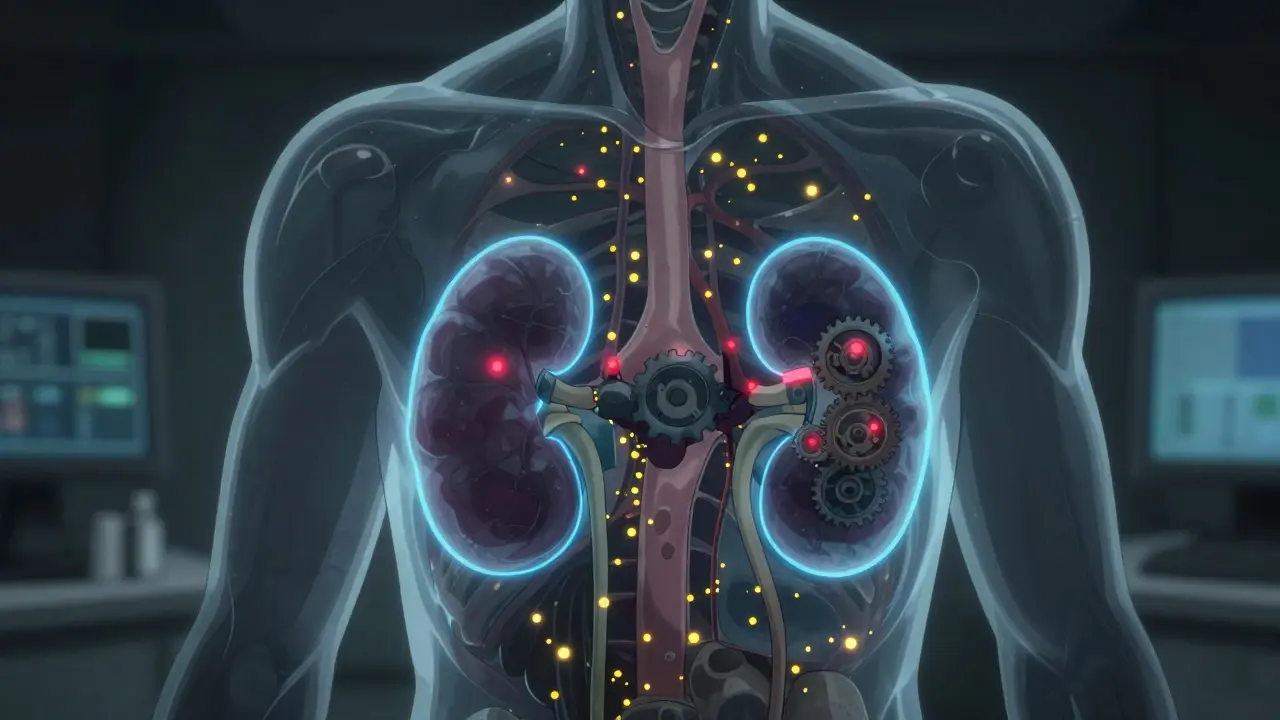
Hyperkalemia is a dangerous condition where potassium levels in the blood rise too high, posing a severe risk to heart rhythm and life. For people living with Chronic Kidney Disease (CKD), this isn't just a lab number-it's a daily balancing act. Your kidneys are supposed to filter out excess potassium, but when they slow down, that mineral builds up. This article breaks down exactly how to manage those levels through smart dietary choices and what happens when things go wrong in an emergency.
Why Potassium Matters in Chronic Kidney Disease
Potassium is an electrolyte your body needs for muscles and nerves to work correctly. In healthy individuals, the kidneys handle the job of keeping levels steady. But in CKD stages 3b through 5, that filtration system is compromised. About 40% to 50% of patients with advanced CKD face hyperkalemia, defined as serum potassium levels above 5.0 mmol/L. The real danger lies in the heart. High potassium can cause fatal arrhythmias without warning signs until it’s critical.
The complexity increases because many CKD patients take medications called RAAS inhibitors (like ACE inhibitors or ARBs). These drugs protect the heart and slow kidney damage but often raise potassium levels as a side effect. Doctors aim for a "sweet spot"-keeping potassium between 4.0 and 4.5 mmol/L-to balance protection against risks.
Dietary Limits: What You Can and Cannot Eat
Food is the first line of defense. If you have mild CKD (stages 1-3a), guidelines suggest a "prudent" approach rather than strict restriction. However, if you are in advanced stages (3b-5) not on dialysis, you typically need to limit intake to 2,000-3,000 mg (about 51-77 mmol) per day. That sounds manageable, but potassium hides in many common foods.
| Food Item | Potassium Content (per 100g) | Serving Note |
|---|---|---|
| Bananas | 422 mg | Average banana contains ~450 mg total |
| Potatoes | 421 mg | Leaching (soaking) can reduce content by up to 50% |
| Oranges | 181 mg | Juice concentrates potassium further |
| Spinach (cooked) | 466 mg | Small servings add up quickly |
| Avocado | 485 mg | Half an avocado exceeds daily safe limits for some |
You don’t have to eliminate these foods entirely if you use preparation tricks. Leaching potatoes-peeling them, cutting them into small pieces, soaking them in water for several hours, and then boiling them-can remove significant amounts of potassium. Always check labels on processed foods and salt substitutes, which are often pure potassium chloride.

Emergency Treatment: When Seconds Count
If your potassium hits ≥5.5 mmol/L with ECG changes, or ≥6.0 mmol/L regardless of symptoms, you need immediate medical intervention. This is not a "wait and see" situation. Emergency protocols follow a specific sequence designed to stabilize the heart before lowering the potassium itself.
- Membrane Stabilization: Intravenous calcium gluconate (10 mL of 10% solution over 2-5 minutes) is given first. It doesn't lower potassium but protects the heart muscle from electrical instability within 1-3 minutes.
- Shifting Potassium into Cells: Next, doctors administer insulin and glucose (10 units regular insulin with 50 mL 50% dextrose). This forces potassium out of the blood and into cells, working within 15-30 minutes. Watch for low blood sugar afterward.
- Acidosis Correction: If you also have metabolic acidosis, sodium bicarbonate may be used to help shift potassium, though its effect is less predictable than insulin.
These steps buy time. They do not remove potassium from the body permanently. To actually eliminate the excess, you might receive loop diuretics (if your kidneys still respond), potassium binders, or, in severe cases, dialysis.

Chronic Management: Modern Potassium Binders
For long-term control, older binders like sodium polystyrene sulfonate (SPS) are falling out of favor due to risks like colonic necrosis and sodium overload. Newer agents offer safer, more effective options that allow you to stay on life-saving RAAS inhibitors.
- Patiromer (Veltassa): Approved in 2015, this binder works in the gut to trap potassium. It takes 4-8 hours to lower levels significantly but is ideal for chronic maintenance. It is sodium-neutral, making it better for heart failure patients.
- Sodium Zirconium Cyclosilicate (SZC / Lokelma): Approved in 2018, SZC acts faster-reducing potassium within one hour. It is often the drug of choice for acute-on-chronic spikes. However, it absorbs sodium, which can worsen fluid retention in some patients.
Clinical data shows that using patiromer allows nearly 78% of patients to maintain maximum RAAS inhibitor doses, compared to only 38% without binders. This matters because stopping these drugs increases cardiovascular event risks by 28%. Cost remains a barrier; patiromer costs significantly more monthly than traditional SPS, but newer agents reduce hospital visits for hyperkalemia, potentially offsetting expenses over time.
Monitoring and Lifestyle Adjustments
Consistent monitoring is non-negotiable. Check your potassium levels within 1-2 weeks after starting or changing any medication affecting potassium. Once stable, testing every 3-6 months is standard. Watch for subtle symptoms like muscle weakness, fatigue, or palpitations. An ECG showing peaked T-waves at levels above 5.5 mmol/L is a red flag.
Adherence to diet and medication is tough. Only about 37% of patients consistently stick to low-potassium diets. Consider working with a renal dietitian who can provide personalized strategies, such as leaching techniques or alternative food swaps. Digital tools, including apps that scan barcodes for potassium content, are emerging to help track intake in real-time.
What is the target potassium level for CKD patients?
The optimal range is generally considered to be 4.0-4.5 mmol/L. Levels below 3.5 mmol/L carry their own risks, while levels above 5.0 mmol/L increase the likelihood of cardiac events and medication discontinuation.
Can I eat bananas if I have hyperkalemia?
Bananas are high in potassium (about 422 mg per 100g). In advanced CKD, you should likely avoid them or consume very small portions. Apples, berries, and grapes are lower-potassium alternatives.
How fast does Sodium Zirconium Cyclosilicate work?
SZC begins lowering potassium levels within one hour of ingestion. It is faster than patiromer, which takes 4-8 hours to show significant effects, making SZC useful for quicker corrections.
Why are RAAS inhibitors stopped if potassium gets high?
RAAS inhibitors block hormones that regulate blood pressure and kidney function but also reduce potassium excretion. Historically, doctors stopped them to prevent dangerous hyperkalemia. Now, with potassium binders, doctors aim to keep patients on these protective drugs safely.
What are the symptoms of severe hyperkalemia?
Early signs include muscle weakness, tingling, nausea, and fatigue. Severe cases may present with irregular heartbeat (palpitations), chest pain, or shortness of breath. Often, there are no symptoms until an ECG reveals abnormal heart rhythms.


Rebekah Korak
May 1, 2026 AT 20:36