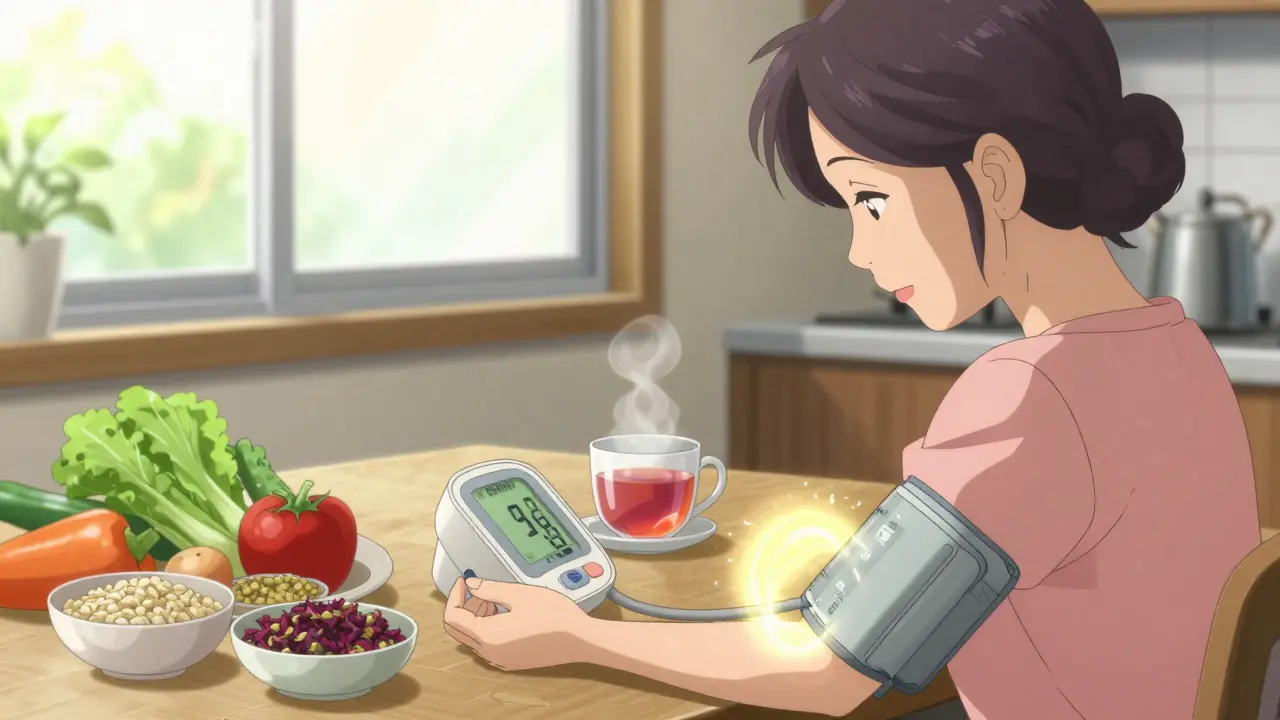
High blood pressure doesn’t announce itself with symptoms. It just creeps up-until it’s too late. By 2026, over 1.3 billion people worldwide are living with hypertension, and many don’t even know it. The good news? You don’t have to rely only on pills to bring it down. A growing body of science shows that natural strategies can work alongside medication to give you real control. But here’s the catch: they’re not magic. They take time, consistency, and smart planning.
What Counts as High Blood Pressure?
High blood pressure isn’t just one number. It’s two: systolic (top number) and diastolic (bottom). According to current guidelines, anything above 130/80 mm Hg is considered stage 1 hypertension. That’s not a fluke. That’s a warning. And if you’re sitting at 140/90 or higher, you’re in stage 2-where medication becomes harder to avoid.
But here’s what most people miss: lowering your blood pressure by just 5 mm Hg systolic cuts your stroke risk by 14%. That’s not a small win. It’s life-changing. And you don’t need to drop 30 points to get there. Even small, steady improvements add up.
Medications: The Fast Track, But Not the Only Track
Doctors reach for ACE inhibitors, ARBs, calcium channel blockers, or diuretics because they work fast. In 2 to 4 weeks, you’ll often see your numbers drop by 15 to 20 mm Hg. That’s powerful. But side effects? They’re real. Dizziness. Fatigue. Leg cramps. Some people feel like they’re trading one problem for another.
And here’s the truth: not everyone needs to start on meds. If you’re in stage 1, have no heart disease, and are willing to make changes, you might be able to delay or even avoid them-for a while. But don’t wait too long. Every month with untreated high blood pressure increases your risk of damage to your heart, kidneys, and brain.
Natural Strategies That Actually Work
Let’s cut through the noise. Not every herbal tea or supplement is backed by science. But some are. And they’re not just for “wellness.” They’re measurable.
- DASH diet: This isn’t a fad. It’s a proven system developed by the National Heart, Lung, and Blood Institute. Eat more vegetables, fruits, whole grains, lean proteins, and low-fat dairy. Cut back on processed foods, sugar, and saturated fat. Stick with it for 30 days, and you can drop 8 to 14 mm Hg systolic. That’s as good as some pills.
- Salt reduction: The average person eats 3,400 mg of sodium a day. The target? 1,500 mg. That’s not easy, but it’s doable. Skip the canned soups, deli meats, and frozen meals. Cook at home. Use herbs instead of salt. You’ll see a 5 to 6 mm Hg drop-no pill needed.
- Hibiscus tea: Brew 3 to 4 cups daily. A 2021 study found it lowered systolic pressure by 7.2 mm Hg in just 6 weeks. People on Reddit report similar results: “Went from 148 to 135 in six weeks.” It’s not a cure, but it’s a tool.
- Garlic supplements: Aged garlic extract at 600-1,200 mg daily can knock off 7 to 10 mm Hg. It’s not instant. It takes 4 to 8 weeks. But it’s one of the most consistent natural options.
- Coenzyme Q10: At 100-225 mg daily, this antioxidant can lower systolic pressure by 11 to 17 mm Hg. It’s not as strong as amlodipine, but it’s gentler. And it helps with energy-something many blood pressure meds drain.
- Magnesium: 368 mg daily (preferably glycinate) gives you a modest but real drop: 2 mm Hg systolic, 1.8 mm Hg diastolic. It also helps with muscle cramps and sleep.
- Exercise: 150 minutes a week of brisk walking, cycling, or swimming lowers systolic pressure by 5 to 8 mm Hg. You don’t need to run a marathon. Just move more, every day.
- Transcendental meditation: Sounds soft, but it’s backed by data. Two 20-minute sessions a day can drop systolic pressure by 4.7 to 5.5 mm Hg. It reduces stress hormones. That’s physiology, not placebo.
What Doesn’t Work (Or Can Hurt You)
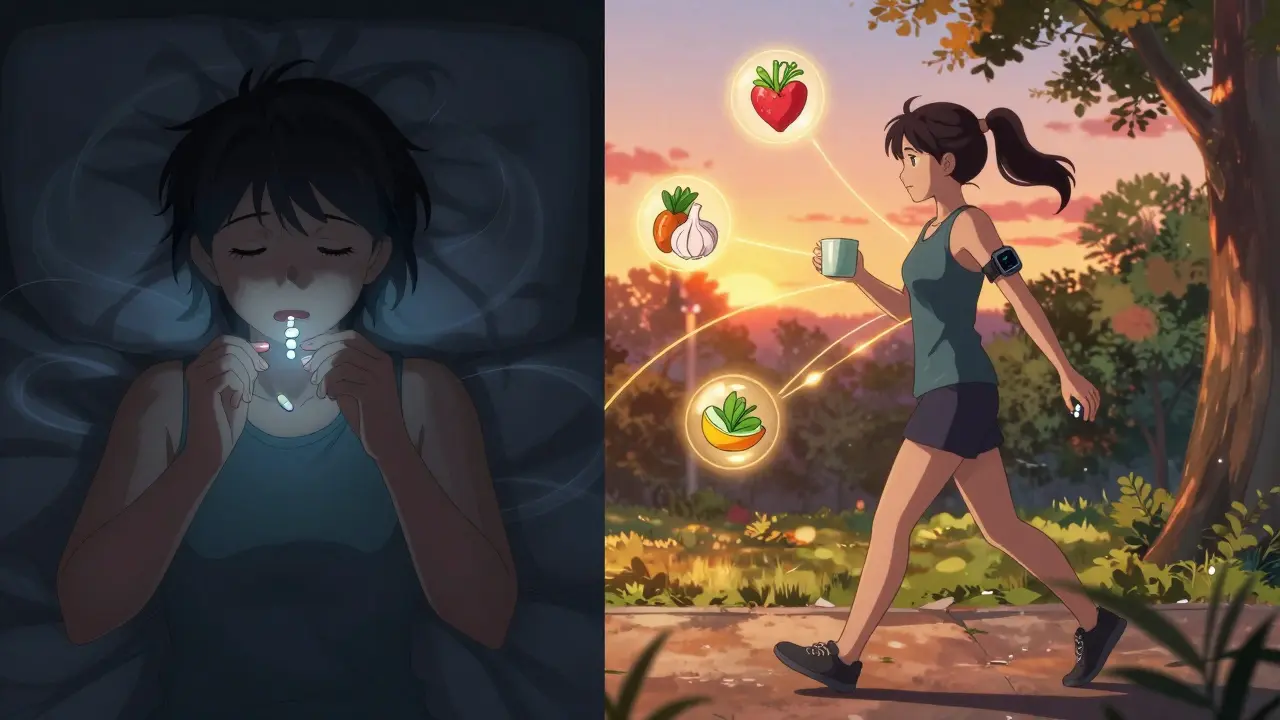
Not all “natural” is safe. Some supplements actually raise blood pressure.
- St. John’s wort: Can spike BP in 68% of users.
- Ephedra or ma huang: Banned in the U.S., but still sold online. Dangerous. Avoid.
- Yohimbine: Found in some “energy” or “male enhancement” supplements. Raises BP and heart rate.
- Licorice root: Can cause potassium loss and fluid retention-especially bad if you’re on diuretics.
- Hawthorn berry: Some people swear by it. But studies show mixed results. 42% of users report no change. And it can make beta-blockers too strong.
And here’s the biggest mistake people make: replacing meds with supplements. That’s not smart. If your doctor prescribed you a pill, don’t swap it for garlic. You’re risking your health.
How to Combine Natural Strategies with Medication
The best outcomes come from stacking smart choices-not choosing between them.
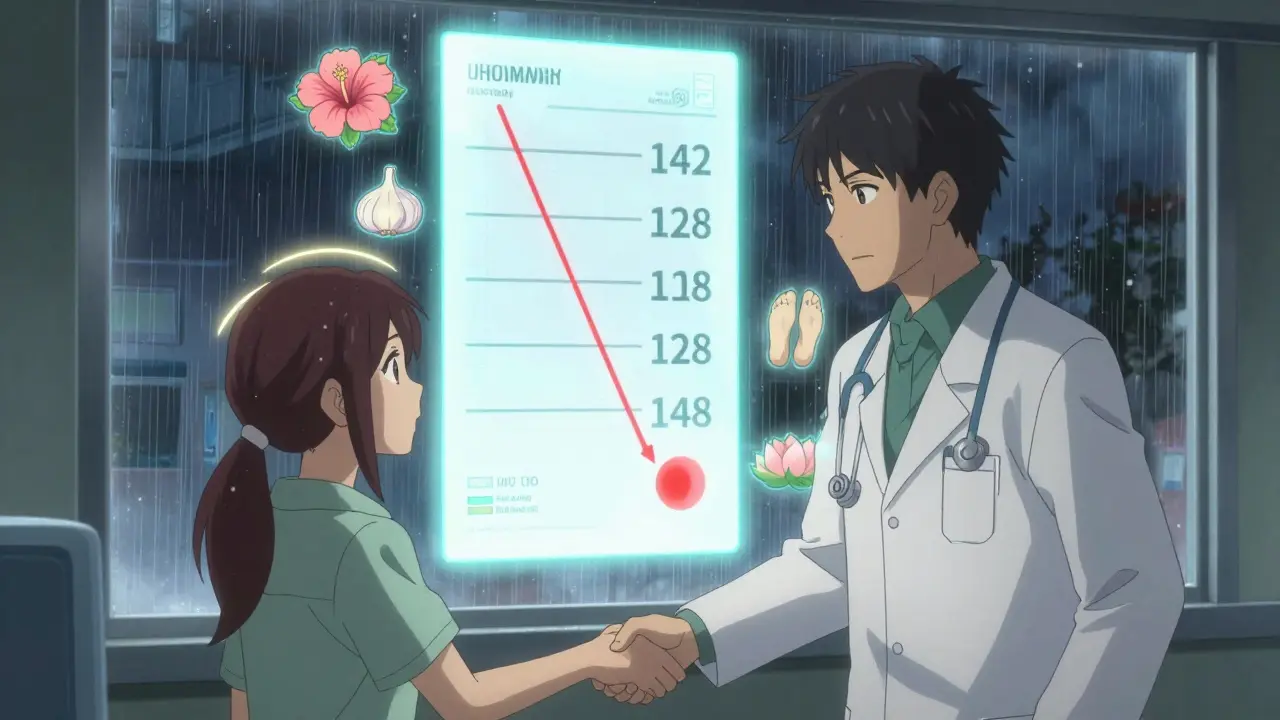
Take Sarah, 58, from Bristol. She was on lisinopril but kept getting dizzy. Her doctor suggested she cut salt, start the DASH diet, and add hibiscus tea. After 8 weeks, her systolic dropped from 142 to 128. Her doctor was able to lower her lisinopril dose. She felt better. No dizziness. More energy.
That’s the goal: synergy. Medication gives you control. Natural strategies give you sustainability. Together, they reduce side effects, lower your pill burden, and improve your quality of life.
But timing matters:
- Take coenzyme Q10 with a meal that has fat-like avocado or olive oil. It won’t absorb otherwise.
- Garlic supplements are best taken with food to avoid stomach upset.
- Don’t take magnesium at night if it gives you loose stools. Try morning instead.
And always, always tell your doctor what supplements you’re taking. Garlic can thin your blood. Magnesium can interact with diuretics. Hibiscus might make your BP drop too far if you’re already on meds. You need to know what’s happening.
What to Track and How Often
You can’t manage what you don’t measure. Buy a home blood pressure monitor. Get one with memory and Bluetooth if you can. Check it:
- First thing in the morning, before coffee or meds
- At night, before bed
- Once a week, sit quietly for 5 minutes, then take 3 readings 1 minute apart. Average them.
Keep a simple log: date, time, systolic, diastolic, heart rate, and any notes (e.g., “ate salty lunch,” “meditated,” “took garlic”). After 4 weeks, you’ll start to see patterns. That’s how you know what’s working.
When to Call Your Doctor
Not every change is a win. If you see:
- Systolic below 110 or diastolic below 60-especially if you feel lightheaded
- Heart rate below 50 or above 100 without reason
- Swelling in legs, trouble breathing, chest pain
- Any new dizziness or confusion
Stop what you’re doing and call your doctor. Natural doesn’t mean harmless. And high blood pressure doesn’t wait.
The Bottom Line
Hypertension isn’t a punishment. It’s a signal. Your body is asking you to change. You don’t have to go it alone. Medication is a tool. Natural strategies are tools too. Together, they give you more control than either one alone.
Start small. Pick one thing: cut salt, drink hibiscus tea, walk 20 minutes a day. Do it for 30 days. Measure your results. Then add another. Slow progress beats quick fixes.
You’re not just lowering a number. You’re protecting your heart, your brain, your future. And that’s worth every step.
Can I stop my blood pressure medication if I start using natural remedies?
No. Never stop prescribed medication without talking to your doctor. Natural strategies like the DASH diet, garlic, or coenzyme Q10 can help reduce your dose over time-but only under medical supervision. Stopping meds abruptly can cause dangerous spikes in blood pressure. Even if your numbers improve, your doctor needs to adjust your treatment plan safely.
How long does it take for natural remedies to lower blood pressure?
Most natural approaches take 4 to 8 weeks to show measurable results. The DASH diet and exercise may start working in 2 weeks, but full effects take a month or more. Supplements like garlic or coenzyme Q10 need consistent daily use for at least 6 weeks before you’ll see a drop. Unlike medications, which often work in days, natural methods build up slowly. Patience and consistency are key.
Which supplements are safest for high blood pressure?
The best-supported and safest options include magnesium glycinate (368 mg/day), aged garlic extract (600-1,200 mg/day), and hibiscus tea (3-4 cups daily). Coenzyme Q10 (100-225 mg/day) is also well-studied and generally safe. Avoid unregulated products, especially those claiming “instant results.” Stick to brands with third-party testing (USP, NSF, or ConsumerLab). Always check for interactions with your current meds.
Can I use hibiscus tea instead of medication?
Not if you have stage 2 hypertension (140/90 or higher) or existing heart disease. Hibiscus tea can help lower blood pressure by about 7 mm Hg-useful as an addition, not a replacement. For mild cases (stage 1), some doctors may allow a 3- to 6-month trial of lifestyle changes including hibiscus tea, but only if your risk is low and you’re closely monitored. Never use it to replace prescribed treatment without professional guidance.
Do I need to take supplements every day?
Yes. Natural remedies work through consistent, daily use. Taking garlic or coenzyme Q10 only a few times a week won’t give you results. Think of them like vitamins-you need regular intake for them to build up in your system. Missing a day isn’t catastrophic, but skipping several days in a row will reduce their effectiveness. Make it part of your routine, like brushing your teeth.
Can exercise replace medication for high blood pressure?
For some people with mild hypertension and low overall risk, regular exercise (150 minutes a week) can lower blood pressure as much as some medications-by 5 to 8 mm Hg. But it’s rarely enough on its own. Exercise works best when combined with diet, weight loss, and sometimes medication. If your doctor says you need meds, don’t rely on walking alone. Use exercise as a powerful partner to your treatment plan.
Why do some people say natural remedies didn’t work for them?
Because they didn’t do enough-or didn’t do it right. Many people try one thing-like drinking hibiscus tea-and expect a miracle. But hypertension needs a multi-pronged approach. You need diet, movement, stress management, and often, supplements. Also, some supplements are poorly made. If you buy cheap garlic pills without standardized extract, you’re not getting the active compounds. Quality matters. So does consistency.


Brett MacDonald
February 2, 2026 AT 16:44