
Imagine opening your medicine cabinet and not being able to tell which pill is which. The bottles all look the same-white, oval, no clear markings. One is for your blood pressure. Another is for sleep. Both are the same size, same color, same shape. You take one at night. You meant to take the other. This isn’t a hypothetical. It happens every day to over 1.8 million people in the UK with low vision, and millions more with hearing loss. Medication errors aren’t just inconvenient-they’re dangerous. And too often, the system isn’t built to keep them safe.
Why Medication Safety Is a Real Crisis for People with Sensory Impairments
People with low vision struggle with standard prescription labels. Most pharmacies print instructions in 7- to 10-point font. That’s too small to read-even with glasses. The American Foundation for the Blind says you need at least 18-point font, high contrast, and no glare. Yet only 32% of U.S. pharmacies follow even basic accessibility guidelines. In the UK, the RNIB found that 58% of people with vision loss can’t tell their medicine containers apart. That’s not a coincidence. It’s a design failure.
For people with hearing loss, the problem is different but just as serious. Pharmacists often give verbal instructions in noisy stores. If you can’t hear the difference between “take once daily” and “take twice daily,” you’re at risk. Medication reminder alarms? If they’re just beeps, they’re useless. Many people don’t tell their doctors or pharmacists they’re struggling. A 2019 study showed 68% of visually impaired patients never mentioned their difficulties-so no one fixes it.
The numbers don’t lie. People with low vision are 1.67 times more likely to make a medication error than someone with full vision. Mistakes like taking expired pills, mixing up doses, or missing refills lead to hospital visits, falls, and even death. And it’s getting worse. As the population ages, more people are taking four or more medications daily. That’s polypharmacy. And without clear labels or accessible help, it’s a ticking time bomb.
What Makes Medications Hard to Use-And What Doesn’t
Not all medications are equally hard to manage. Tablets and capsules? Usually fine. You can feel the shape. You can count them. But liquids? That’s a whole different challenge. Measuring out 5 milliliters with a shaky hand and a tiny cup? Nearly impossible without help. Eye and ear drops are even worse. You can’t see the dropper, can’t tell if it’s empty, and if you miss the eye, you waste the whole dose. A 2019 study found only 39% of visually impaired people could use eye drops safely on their own.
Color-coding helps-but only if it’s consistent. Some people use red bands for morning pills, blue for night. But if your pharmacist uses green for afternoon and your daughter uses yellow, confusion sets in. Rubber bands around bottles? They’re cheap and easy, but 35% of users forget what each band means after a few weeks. Braille labels? Great-if you read braille. But only 15% of adults who lose vision later in life learned braille. So for most, it’s useless.
Electronic devices like the Talking Rx or Hero Health can speak the name, dose, and time out loud. They work. One study showed 92% adherence improvement. But they cost up to $200. Most insurance won’t cover them. And if you’re on a fixed income, that’s not an option. The system isn’t broken because people don’t try. It’s broken because the solutions aren’t built for real life.
Simple, Low-Cost Solutions That Actually Work
You don’t need fancy tech to stay safe. Some of the most effective fixes cost less than a cup of coffee.
- Use a black marker to write “AM” or “PM” directly on the bottle. Takes 30 seconds. Works every time.
- Color-code with tape. Red for morning, blue for night, green for afternoon. Use thick, matte tape so it doesn’t peel. Stick it on the cap, not the label.
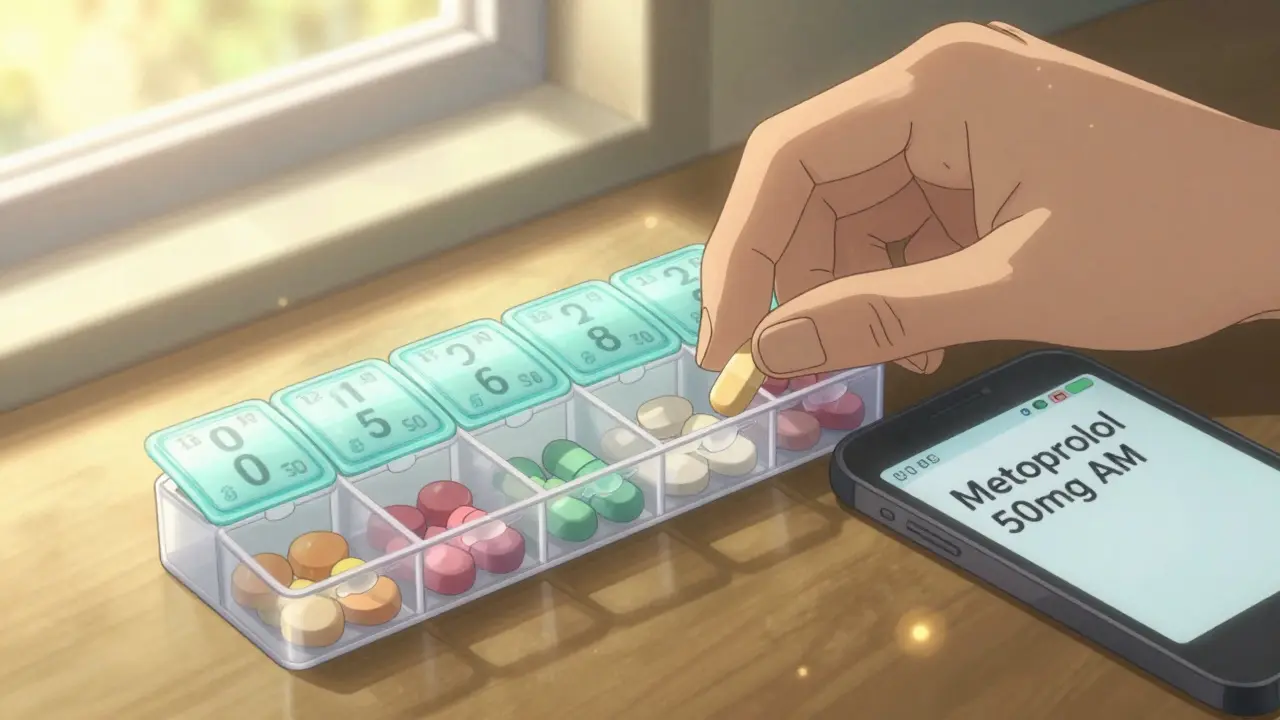
- Use a pill organizer. Buy one with big, clear labels. Put the pills in the night before. Even if you can’t read the text, you can feel the shape of the compartments. Some have bumps for each day.
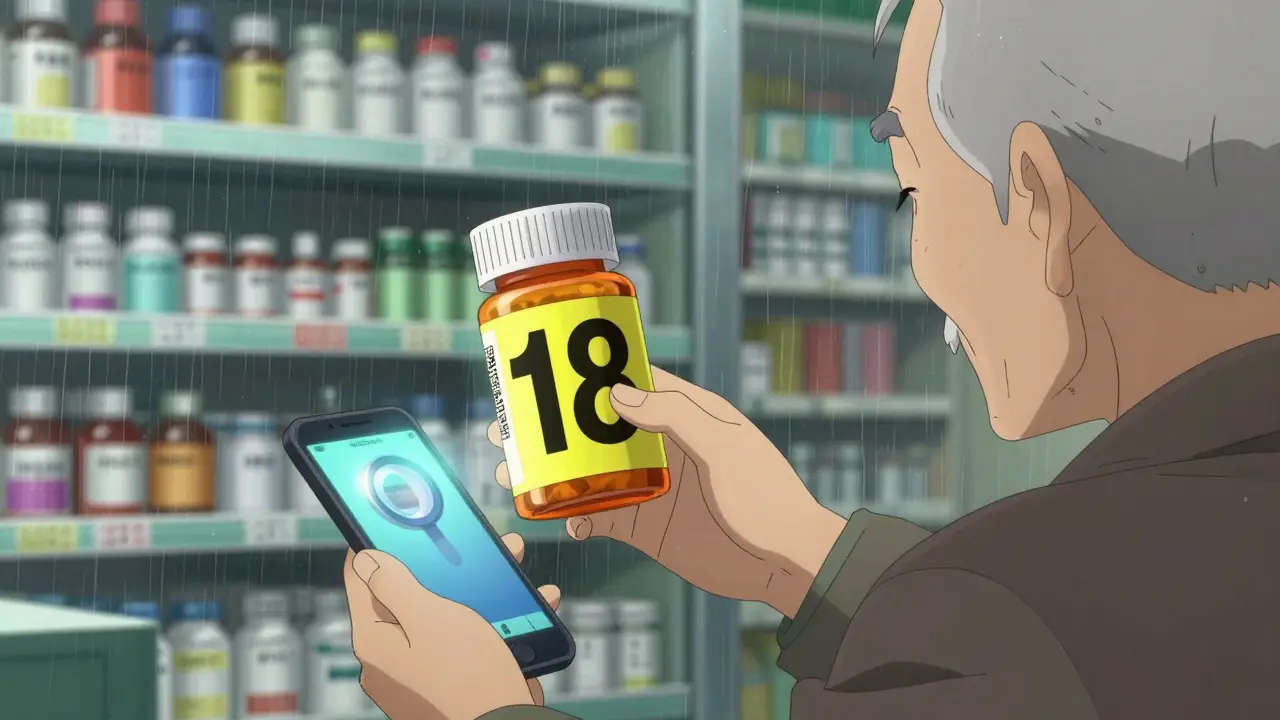
- Ask your pharmacist for a large-print label. Most will do it for free if you ask. Don’t assume they’ll offer it. Say: “I have low vision. Can you print the instructions in 18-point font with high contrast?”
- Use a magnifier app. Your phone’s camera can zoom in on labels. Turn on the flashlight for better contrast. Many phones have a “color inversion” setting that turns white text black and vice versa-makes reading labels easier.
For hearing loss, ask for written instructions. Many pharmacies now offer printed summaries. If they don’t, ask for a printed version of the medication leaflet. Use a hearing aid with Bluetooth? Pair it with your phone to hear pharmacy calls clearly. Set up text alerts for refill reminders. No more missed calls.
What Pharmacies Should Be Doing (But Often Aren’t)
Pharmacists are on the front lines. They’re the ones handing out the meds. But most haven’t been trained in accessibility.
The AFB Guidelines are clear: labels need 18-point font, no glare, high contrast, and clear spacing. The pill bottle should say the drug name, dose, frequency, and purpose-like “Metoprolol 50mg, take one tablet by mouth each morning for blood pressure.” No abbreviations. No tiny print. No fancy fonts.
But here’s the problem: pharmacies get paid $14.97 per prescription in the U.S. under Medicare Part D. That’s it. No extra money for spending five extra minutes labeling a bottle or explaining how to use a pill organizer. So most skip it. Only 28% of pharmacies routinely offer accessible labeling. In the UK, the MHRA admits current rules aren’t enough. But they haven’t changed them yet.
What should happen? Pharmacies should be required to offer:
- Large-print labels on request
- Audio labels via QR code (scan with phone to hear instructions)
- Color-coded caps as a standard option
- Training for staff on sensory impairments
It’s not expensive. It’s just not prioritized.
Real Stories: What People Are Dealing With
One user on Reddit said: “I took my blood pressure pill at night because the new generic looked just like my sleeping pill. Both white ovals. No marks. I didn’t know until my daughter checked my pillbox.”
A Guide Dogs UK survey found:
- 41% had taken expired medication by mistake
- 58% couldn’t tell which bottle was which
- 67% couldn’t read refill instructions
Another person said: “My pharmacist gave me a new bottle with a tiny label. I asked for a bigger one. She said, ‘We don’t do that.’ So I started using rubber bands. My daughter helped me assign them. It’s not perfect, but I haven’t messed up since.”
These aren’t rare cases. They’re the norm. And the silence around them is deadly. People don’t speak up because they’re embarrassed. Or they think no one can help. But help is possible-if you ask.
What You Can Do Right Now
You don’t have to wait for the system to fix itself. Here’s your action plan:
- Ask for large-print labels-every time you pick up a prescription. Say: “I need the label in 18-point font, high contrast, no glare.”
- Use color-coded tape on your pill bottles. Assign one color per time of day. Stick it on the cap so it’s easy to see.
- Get a pill organizer with tactile markings. Put your pills in on Sunday night. That way, you’re not guessing during the week.
- Use your phone. Take a picture of each pill bottle. Use the notes app to write the name, dose, and time. Turn on voice-to-text so you can speak it out loud.
- Ask for a written summary of your meds. If you have hearing loss, insist on printed instructions. Don’t rely on verbal info.
- Teach someone. A family member, friend, or caregiver should know your routine. Keep a backup list in their phone or wallet.
It takes about 2.7 weeks to get used to a new system. But once it’s in place, you’re safer. And you don’t need to do it all at once. Start with one pill. Add one change. Build from there.
What’s Changing? And What’s Not
There’s progress. The RNIB is developing a standardized labeling system for 2025. The AFB is launching a pharmacy certification program in 2024. The FDA has drafted new guidance-but still no mandatory rules.
But here’s the hard truth: without regulation, nothing changes. Pharmacies won’t spend extra time unless they’re paid for it. Manufacturers won’t print bigger labels unless the law forces them. And patients won’t speak up unless they know they’re not alone.
That’s why your voice matters. If you’ve struggled with your meds, tell your pharmacist. Tell your doctor. Tell your MP or local health board. Write to the MHRA. Say: “Accessible medication labeling isn’t a luxury. It’s a safety need.”
The tools exist. The guidelines exist. What’s missing is the will to use them. You don’t have to wait for someone else to fix this. Start today. One label. One color. One pill. Your life depends on it.


Lisa Davies
December 15, 2025 AT 23:01