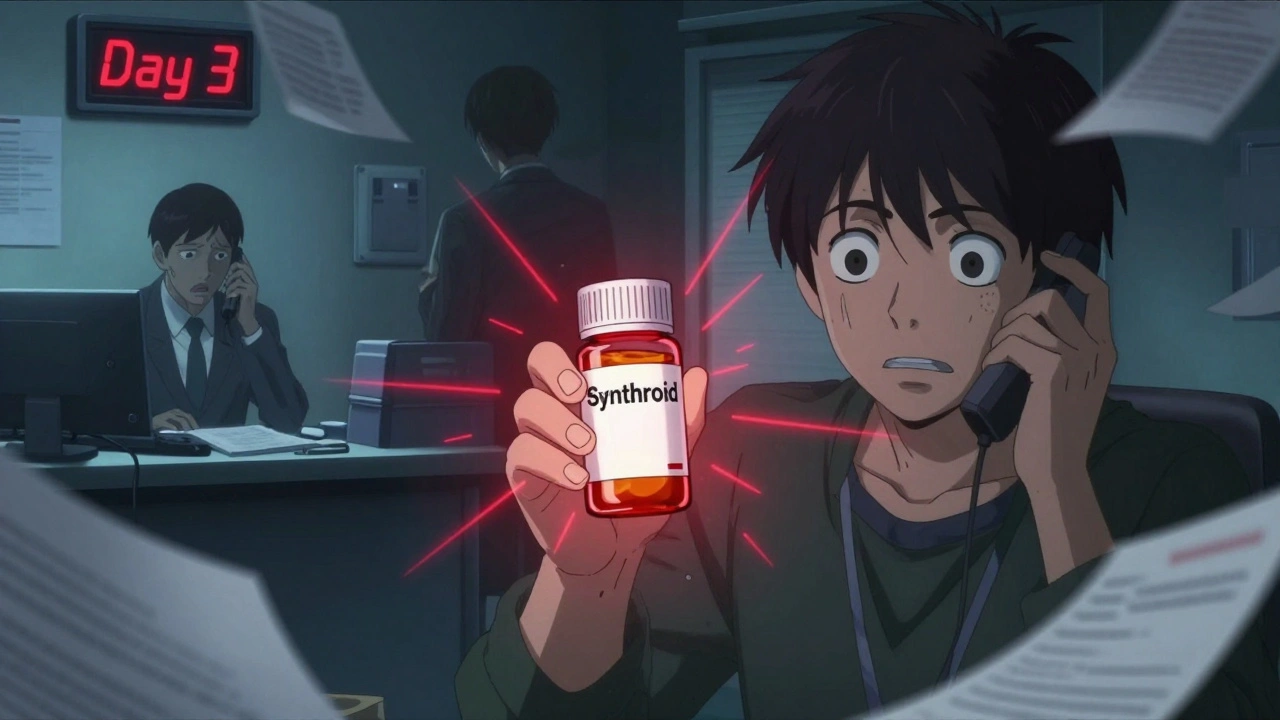
For patients taking medications like levothyroxine or phenytoin, a simple prescription isn’t enough. Even if their doctor says the brand name is necessary, their insurance might demand a prior authorization - or worse, deny it outright. This isn’t about cost-cutting for luxury drugs. It’s about drugs where a tiny change in dosage or formulation can trigger seizures, thyroid crashes, or even death. These are NTI drugs - narrow therapeutic index medications - and they’re being treated like ordinary prescriptions, even though they’re anything but.
What Makes NTI Drugs Different?
NTI drugs have a razor-thin line between working and causing harm. The FDA defines them as medications where small differences in blood concentration can lead to serious therapeutic failure. That means if a generic version isn’t *exactly* the same as the brand, even by a few percentage points, it could make you sicker - not better.
Take levothyroxine, used to treat hypothyroidism. A patient stable on Synthroid might switch to a generic and suddenly see their TSH levels spike by 300%. That’s not a fluke. It’s a documented pattern. For epilepsy patients on carbamazepine or phenytoin, switching generics can mean the difference between staying seizure-free and having a grand mal seizure. The body doesn’t treat these drugs like it does ibuprofen or statins. Their absorption, metabolism, and effectiveness are hyper-sensitive to tiny formulation changes.
There are about 37 drugs in this category, according to DrugBank. Most are used for epilepsy, thyroid disorders, blood thinners like warfarin, and some heart rhythm medications. These aren’t rare conditions. Millions rely on them daily. And yet, insurers often treat them like any other brand-name drug with a generic alternative.
Why Do Insurers Even Require Prior Authorization?
Most insurance plans follow a simple rule: if a generic exists, use it. It saves money. That’s fine for most drugs. But for NTI drugs, that rule ignores patient safety. Insurers justify prior authorization as a way to ensure the drug is truly necessary - to review lab results, diagnosis codes, or past treatment history. In theory, it’s about safety. In practice, it’s often a bureaucratic hurdle.
Some insurers, like Health Net, actually exempt certain NTI drugs from prior authorization entirely. Their policy says brand-name NTI drugs can be listed on a higher tier and approved without extra paperwork - recognizing that forcing a switch risks patient harm. But that’s the exception, not the rule. Most plans still require doctors to jump through hoops: filling out forms, calling in requests, waiting days for approval.
The problem? The process was never designed for NTI drugs. It was built for drugs where switching is safe. When a patient on brand-name Keppra gets denied and switches to a generic, then has a seizure, the insurer doesn’t pay for the ER visit. The patient does.
How Long Does It Really Take?
On average, it takes 3.2 business days to get a prior authorization approved for an NTI drug. That’s longer than for most other medications. Why? Because insurers demand more documentation - lab results, TSH levels, seizure logs, weight and height measurements. Even then, 17.6% of requests are denied at first.
And delays aren’t just inconvenient. They’re dangerous. A 2024 survey from Patients Rising found that 68% of patients taking NTI drugs experienced delays longer than 72 hours. Nearly 30% of those patients reported a direct health event - hospitalization, seizure, thyroid storm - because they couldn’t get their medication on time.
Some states are starting to fix this. California’s AB-1428, effective January 2025, says insurers can’t require prior authorization for an NTI drug if the patient was already stable on it. If the prescription is renewed and the condition hasn’t changed, approval must be automatic. Other states, like Mississippi and North Carolina, still require faxed forms or portal submissions - and even then, response times vary wildly.

What Do Doctors and Patients Really Say?
Neurologists are fed up. One doctor on Reddit shared that 73% of their levothyroxine prior auth requests were initially denied - even when patients had unstable TSH levels after switching generics. The American Academy of Neurology found that unnecessary barriers to brand-name antiepileptic drugs contribute to preventable seizures in nearly 19% of epilepsy patients.
On the other side, insurers argue that prior authorization prevents inappropriate brand use and saves health plans $2.3 billion a year. But that math ignores the hidden costs: emergency room visits, lost workdays, long-term complications. A study in the Journal of Managed Care & Specialty Pharmacy found that while 82% of denied NTI requests are eventually approved, the damage is already done by then.
Patients aren’t just frustrated - they’re scared. One man on HealthUnlocked described how his first prior auth denial led to a grand mal seizure. His insurer later approved brand-name Keppra automatically - but only after he ended up in the hospital. That’s not a system working. That’s a system failing.
What’s Changing - and What’s Not
Change is coming, but slowly. The Improving Seniors’ Timely Access to Care Act, passed in April 2024, requires Medicare Advantage plans to give real-time electronic decisions on prior authorization. That’s huge. For NTI drugs, it means no more waiting three days for a phone call.
Twenty-two states now have laws limiting prior authorization for NTI drugs. Eighteen states require automatic approval if the insurer doesn’t respond within the mandated timeframe - up from just seven in 2022. The 21st Century Cures Act also forced insurers to make their approval criteria public. That’s led to a 37% increase in first-time approvals.
But here’s the catch: 42% of NTI prior auth requests still take longer than 72 hours, even in states with laws on the books. Electronic systems cut processing time by 42%, but NTI requests still take 22% longer than normal because of the extra paperwork. Doctors spend 16 hours a week just managing prior auths - that’s over $4,000 in lost productivity per physician, every week.

What You Can Do
If you or someone you know takes an NTI drug, here’s what actually works:
- Know your drug. Is it on the FDA’s NTI list? Levothyroxine, phenytoin, carbamazepine, warfarin, digoxin - these are the big ones.
- Ask your doctor to write “Do Not Substitute” on the prescription. In many states, that’s enough to bypass generic switching.
- Use electronic prior auth. Fax and phone calls take days. Online portals (like NCTracks or Gainwell) are faster. Ask your pharmacy if they use ePA.
- Appeal immediately. If denied, file an appeal the same day. Many approvals come after the first denial - but only if you push.
- Check your state’s laws. Some states have automatic approval rules. Others ban step therapy for NTI drugs. Visit your state’s Medicaid or insurance commissioner website.
And if you’re a prescriber: document everything. TSH levels. Seizure logs. Weight changes. The more clinical data you provide upfront, the less likely you are to get denied.
Is This Going to Get Better?
Yes - but not fast enough. Industry analysts predict that by 2026, 75% of commercial plans will drop prior authorization for established NTI drugs. Why? Because the risks are too high, the data is too clear, and the lawsuits are piling up.
For now, the system is broken. It treats life-threatening medications like they’re interchangeable. But for patients who depend on stability, they’re not. A pill that’s 95% the same isn’t good enough. When your life depends on consistency, you don’t want to gamble with generics. You want the drug your doctor prescribed - and you shouldn’t have to fight for it.
What are NTI drugs?
NTI drugs, or narrow therapeutic index drugs, are medications where small changes in dose or blood concentration can lead to serious therapeutic failure or toxicity. Examples include levothyroxine for thyroid disorders, phenytoin and carbamazepine for epilepsy, and warfarin for blood thinning. These drugs have a very narrow window between an effective dose and a dangerous one.
Why do insurers require prior authorization for NTI drugs?
Insurers require prior authorization for NTI drugs to control costs, assuming generics are interchangeable. But unlike most medications, NTI drugs are not bioequivalent in practice. Insurers use prior auth to review clinical history, lab results, and diagnosis codes - hoping to prevent unnecessary brand use. However, this process often ignores the real risk of switching, leading to dangerous delays.
Can I switch from a brand-name NTI drug to a generic?
Technically, yes - but it’s risky. Even FDA-approved generics can cause significant differences in blood levels for NTI drugs. Many patients experience worsening symptoms, seizures, or thyroid instability after switching. Some doctors and patient groups strongly advise against switching unless absolutely necessary, and even then, with close monitoring.
How long does prior authorization for NTI drugs take?
On average, it takes 3.2 business days. However, many patients face delays longer than 72 hours, especially with paper-based systems. Electronic prior authorization reduces this by about 42%, but NTI requests still take 22% longer than standard ones due to extra documentation requirements.
Are there states that protect NTI drug access?
Yes. As of 2025, 22 states have laws limiting prior authorization for NTI drugs. California, for example, prohibits prior auth for NTI drugs if the patient was previously stable on the brand. Eighteen states require automatic approval if the insurer doesn’t respond within a set time. These laws are growing, but enforcement remains inconsistent.
What should I do if my NTI drug is denied?
File an appeal immediately - don’t wait. Provide all clinical documentation: lab results, seizure logs, previous prescriptions, and your doctor’s note explaining why the brand is medically necessary. Many approvals happen on appeal. Also, ask your pharmacy to submit electronically, not by fax. If you’re on Medicaid, federal rules require a 24-hour response for urgent cases.


Anthony Breakspear
December 3, 2025 AT 09:21