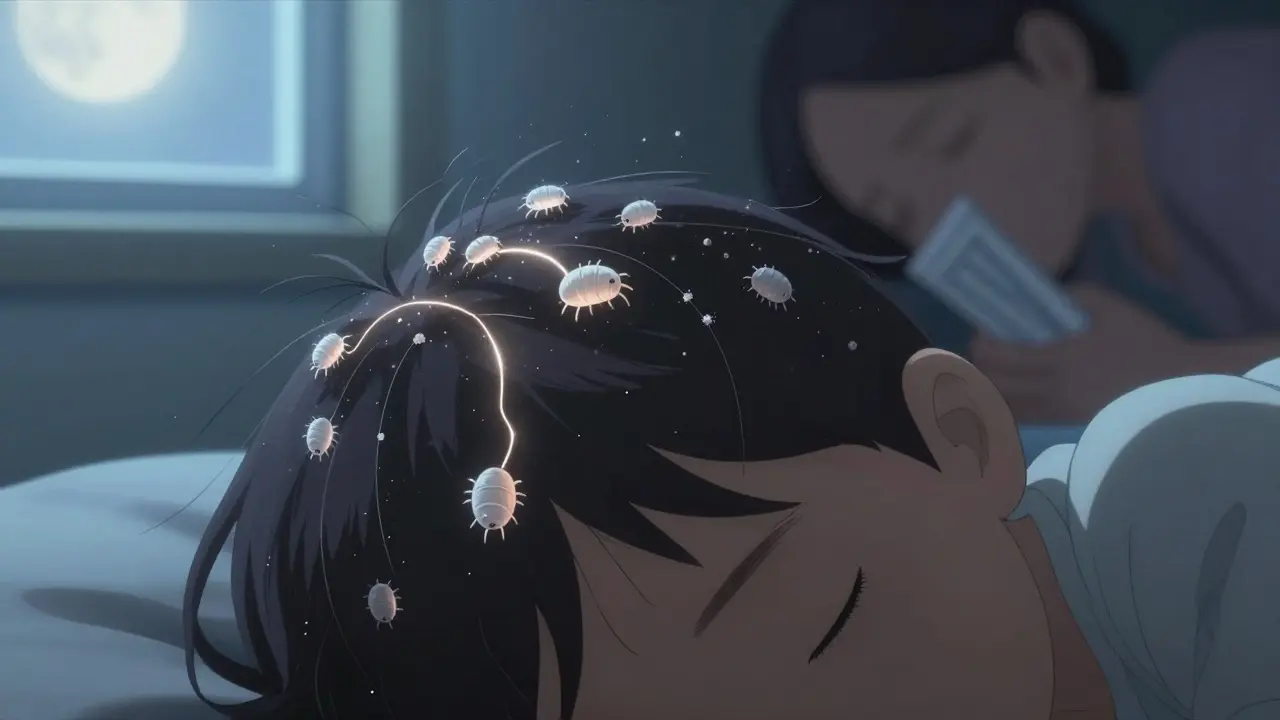
Itching that won’t quit. Tiny bugs crawling under your skin or in your hair. You’ve tried everything-anti-itch creams, hot showers, new sheets-and still, the discomfort won’t go away. If you’re dealing with relentless itching, especially at night, or seeing small white specks clinging to hair shafts, you might be dealing with scabies or lice. These aren’t just annoying-they’re highly contagious, often misunderstood, and require precise treatment to fully eliminate.
What Exactly Are Scabies and Lice?
Scabies is caused by a microscopic mite called Sarcoptes scabiei var. hominis. These mites burrow into the top layer of your skin to lay eggs, triggering a fierce allergic reaction that leads to intense itching, especially at night. You’ll often see thin, wavy lines on the skin-these are the mite tunnels. Common spots include between fingers, around wrists, armpits, waist, genitals, and the soles of the feet. In babies and young children, the rash can spread to the face and scalp.
Lice, on the other hand, are visible insects that live on the surface of the skin or hair. There are three types: head lice (Pediculus humanus capitis), body lice (Pediculus humanus corporis), and pubic lice (Pthirus pubis). Head lice are the most common, especially in kids aged 3 to 11. They don’t jump or fly-they crawl. You’ll notice nits (eggs) glued tightly to hair strands, usually within a quarter inch of the scalp. Body lice live in clothing and only move to the skin to feed. Pubic lice, sometimes called crabs, are found in coarse body hair like pubic areas, eyebrows, or beards.
How Do You Get Infested?
Scabies spreads through prolonged skin-to-skin contact-think holding hands for a long time, sleeping in the same bed, or intimate contact. It can also spread through shared towels or clothing, but that’s less common. Outbreaks happen in crowded places: nursing homes, childcare centers, dorms, and prisons. One person with scabies can infect dozens if not treated quickly.
Lice spread almost entirely through direct head-to-head contact. Sharing combs, hats, headphones, or pillows can pass them along, but it’s rare. Head lice don’t care about hygiene-they thrive on clean hair just as easily as dirty hair. Body lice are linked to poor access to clean clothing and bedding. Pubic lice are typically spread through sexual contact.
Treatment: What Actually Works?
Not all treatments are created equal. Many people try home remedies-tea tree oil, mayonnaise, vinegar-and while these might soothe itching, they won’t kill mites or lice eggs. Only FDA-approved medications can fully eradicate the infestation.
For scabies, the gold standard is permethrin 5% cream. You apply it from your neck down to your toes, including between fingers, under nails, and in skin folds. Leave it on for 8 to 14 hours, then wash it off. A second application is needed 7 days later because permethrin doesn’t kill all the eggs. Studies show this two-step approach works in over 90% of cases.
Another option is oral ivermectin. It’s not FDA-approved for scabies, but doctors prescribe it off-label all the time-especially for people who can’t apply cream (like the elderly or disabled), or in outbreaks where treating hundreds of people at once is necessary. You take it with food to help absorption. One dose cures about 86% of cases; two doses, spaced 7 to 14 days apart, push that to nearly 100%. It’s also used in mass treatment programs in places like the Solomon Islands, where it’s combined with azithromycin to tackle scabies and trachoma together.
For lice, permethrin 1% lotion or shampoo is still widely used. But resistance is growing. In some U.S. regions, up to 30% of head lice no longer respond to permethrin. That’s why alternatives like spinosad 0.9% liquid are gaining popularity. It kills both lice and eggs in one application and is safe for kids as young as 6 months. Ivermectin is also approved for lice-taken orally, it’s effective even when other treatments fail.

Why Do Treatments Sometimes Fail?
Most treatment failures aren’t because the medicine doesn’t work-they’re because people don’t use it right.
With permethrin, common mistakes include:
- Not applying it to all areas-especially under nails, between toes, and the genital region
- Washing it off too early (before 8 hours)
- Skipping the second application
- Not treating everyone in the household at the same time
A 2022 audit from a California dermatology clinic found that 12.3% of treatment failures were due to improper application. Another 7.8% happened because people washed off the cream too soon.
For lice, people often think they’re done once they see no live bugs. But nits can hatch days later. You need to comb out eggs with a fine-toothed nit comb after treatment-even if you used spinosad, which kills eggs, combing helps confirm success.
And here’s the biggest mistake: treating just the person with symptoms. Scabies and lice spread fast. If one child has head lice, every family member, even those without symptoms, needs treatment. Same with scabies-your partner might not itch yet, but they’re already infested.
What About Side Effects?
Permethrin is generally safe. Some people feel a mild burning or stinging after application, especially if the skin is already irritated. That’s normal and fades within hours.
Oral ivermectin can cause nausea, dizziness, or diarrhea in about 8% of users. It’s not recommended for children under 15 kg (about 33 pounds) or pregnant women because safety data is limited. Topical ivermectin (1% cream) is a good alternative-it works just as well as permethrin with fewer systemic side effects.
Lindane lotion, once common, is no longer recommended. It’s neurotoxic and can cause seizures, especially in kids or people with skin conditions. It’s also unavailable in the U.S. now.
How to Prevent Reinfestation
Medication alone isn’t enough. You need to clean your environment.
For scabies:
- Wash all bedding, towels, and clothing used in the past 3 days in hot water (at least 130°F) and dry on high heat.
- Items that can’t be washed-like stuffed animals or pillows-should be sealed in plastic bags for 72 hours. Mites die without human contact after 2-3 days.
- Vacuum carpets and furniture, then throw away the vacuum bag.
For lice:
- Soak combs and brushes in hot water (over 130°F) for 5-10 minutes.
- Don’t bother spraying your house with lice sprays-they’re unnecessary and potentially harmful.
- Check everyone’s head daily for 7-10 days after treatment. Use a nit comb to remove any remaining eggs.

What’s New in Treatment?
Researchers are working on better tools. One big problem with current treatments is that they don’t kill mite eggs effectively. That’s why you need two applications. New drugs in clinical trials aim to be ovicidal-killing eggs in one go.
Also, large-scale programs are proving that treating entire communities works. In the Solomon Islands, giving both ivermectin and azithromycin to over 26,000 people cut scabies rates by nearly 100%. The WHO now sees mass drug administration as a key strategy to reduce global scabies cases.
Meanwhile, the market for scabies treatments is growing. With rising resistance and more outbreaks in crowded settings, demand is expected to climb over 5% per year through 2030. New formulations, like longer-lasting creams and easier-to-use oral options, are on the horizon.
When to See a Doctor
You don’t always need to see a doctor-but you should if:
- Over-the-counter treatments didn’t work after two tries
- You have thick, crusty skin (this could be crusted scabies, which is severe and highly contagious)
- You’re pregnant, nursing, or treating a child under 2
- Signs of infection appear-redness, swelling, pus, fever
Crusted scabies, also called Norwegian scabies, is rare but dangerous. It happens in people with weakened immune systems. Hundreds of thousands of mites can live on one person. It requires combination therapy-oral ivermectin plus topical permethrin-and often hospital-level care.
Can scabies be cured without medication?
No. Scabies mites burrow deep into the skin and lay eggs. Home remedies like essential oils, vinegar, or mayonnaise might soothe itching, but they won’t kill the mites or their eggs. Only FDA-approved medications like permethrin or ivermectin can fully eliminate the infestation.
How long does it take for itching to stop after treatment?
Itching can last for 2 to 4 weeks after treatment, even if all mites are dead. That’s because your body is still reacting to the mites’ remains and waste. Antihistamines or hydrocortisone cream can help manage the itch. If itching continues beyond 4 weeks, you may still have live mites and need retreatment.
Is ivermectin safe for children?
Oral ivermectin is not recommended for children under 15 kg (about 33 pounds) or under the age of 5, because safety data is limited. Topical ivermectin cream (1%) is approved for adults and children over 6 months. Spinosad liquid (0.9%) is safe for kids as young as 6 months and is often preferred for pediatric lice or scabies cases.
Do I need to treat my pets if I have scabies or lice?
No. Human scabies mites and lice cannot survive on animals. If your pet is scratching, it’s likely fleas, ticks, or a different skin condition. Treating your pet won’t help your infestation-and using animal medications on yourself is dangerous.
Can you get scabies from a toilet seat or public surfaces?
It’s extremely unlikely. Scabies mites die within 2-3 days away from human skin. Transmission happens through prolonged skin contact-like hugging, sleeping together, or sexual activity. Brief contact with a toilet seat, chair, or doorknob won’t spread it.
Why do I need two treatments for scabies?
Scabies mites lay eggs that hatch in 3-4 days. The first treatment kills adult mites but not the eggs. The second treatment, given 7 days later, kills the new mites that hatched after the first application. Skipping the second dose is the most common reason treatment fails.
Is permethrin better than ivermectin?
Both are effective, but they work differently. Permethrin is a topical cream that kills mites on contact and is ideal for mild to moderate cases. Ivermectin is oral, easier to use in outbreaks or for people who can’t apply cream, and better for crusted scabies. Studies show permethrin has slightly higher cure rates after two applications (92.5%) compared to single-dose ivermectin (85.9%), but with two doses of ivermectin, cure rates reach 100%.
Final Thoughts
Scabies and lice aren’t signs of poor hygiene. They’re common, treatable, and spread easily in everyday life. The key to beating them isn’t just the right medicine-it’s using it correctly, treating everyone at once, and cleaning your environment. Don’t wait until the itching is unbearable. Act fast, follow the protocol, and don’t assume you’re done after one treatment. With the right approach, you can be rid of these parasites in under two weeks-and keep them from coming back.


Jane Wei
December 16, 2025 AT 01:03