What Is Sick Euthyroid Syndrome?
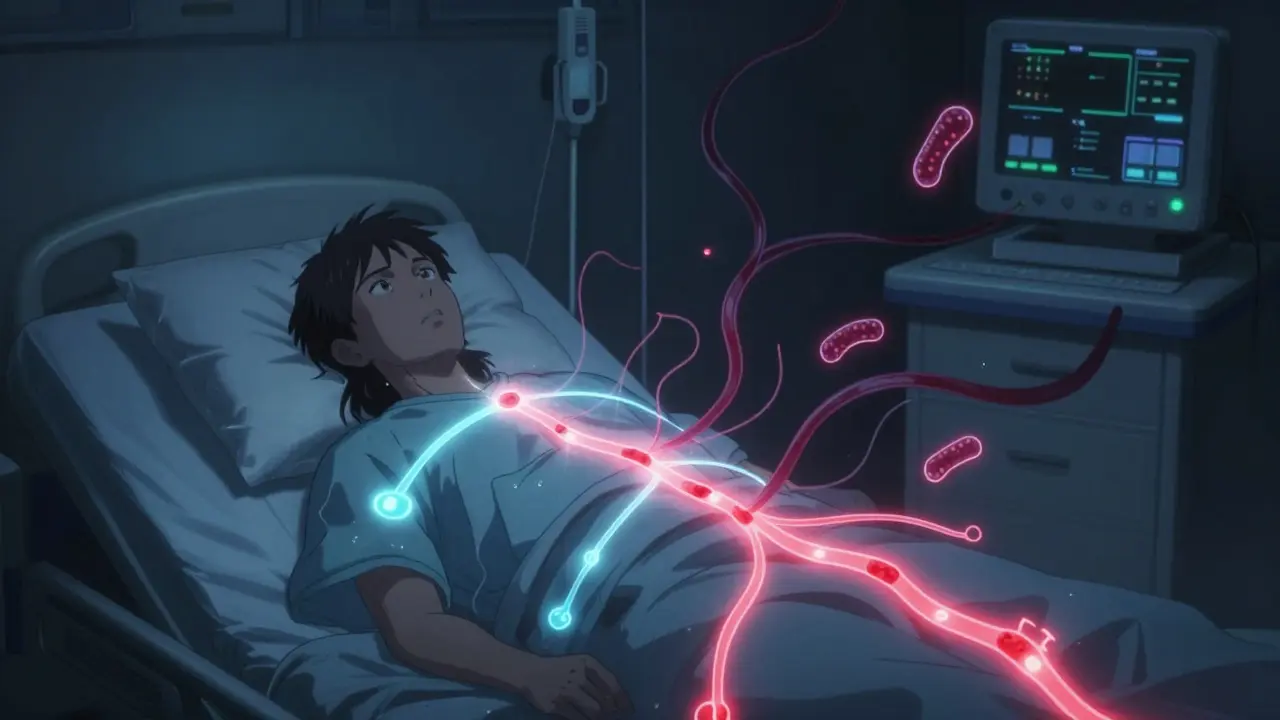
When you're seriously ill, your body doesn't just feel tired-it changes how it uses energy. One of the most misunderstood changes happens in your thyroid hormone levels. You might get blood tests that show low T3, low T4, and maybe even a weirdly high reverse T3. It looks like hypothyroidism. But here's the catch: your thyroid gland is perfectly fine. This isn't a thyroid disease. It's sick euthyroid syndrome, also called nonthyroidal illness syndrome (NTIS). It's your body’s way of slowing down metabolism to survive.
First noticed in the 1970s, this pattern shows up in up to 75% of people in intensive care units. The more severe the illness-whether it’s sepsis, major surgery, a heart attack, or severe burns-the more likely you are to see these abnormal thyroid numbers. And here’s the thing: treating these numbers with thyroid pills doesn’t help. In fact, it can hurt.
How Illness Changes Your Thyroid Lab Results
Your thyroid produces two main hormones: T4 (thyroxine) and T3 (triiodothyronine). T3 is the active form your cells actually use. Normally, your body converts about 80% of T4 into T3. But when you’re critically ill, that conversion shuts down.
Here’s what typically happens in sick euthyroid syndrome:
- T3 drops-in 95% of cases. This is the most consistent sign.
- T4 drops-in about half the cases, especially with long-term or severe illness.
- Reverse T3 (rT3) rises-in 85-90% of patients. Your body starts making more of this inactive form instead of T3.
- TSH stays normal-in 60-70% of cases. Sometimes it dips slightly, sometimes it creeps up a bit during recovery. But it rarely spikes like it does in true hypothyroidism.
This isn’t random. It’s controlled by inflammation. When you’re sick, your immune system releases cytokines-like IL-6, TNF-alpha, and IL-1. These chemicals directly mess with the enzymes (deiodinases) that turn T4 into T3. They also reduce how much thyroid hormone binds to transport proteins in your blood. The result? Low active hormone levels, even though your thyroid is still working.
What Illnesses Trigger This?
Sick euthyroid syndrome doesn’t happen in mild colds or flu. It shows up when your body is under serious stress. Common triggers include:
- Sepsis-affects 80-85% of patients
- Major surgery-seen in 65-70%
- Severe burns-75-80% of cases
- Heart attack-50-55%
- Diabetic ketoacidosis-60-65%
Chronic illnesses can cause it too:
- Anorexia nervosa-up to 90% of severe cases
- Cirrhosis-70-75%
- Chronic kidney failure-60-65%
Changes in thyroid labs can appear within 24 to 48 hours after the illness starts. That’s how fast your body shifts into survival mode.
Why It Feels Like Hypothyroidism (But Isn’t)
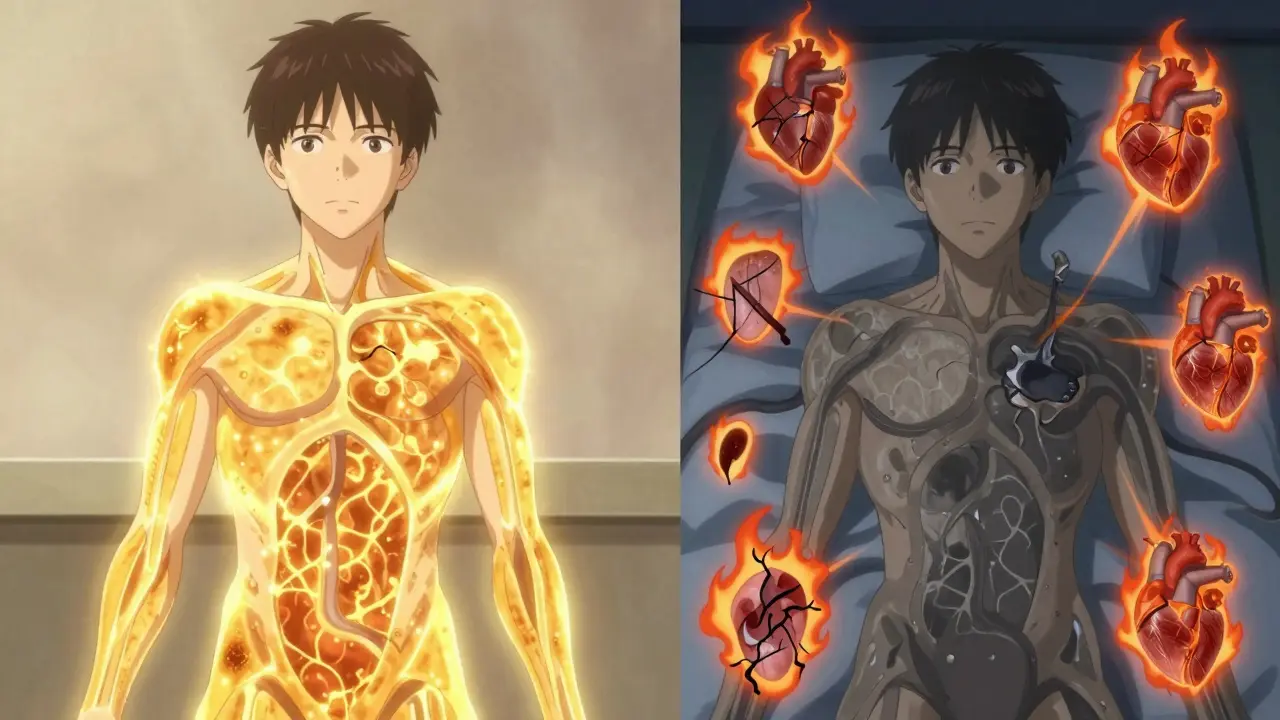
If you’re sick and your labs show low T3 and T4, you might feel like you have hypothyroidism: tired, cold, constipated, weak. That’s because the symptoms overlap. But here’s how to tell them apart:
- In true hypothyroidism, TSH is high, and you usually have thyroid antibodies (like TPO antibodies) in your blood.
- In sick euthyroid syndrome, TSH is normal or only slightly off, and antibodies are absent.
- You won’t see classic signs like puffy face, dry skin, or hoarse voice-those are rare in ESS.
Some patients even develop low body temperature, slow breathing, or low blood pressure. In the worst cases, they slip into coma. But again-this isn’t because the thyroid is broken. It’s because the whole body is shutting down non-essential functions to save energy.
Why You Shouldn’t Take Thyroid Pills for This
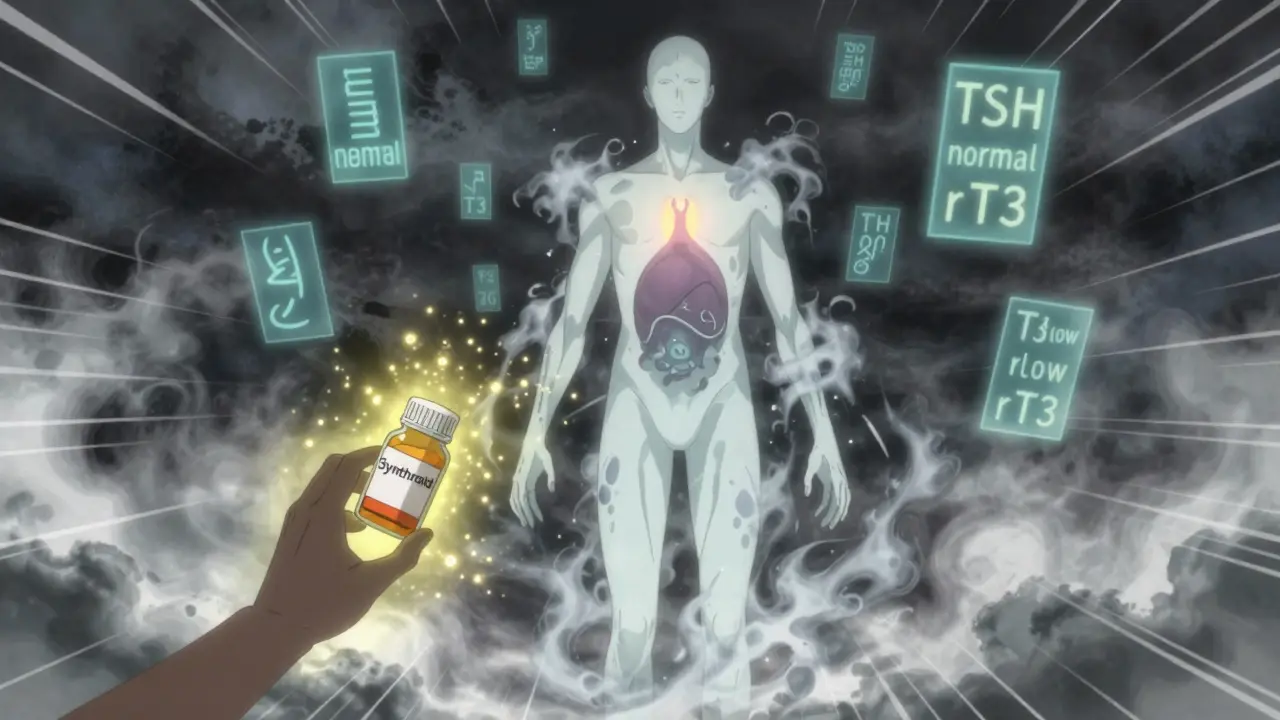
Here’s the biggest mistake doctors make: giving levothyroxine (Synthroid) to patients with sick euthyroid syndrome.
A 2022 study in the New England Journal of Medicine looked at 450 critically ill patients with ESS. Half got thyroid hormone replacement. Half got a placebo. The results? Identical 30-day death rates. Identical ICU stays. No benefit. None.
And it gets worse. A 2021 study in JAMA Internal Medicine found that 12% of ICU patients were incorrectly treated for hypothyroidism when they actually had ESS. Those patients had worse outcomes. Why? Because adding thyroid hormone forces the body to burn energy it doesn’t have. In a stressed, starving system, that’s dangerous.
The American Thyroid Association and Endocrine Society both say the same thing: Don’t treat the labs. Treat the illness. If you’re sick, focus on fixing the infection, the trauma, the heart problem-not the thyroid numbers.
How Doctors Diagnose It Right
Getting the diagnosis right isn’t about one test. It’s about the full picture.
Step one: Look at TSH. If it’s normal or only slightly low/high while T3 and T4 are down, it’s almost certainly ESS. If TSH is very low (below 0.1) and T3/T4 are low, that’s a different problem-central hypothyroidism, which does need treatment.
Step two: Check for signs of inflammation. CRP, white blood cell count, procalcitonin-all these tell you how sick the patient really is.
Step three: Don’t order thyroid tests unless there’s a reason. The Endocrine Society says thyroid function tests shouldn’t be routine in ICU patients. Why? Because 90% of abnormal results in the ICU are due to ESS, not thyroid disease. Ordering them leads to confusion, extra tests, and unnecessary treatment.
Step four: Wait. After the illness clears, repeat the thyroid tests in 4-6 weeks. If the numbers return to normal, you know it was ESS. If they stay low, then you might have real thyroid disease.
What’s New in Research?
Scientists are now looking at ESS not just as a side effect-but as a clue.
A 2022 study in Critical Care found that the lower your T3 level, the higher your risk of dying. Patients with T3 below 40 ng/dL had a 45% death rate. Those with T3 above 80 ng/dL had only a 15% death rate. That means T3 levels might help predict who’s in the most danger.
Right now, a big study called EUTHYROID-ICU is tracking 2,500 critically ill patients across Europe to see if specific patterns in thyroid hormones can predict recovery. Could we one day use T3 trends to guide care? Maybe.
The bottom line? Sick euthyroid syndrome isn’t a disease. It’s a survival tool. Your body isn’t broken. It’s adapting.
What Should You Do If You’re Diagnosed?
If you’re in the hospital and your thyroid tests look weird, ask: "Is this sick euthyroid syndrome?"
Don’t push for thyroid medication. Don’t assume you need lifelong treatment. Ask for the full clinical picture: What’s the main illness? How sick am I? Are my TSH and antibodies normal?
If you’re recovering at home and your thyroid labs were abnormal during your illness, don’t panic. Wait. Give your body time. Repeat the tests in a month. Most people bounce back to normal without any intervention.
The key is understanding: abnormal labs don’t always mean disease. Sometimes, they just mean you were sick-and your body did exactly what it was supposed to do.


Jake Kelly
January 11, 2026 AT 06:56