
Imagine trying to eat a simple sandwich, but your mouth is so dry that you need to wash it down with three glasses of water. Or blinking repeatedly because your eyes feel like they are filled with sand. For millions of people, this is not a temporary annoyance caused by air conditioning or lack of sleep; it is the daily reality of Sjögren’s Syndrome, a chronic autoimmune disorder where the immune system mistakenly attacks moisture-producing glands. While often reduced to "just" dry eyes and mouth, this condition is a systemic disease that can affect joints, skin, lungs, and nerves. If you have been dealing with persistent dryness and fatigue, understanding how this condition works is the first step toward managing it effectively.
What Is Sjögren’s Syndrome?
First described in 1933 by Swedish ophthalmologist Henrik Sjögren, this condition is one of the most common autoimmune disorders, particularly among women. In a healthy body, the lacrimal glands produce tears and the salivary glands produce saliva. In Sjögren’s, immune cells infiltrate these glands, causing inflammation and eventually reducing their ability to produce moisture. This damage is why the hallmark symptoms are xerophthalmia (dry eyes) and xerostomia (dry mouth). However, the disease does not stop at the surface. It is classified into two main types: primary Sjögren’s, which occurs on its own, and secondary Sjögren’s, which develops alongside other autoimmune conditions like rheumatoid arthritis or lupus. Approximately 30-50% of cases are secondary, meaning if you already have another autoimmune issue, your risk is higher.
Who Gets It and Why?
You might wonder why your immune system would target your own glands. Research points to a mix of genetic susceptibility and environmental triggers, such as viral infections. The demographic profile is distinct: about 90% of patients are women, typically diagnosed between the ages of 45 and 55. This age and gender specificity helps doctors narrow down differential diagnoses. Unlike juvenile idiopathic arthritis or early-onset lupus, which appear in younger populations, Sjögren’s usually strikes in middle age. The median age of diagnosis is 48 years, which explains why many patients spend decades thinking their dryness is just part of getting older or a side effect of medications before seeking specialized care.
Beyond Dry Eyes and Mouth: Systemic Symptoms
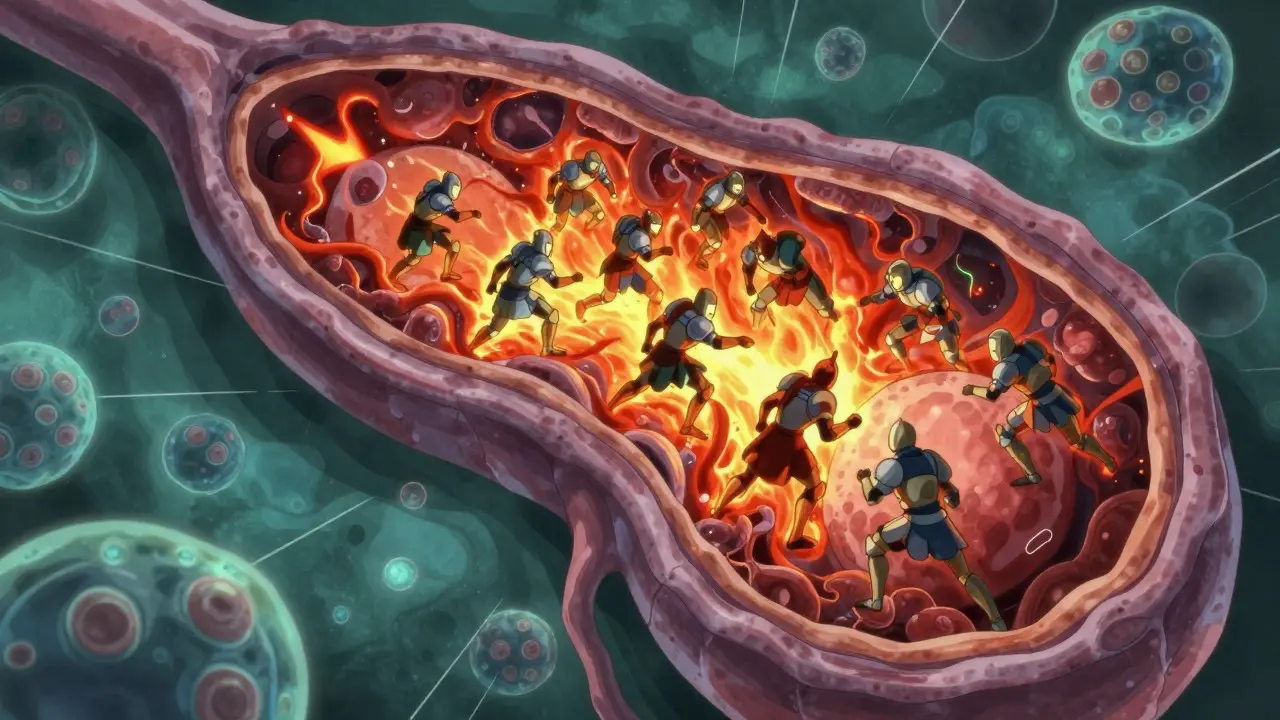
If you think Sjögren’s is only about hydration, think again. Dr. Alan Baer from Johns Hopkins University emphasizes that it is a systemic disease. Beyond the obvious dryness, patients frequently experience extreme fatigue that does not improve with rest, affecting up to 70% of individuals. Joint and muscle pain affects 30-50% of patients, though it is generally less destructive to joint architecture than rheumatoid arthritis. Skin issues, such as dry, itchy patches or rashes on the hands and feet, occur in up to 20% of cases. Some patients also face vaginal dryness, which impacts quality of life but is rarely discussed in general medical settings. More seriously, there is a slightly elevated risk of developing non-Hodgkin lymphoma, a type of blood cancer, compared to the general population. This is why regular monitoring by a rheumatologist is crucial, not just for symptom relief but for long-term health surveillance.
The Diagnostic Challenge
One of the biggest frustrations for patients is the delay in diagnosis. On average, it takes 2.8 years from the onset of symptoms to a confirmed diagnosis. Many visit multiple doctors-primary care physicians, ENTs, and dentists-who may attribute the symptoms to allergies, acid reflux, or simply not drinking enough water. To confirm Sjögren’s, doctors use specific criteria established by the American College of Rheumatology and the European League Against Rheumatism. These include:
- Schirmer’s Test: Measures tear production. A result below 5mm in 5 minutes indicates dry eyes.
- Salivary Flow Rate: Unstimulated flow below 1.5mL in 15 minutes suggests gland dysfunction.
- Blood Tests: Checking for autoantibodies, specifically anti-SSA/Ro and anti-SSB/La. These are present in 60-70% of cases.
- Gland Biopsy: In some cases, a minor salivary gland biopsy is performed to look for focal lymphocytic sialadenitis.
Newer imaging techniques, such as salivary gland ultrasound, are also becoming standard, showing high sensitivity and specificity for diagnosis without the need for invasive biopsies in many instances.

Managing the Condition: Treatment Options
There is currently no cure for Sjögren’s, but management has improved significantly. The goal is to replace lost moisture and control systemic inflammation. For dry eyes, preservative-free artificial tears are recommended 8-10 times a day. For dry mouth, saliva substitutes can be used 5-7 times daily. Prescription medications like pilocarpine or cevimeline stimulate the remaining gland function, with clinical studies showing moderate improvement in 60-70% of patients. For those with significant joint pain or fatigue, hydroxychloroquine is often prescribed, though benefits vary. Dental care must be intensified, with check-ups every 3-4 months instead of the standard six, due to a 5-10 times higher risk of cavities. Environmental adjustments, such as using humidifiers to maintain 40-60% humidity, also play a vital role in daily comfort.
| Feature | Primary Sjögren’s | Secondary Sjögren’s |
|---|---|---|
| Definition | Occurs independently without other autoimmune diseases | Develops alongside conditions like RA or Lupus |
| Prevalence | 50-70% of all cases | 30-50% of all cases |
| Key Risk Factor | Genetic susceptibility + environmental trigger | Existing autoimmune disorder |
| Diagnosis Focus | Isolated glandular symptoms + antibodies | Overlap with parent disease symptoms |
Living with Sjögren’s: Quality of Life
Living with an invisible illness can be isolating. Many patients report feeling dismissed by healthcare providers because the symptoms are not always visible. Fatigue and "brain fog" can make work challenging, leading colleagues to misinterpret cognitive difficulties as incompetence. Social interactions may suffer due to the physical discomfort of speaking for long periods without saliva. However, community support makes a difference. Organizations like the Sjögren’s Syndrome Foundation provide resources and connect patients with others who understand the struggle. Awareness campaigns have increased diagnosis rates by 15% annually over the past five years, helping more people get the right care sooner. Remember, while the condition is chronic, 90% of patients have a normal life expectancy when properly managed. The key is active participation in your own care, asking questions, and advocating for yourself when symptoms persist.
Is Sjögren’s Syndrome curable?
Currently, there is no cure for Sjögren’s Syndrome. However, it is manageable with medications, lifestyle changes, and regular monitoring. New treatments are being developed, including biologics targeting specific immune pathways, which show promise in clinical trials.
Can men get Sjögren’s Syndrome?
Yes, although rare. About 10% of patients are male. Men may sometimes experience different symptom profiles or have comorbidities that complicate diagnosis, but the underlying mechanism of the autoimmune attack on glands remains the same.
How is Sjögren’s different from dry eye syndrome?
Simple dry eye syndrome is often caused by aging, screen time, or environment and lacks systemic symptoms. Sjögren’s is an autoimmune disease characterized by specific autoantibodies (anti-SSA/SSB), potential involvement of other organs, and glandular damage confirmed by tests like Schirmer’s test or biopsy.
What foods should I avoid with Sjögren’s?
Foods that require much chewing or swallowing, such as dry crackers, toast, or nuts, can be difficult. Spicy or acidic foods may irritate sensitive oral tissues. It is best to stay hydrated, eat moist foods, and use sugar-free gum to stimulate saliva production.
Does Sjögren’s affect life expectancy?
For most patients, life expectancy is normal. However, there is a slightly increased risk of non-Hodgkin lymphoma (4-5% lifetime risk compared to 0.5% in the general population). Regular rheumatology follow-ups help monitor for this and other systemic complications.