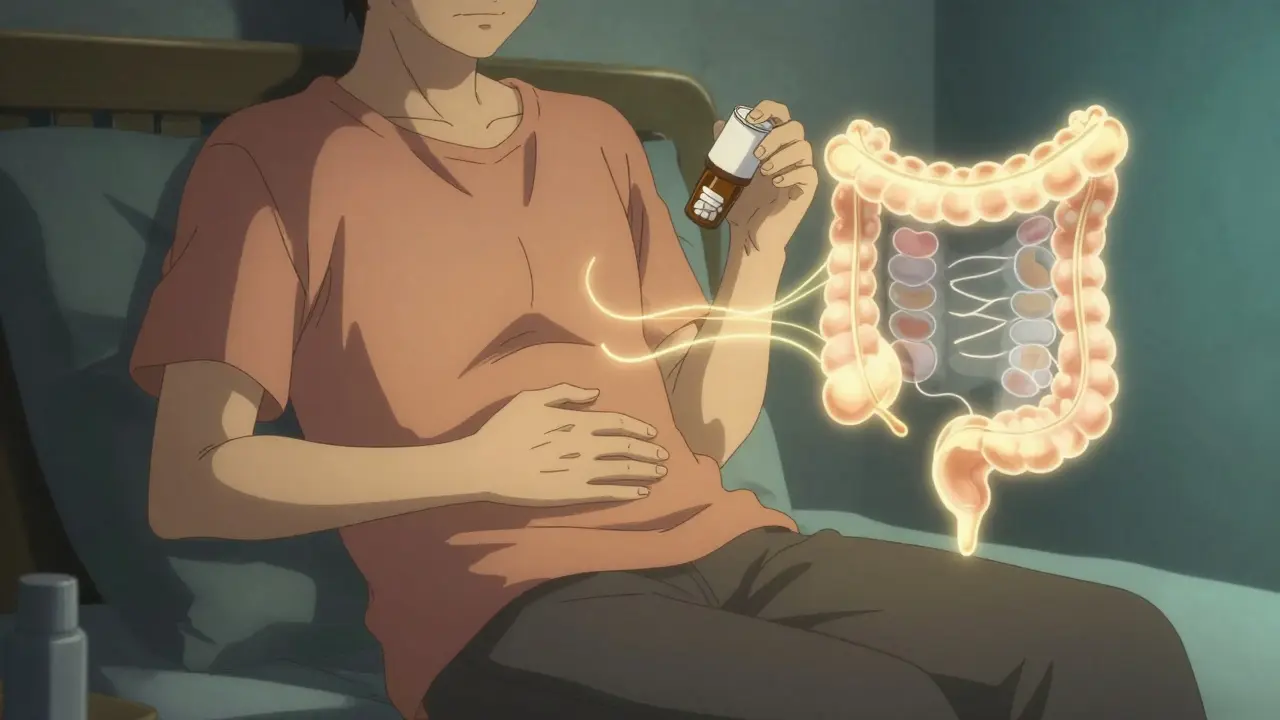
Ulcerative colitis isn't just about frequent bathroom trips. It’s a chronic, unpredictable disease where your immune system turns against your own colon, causing open sores, constant pain, and fatigue that can wreck your daily life. Unlike a stomach bug that fades in a day, ulcerative colitis (UC) lingers - flaring up without warning and vanishing just as suddenly. But here’s the truth: most people with UC don’t live in constant crisis. With the right approach, long-term remission isn’t a dream. It’s achievable.
What Exactly Is Ulcerative Colitis?
- It affects only the inner lining of the colon and rectum.
- Inflammation starts in the rectum and moves upward - never skipping areas.
- It doesn’t punch through the gut wall like Crohn’s disease does.
- The damage is continuous: no healthy patches between inflamed zones.
There are five main types of UC, defined by how far up the colon the inflammation spreads:
- Ulcerative proctitis: Only the rectum. Often the mildest form - maybe just occasional blood in stool.
- Proctosigmoiditis: Rectum and lower sigmoid colon. More frequent bowel movements, cramping.
- Left-sided colitis: Extends from rectum to the splenic flexure. Pain on the left side, weight loss, more diarrhea.
- Pancolitis: Affects the entire colon. Severe symptoms: 10+ bloody stools a day, major fatigue, high fever.
- Rectal-sparing UC: Rare. Colon inflamed, rectum untouched.
Knowing your type helps doctors pick the right treatment. Pancolitis carries a higher risk of colon cancer over time. Proctitis? Much lower risk. That’s why regular colonoscopies aren’t optional - they’re life-saving.
Why Does This Happen? The Real Cause (and What Doesn’t Cause It)
No one knows exactly why your immune system attacks your colon. But we do know this: it’s not your fault. You didn’t eat too much spicy food. You didn’t stress out too much. You didn’t do anything wrong.
Ulcerative colitis is an autoimmune disease. That means your body’s defense system - designed to fight germs - mistakenly sees your colon lining as an enemy. The trigger? Still unknown. Genetics play a role. If a close family member has UC or another autoimmune condition like psoriasis, your risk goes up. People of Ashkenazi Jewish or Caucasian descent are more likely to develop it. And it hits in two waves: ages 15-30, and again between 50-70.
Here’s what doesn’t cause UC:
- Stress - it doesn’t cause it, but it can make flares worse.
- Diet - no food causes UC, but some foods can trigger symptoms during flares.
- Smoking - actually, smokers have a lower risk of UC (though they’re at higher risk for Crohn’s).
It’s not about what you did. It’s about what your body is doing. And that’s where treatment comes in.
How UC Differs From Crohn’s Disease
People often confuse ulcerative colitis with Crohn’s disease. They’re both types of inflammatory bowel disease (IBD), but they’re not the same.
| Feature | Ulcerative Colitis | Crohn’s Disease |
|---|---|---|
| Location | Only colon and rectum | Any part of GI tract - mouth to anus |
| Depth of inflammation | Inner lining only | All layers of the gut wall |
| Pattern | Continuous - no healthy patches | Patchy - “skip lesions” between inflamed areas |
| Common symptoms | Bloody diarrhea, urgency, tenesmus | Diarrhea, abdominal pain, weight loss, fistulas |
| Cancer risk | Higher with pancolitis over time | Lower overall, but risk in affected areas |
That difference matters. Surgery to remove the colon can cure UC. You can’t cure Crohn’s with surgery - it often comes back elsewhere.
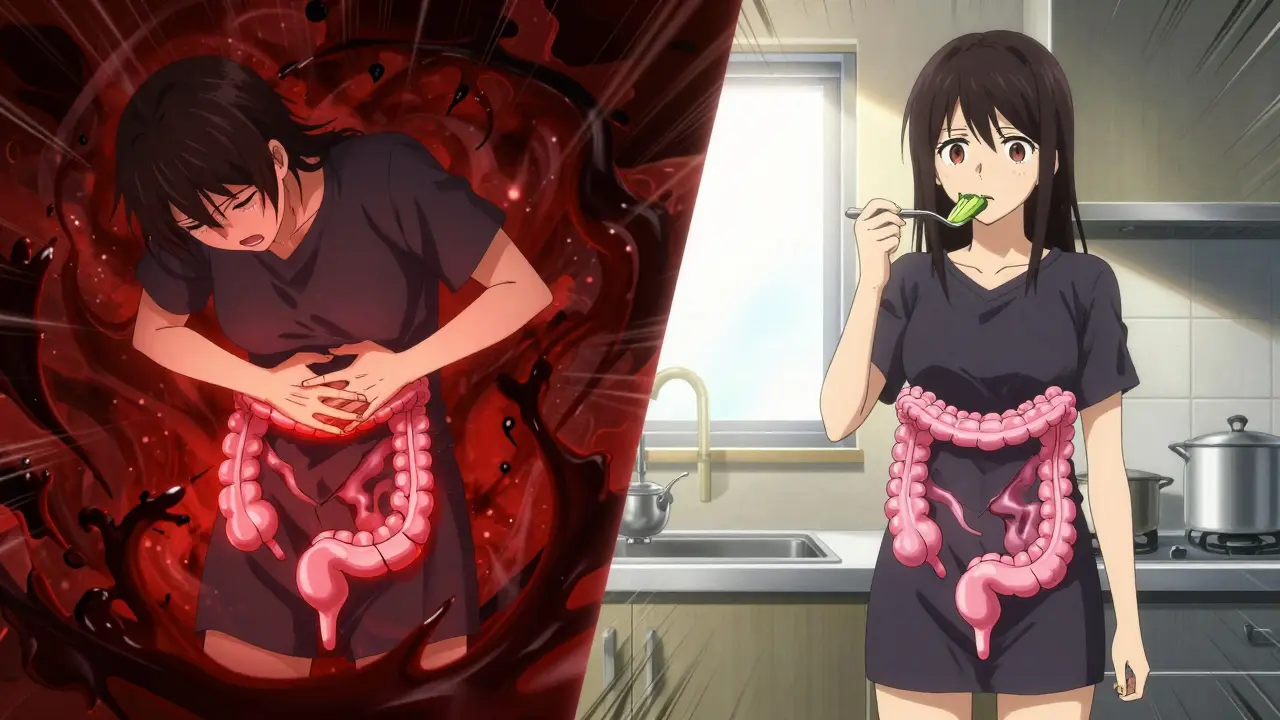
How to Get Into and Stay in Remission
Remission doesn’t mean you’re cured. It means no active inflammation, no symptoms, and your colon looks healthy on a colonoscopy. Getting there takes a plan - and sticking to it.
Step 1: Medications That Work
Treatment follows a step-up approach, starting with the least powerful and moving up if needed.
- 5-ASAs (Mesalamine, Sulfasalazine): First-line for mild to moderate UC. Taken as pills, suppositories, or enemas. They reduce inflammation right where it’s happening. Many people stay in remission on these alone.
- Immunomodulators (Azathioprine, 6-MP): For moderate to severe cases. They slow down the immune system. Takes 3-6 months to kick in. Used long-term to keep flares away.
- Biologics (Infliximab, Vedolizumab, Ustekinumab): Target specific immune proteins. Given by IV or injection. Highly effective for people who don’t respond to other drugs. Many achieve deep remission - meaning no signs of inflammation even on scans.
- JAK inhibitors (Tofacitinib, Upadacitinib): Newer oral pills that block inflammation signals. Used when biologics fail or aren’t an option.
Some people need surgery. If meds stop working, or if you develop precancerous changes, removing the colon (colectomy) is a permanent solution. After surgery, you’ll need an ileostomy or a pouch built from your small intestine. Many say life improves dramatically after surgery - no more bloody stools, no more pain.
Step 2: Diet and Nutrition - Not a Cure, But a Tool
You can’t eat your way out of UC. But what you eat can make flares less brutal.
During a flare:
- Avoid high-fiber foods like raw veggies, nuts, seeds, and whole grains - they can irritate the colon.
- Limit dairy if you’re lactose intolerant (common in UC).
- Stay hydrated. Diarrhea steals fluids and electrolytes.
- Small, frequent meals are easier to handle than three big ones.
When you’re in remission, focus on balance:
- Lean proteins: chicken, fish, eggs.
- Cooked vegetables: carrots, zucchini, spinach.
- Low-fiber fruits: bananas, applesauce, melon.
- Healthy fats: olive oil, avocado.
Keep a food diary. Note what you eat and how you feel. Common triggers include alcohol, caffeine, spicy foods, and artificial sweeteners. But triggers are personal. What messes up your gut might be fine for someone else.
Step 3: Stress Management Is Non-Negotiable
Stress doesn’t cause UC. But it can turn a quiet flare into a full-blown crisis.
Studies show people who practice mindfulness, yoga, or regular breathing exercises have fewer flares. Therapy helps too - especially cognitive behavioral therapy (CBT). It doesn’t fix your colon, but it gives you tools to stop the panic when you feel that urgent need to go.
Sleep matters. Fatigue is both a symptom and a trigger. Aim for 7-8 hours. If pain keeps you up, talk to your doctor. There are safe, non-addictive options.
What to Expect Long-Term
UC is lifelong. But it doesn’t have to control your life.
Most people spend more time in remission than in flare. With modern treatments, many achieve deep, drug-free remission. The key is consistency:
- Take your meds - even when you feel fine.
- Keep your colonoscopies on schedule.
- Watch for early signs: more mucus, slight cramping, a change in stool.
- Build a support system - family, friends, online groups.
People with UC work, travel, raise kids, and run marathons. It’s not easy. But it’s possible.

When to Call Your Doctor
Don’t wait. If you notice:
- Bloody diarrhea more than 6 times a day
- Fever over 101°F
- Severe abdominal pain or swelling
- Signs of dehydration (dizziness, dark urine, dry mouth)
- Weight loss without trying
Call your gastroenterologist. A quick check can prevent a hospital stay.
Can ulcerative colitis be cured?
There’s no medical cure for ulcerative colitis, but removing the colon (colectomy) is the only way to eliminate the disease entirely. Most people manage UC with medication and lifestyle changes, achieving long-term remission without surgery.
Do I need to take medication forever?
For most people, yes. Stopping meds increases the risk of a flare by up to 80% within a year. Even if you feel fine, inflammation may still be present. Your doctor will monitor you and adjust your plan - but don’t quit meds without talking to them first.
Is ulcerative colitis the same as IBS?
No. IBS (irritable bowel syndrome) is a functional disorder - your gut looks normal but doesn’t work right. UC is an inflammatory disease with visible damage, ulcers, and bleeding. IBS doesn’t increase cancer risk. UC does. Diagnosis requires a colonoscopy and biopsies.
Can I still have kids with ulcerative colitis?
Yes. Most women with UC have healthy pregnancies - especially if they’re in remission. Some medications are safe during pregnancy. Talk to your GI doctor and OB-GYN before trying to conceive. Men with UC can father children without issue. Fertility isn’t affected by UC itself.
What’s the risk of colon cancer with UC?
Risk increases with how long you’ve had UC and how much of your colon is affected. After 8-10 years of pancolitis, cancer risk rises. After 20 years, it’s about 5-10%. Regular colonoscopies with biopsies every 1-2 years after 8 years of disease can catch precancerous changes early - and prevent cancer.
Next Steps: What to Do Today
Whether you’ve just been diagnosed or you’ve lived with UC for years, here’s what to do now:
- Write down your symptoms - frequency, severity, triggers.
- Review your meds. Are you taking them as prescribed?
- Schedule your next colonoscopy if it’s due.
- Start a food and symptom journal - even for a week.
- Find a support group. You’re not alone.
Ulcerative colitis doesn’t define you. It’s a condition you manage. And with the right tools, you can live fully - even when your colon is healing.


matthew martin
January 26, 2026 AT 12:50