Most people take St. John’s Wort because they want to feel better-without a prescription, without the side effects of antidepressants, and without the stigma. But here’s the thing: St. John’s Wort doesn’t just affect your mood. It can turn life-saving medications into useless pills-or worse, make them dangerously strong. If you’re on any kind of prescription drug and thinking about trying this herb, stop. Read this first.
How St. John’s Wort Changes Your Body’s Chemistry
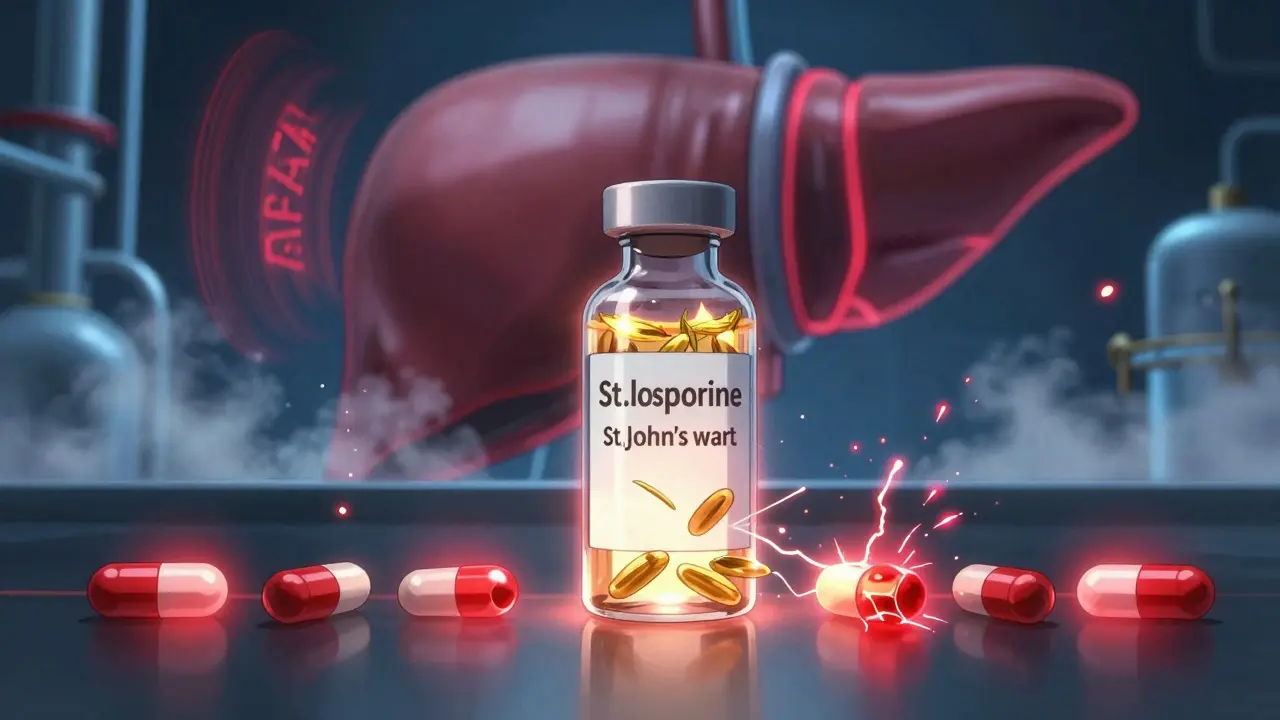
St. John’s Wort isn’t just a natural remedy. It’s a powerful chemical actor inside your body. The main ingredient responsible for its effects-and its dangers-is called hyperforin. This compound wakes up a system in your liver called the pregnane-X-receptor, or PXR. When PXR gets activated, your body starts producing more enzymes, especially CYP3A4, CYP2C9, and CYP1A2. These are the same enzymes that break down about 50% of all prescription drugs.
Think of it like this: your liver is a factory that processes medicines. St. John’s Wort doesn’t just add noise to the factory-it turns up the machines to double time. So when you take a pill, your body shreds it before it can do its job. The result? The medication doesn’t work.
And it’s not just about breaking things down. St. John’s Wort also ramps up P-glycoprotein, a protein that pumps drugs out of your cells. This means even if a drug gets absorbed, it gets shoved right back out before it can help.
The Medications That Can Fail Because of St. John’s Wort
You might think, "I’m not on anything serious." But the list of drugs that can be sabotaged by St. John’s Wort is longer than most people realize. Here are the ones that cause real, documented harm:
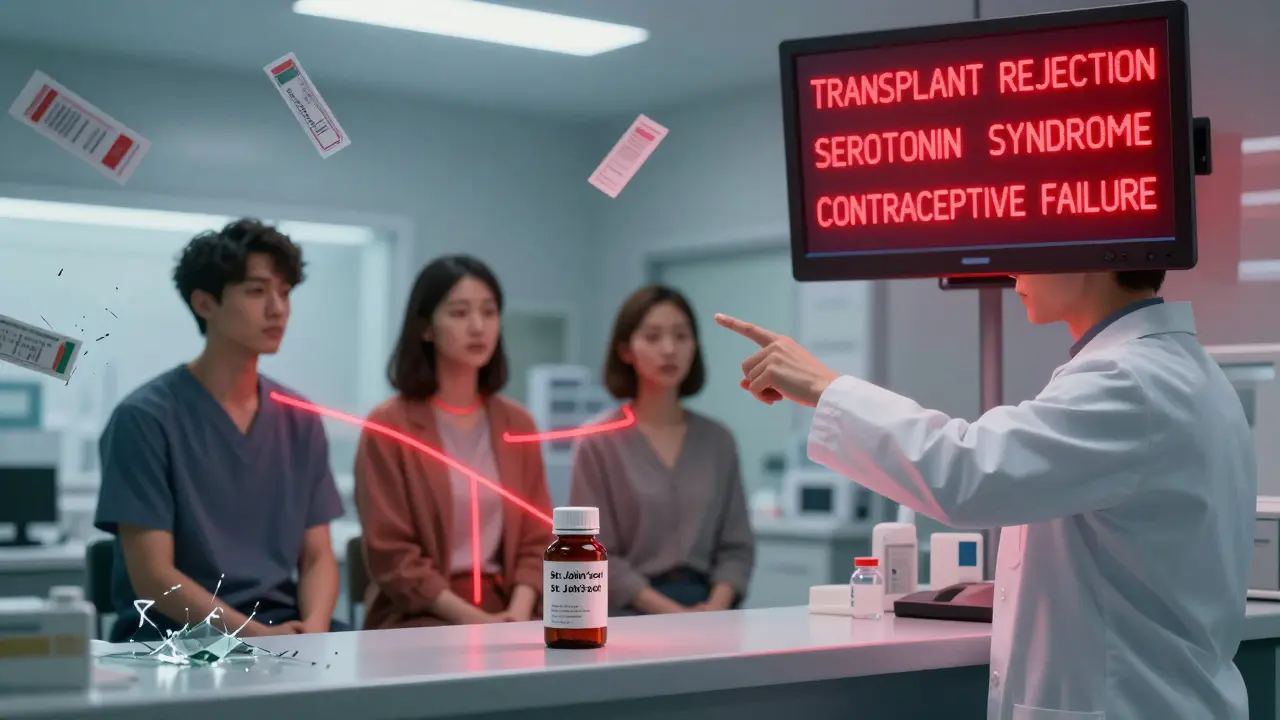
- Organ transplant drugs like cyclosporine, tacrolimus, and sirolimus. In at least 15 documented cases, patients had organ rejection within weeks of starting St. John’s Wort-even when their doses were perfectly matched before.
- HIV medications like protease inhibitors (atazanavir, indinavir). These drugs keep the virus under control. St. John’s Wort can drop their levels so low that the virus rebounds, leading to drug resistance.
- Birth control pills. This isn’t a myth. At least 17 women reported unplanned pregnancies after starting St. John’s Wort. One study showed hormone levels dropped by 40% in just 10 days.
- Anticoagulants like warfarin. A patient in 2000 saw their INR (a blood-thinning measure) crash from 2.5 to 1.4 in under two weeks. That’s the difference between being protected from clots and being at risk of a stroke.
- Opioid painkillers like oxycodone, methadone, and tramadol. St. John’s Wort can make these drugs almost useless. People have reported severe pain returning after taking the herb.
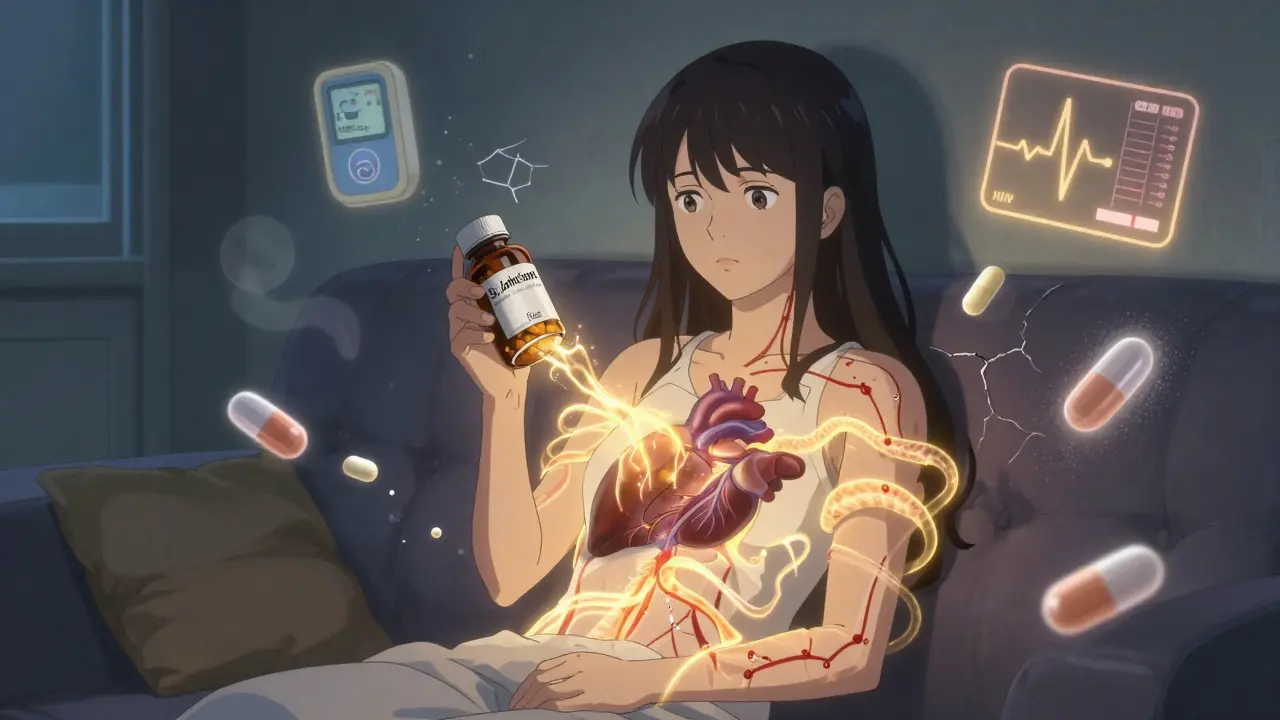
- Antidepressants like SSRIs and SNRIs. Combining them with St. John’s Wort can trigger serotonin syndrome-a dangerous spike in serotonin that causes confusion, rapid heartbeat, fever, and seizures.
The European Medicines Agency says St. John’s Wort should never be used with any drug that has a "narrow therapeutic index." That’s just a fancy way of saying: if the dose is too low, it doesn’t work. If it’s too high, you die.
Why the Risks Are Hidden-and Why You Might Not Know
St. John’s Wort is sold as a supplement. That means it doesn’t go through the same safety checks as prescription drugs. In the U.S., the FDA doesn’t approve supplements before they hit shelves. Labels often say "use with caution"-but that’s not enough.
Most people don’t tell their doctors they’re taking herbal supplements. A 2017 study found that 73% of adults using St. John’s Wort never mentioned it to their pharmacist or physician. Why? Because they think it’s "natural" and therefore safe. But natural doesn’t mean harmless. As one pharmacist in Bristol put it: "I’ve seen more people hospitalized from St. John’s Wort than from aspirin overdoses."
The delay in effects makes it worse. It takes 7-14 days for St. John’s Wort to fully activate those liver enzymes. So if you start the herb and your blood pressure suddenly spikes or your birth control fails, you might not connect the dots for weeks. By then, the damage is done.
What the Research Really Says
St. John’s Wort does work-for mild to moderate depression. Multiple studies, including ones from the Cochrane Collaboration, show it’s as effective as some SSRIs, with fewer side effects like weight gain or sexual dysfunction. But here’s the catch: those studies were done on people who weren’t taking other medications.
When real-world data is looked at-like the 347 reviews on Drugs.com-the picture changes. People who took it alone reported good results. But those who combined it with other drugs? Nearly one in three had a bad reaction. The most common? Birth control failure, transplant rejection, and painkiller ineffectiveness.
And it’s not just anecdotal. A 2020 review in PMC7056460 tracked 47 confirmed cases of transplant rejection linked to St. John’s Wort. In every single case, the patient had started the herb without telling their doctor. The same study found that 90% of those patients had their drug levels drop below the safe range.
What Should You Do?
If you’re on any prescription medication, here’s your simple rule: Don’t take St. John’s Wort.
Even if you think you’re "just taking it for a little mood boost," the risks aren’t worth it. There are safer alternatives:
- SAM-e has almost no known interactions.
- 5-HTP has fewer interactions than St. John’s Wort, though it still carries some risk with antidepressants.
- Cognitive behavioral therapy (CBT) is proven to help mild depression without any chemical risks.
If you’re already taking St. John’s Wort, don’t quit cold turkey. Talk to your pharmacist. They can check your meds, run a drug interaction scan, and help you taper off safely. The effects of St. John’s Wort can last up to two weeks after you stop, so your doctor may need to monitor your drug levels during that time.
Why This Matters Now More Than Ever
Global sales of St. John’s Wort dropped 37% since its peak in 2000, but it’s still a $587 million industry. In Germany, it’s still used in 20% of depression cases. But in the U.S., awareness is growing. The FDA issued a new advisory in March 2023 calling it a "high-risk supplement." More pharmacies now flag it in their systems.
And new research is promising. Scientists are testing hyperforin-free versions of St. John’s Wort that don’t trigger enzyme induction. Early results show a 90% drop in interaction risk. But those products aren’t on the market yet.
For now, the safest choice is simple: if you’re on a prescription drug, leave St. John’s Wort on the shelf. Your body doesn’t need another chemical to fight with. Your doctor, your pharmacist, and your medication already have enough to do.
Can I take St. John’s Wort if I’m not on any medication?
If you’re not taking any prescription drugs, over-the-counter medications, or other supplements, St. John’s Wort may be safe for short-term use for mild depression. But even then, it’s not risk-free. It can still cause side effects like dry mouth, dizziness, or increased sun sensitivity. Always start with a low dose and monitor how you feel. And if you ever start a new medication-even an antibiotic or allergy pill-stop the herb immediately and check for interactions.
How long does it take for St. John’s Wort to affect other drugs?
The enzyme-inducing effects of St. John’s Wort start within 5-7 days, but they peak around 10-14 days. That’s why some people don’t notice a problem until weeks after they start taking it. Even after you stop, the effects can linger for up to two weeks. This delay is why many patients don’t realize the herb is the cause of their medication failure.
Are all St. John’s Wort products the same?
No. Products vary widely in hyperforin content, which is what causes most interactions. Standardized extracts usually contain 0.3% hypericin and 2-5% hyperforin. But some brands have inconsistent levels. A 2022 study found that 30% of U.S. supplements had hyperforin levels 50% higher than labeled. That means a "low-dose" product could be as dangerous as a high-dose one.
What should I do if I accidentally took St. John’s Wort with my medication?
Stop taking the herb immediately. Then contact your pharmacist or doctor. Don’t wait for symptoms. If you’re on a drug like cyclosporine, tacrolimus, warfarin, or an HIV medication, you may need a blood test to check your drug levels. In some cases, your medication dose may need to be adjusted for weeks after you stop the herb.
Is St. John’s Wort banned anywhere?
It’s not banned, but it’s heavily restricted. In the EU, all St. John’s Wort products must carry warnings about interactions with birth control, immunosuppressants, and anticoagulants. In the U.S., it’s still sold over the counter, but the FDA has issued multiple public advisories. Some hospitals in the UK now automatically screen patients for St. John’s Wort use before surgery or transplant procedures.


Brandie Bradshaw
February 27, 2026 AT 11:34