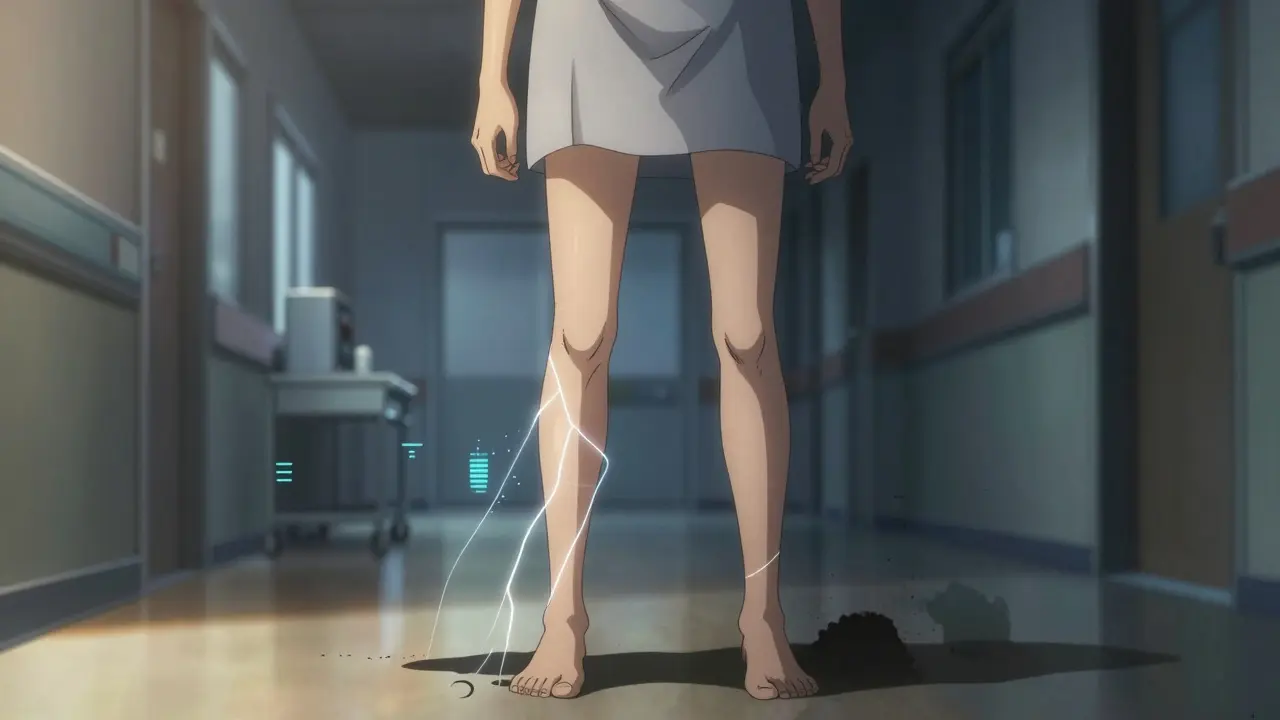
Imagine waking up feeling perfectly fine, only to find your legs refusing to cooperate by the afternoon. For someone with Guillain-Barré Syndrome, also known as GBS, this terrifying scenario is reality. It is a rare but serious condition where your immune system mistakenly attacks your nerves, leading to rapid muscle weakness that can escalate to paralysis. While the thought of sudden paralysis is frightening, modern medicine has powerful tools to fight back. The cornerstone of treatment today is Intravenous Immunoglobulin, commonly referred to as IVIG. This therapy doesn't just manage symptoms; it actively stops the immune attack, shortening recovery time significantly.
Understanding GBS isn't just about memorizing medical terms. It’s about recognizing the signs early, knowing why treatments like IVIG work, and having realistic expectations for recovery. Whether you are a patient facing diagnosis, a caregiver supporting a loved one, or simply curious about neurological health, grasping these fundamentals can make a critical difference in outcomes.
What Is Guillain-Barré Syndrome?
At its core, GBS is an autoimmune disorder. Normally, your immune system protects you from viruses and bacteria. In GBS, however, it gets confused. After fighting off an infection, the immune system creates antibodies that remain active and start attacking the myelin sheath-the protective covering of your peripheral nerves. Think of it like stripping the insulation off electrical wires. When the signal from your brain tries to travel down the nerve to your muscles, it slows down or stops completely. This results in weakness, numbness, and eventually, loss of movement.
The condition was first described in 1916 by French physicians Georges Guillain, Jean Alexandre Barré, and André Strohl. Despite being over a century old, it remains a medical emergency. According to the Centers for Disease Control and Prevention (CDC), GBS affects about 1 to 2 people per 100,000 annually in the United States. That sounds small, but when you consider the severity, every case demands immediate attention. The weakness typically starts in the feet and legs and moves upward-a pattern doctors call "ascending paralysis." If untreated, it can reach the chest muscles, making breathing difficult or impossible.
| Feature | Details |
|---|---|
| Type | Autoimmune neuropathy |
| Primary Symptom | Rapid-onset muscle weakness |
| Progression | Ascending (legs to arms/chest) |
| Peak Severity | Usually within 3-4 weeks |
| Common Trigger | Recent infection (e.g., Campylobacter jejuni) |
Why Does It Happen? Triggers and Risk Factors
You might wonder, "Did I do something wrong to cause this?" The short answer is no. GBS is almost always triggered by a prior infection. Your body fights the germ, but in the process, it produces antibodies that look similar to parts of your own nerves. This phenomenon is called molecular mimicry. About 20% to 40% of GBS cases in the U.S. are linked to Campylobacter jejuni, a bacterium often found in undercooked poultry that causes stomach flu. Other common culprits include cytomegalovirus (CMV) and Epstein-Barr virus (EBV).
In rarer instances, Zika virus infections have been associated with spikes in GBS cases, as seen during the 2015-2016 epidemic in Latin America. Even surgeries or vaccinations can occasionally trigger it, though the risk is extremely low-far lower than the risk from the diseases themselves. It’s crucial to understand that GBS is not contagious. You cannot catch it from someone who has it. It is a unique biological error specific to the individual’s immune response.
Recognizing the Symptoms: When to Seek Help
Time is tissue when it comes to nerve damage. The hallmark symptom of GBS is symmetrical weakness. It usually begins in both legs simultaneously. You might notice trouble walking, climbing stairs, or even standing up from a chair. As the condition progresses, the weakness moves to the arms, face, and neck. Many patients report tingling sensations or pain in their fingers and toes before the weakness sets in.
A key sign doctors look for is areflexia-the loss of reflexes. If a doctor taps your knee with a hammer and there is no kick, it suggests the nerve pathway is disrupted. Another red flag is facial weakness, which can make closing your eyes or smiling difficult. In severe cases, about 20% to 30% of patients require mechanical ventilation because the muscles controlling their diaphragm become too weak to breathe on their own. If you experience sudden, unexplained weakness in your legs after a recent illness, go to the emergency room immediately. Do not wait to see if it gets better on its own.

How IVIG Treatment Works
Once diagnosed, the goal shifts to stopping the immune attack. The two primary treatments are plasma exchange (plasmapheresis) and Intravenous Immunoglobulin (IVIG). IVIG has become the preferred first-line therapy in most hospitals due to its ease of administration and comparable effectiveness. But what exactly is IVIG?
IVIG is a solution made from blood plasma donated by thousands of healthy people. This plasma contains normal antibodies (immunoglobulins). When infused into a patient with GBS, these healthy antibodies help regulate the immune system. They block the harmful antibodies attacking the nerves and reduce inflammation. It’s like sending in a peacekeeping force to stop a civil war inside your body.
The standard protocol involves administering 0.4 grams per kilogram of body weight per day for five consecutive days. Doctors aim to start this treatment within two weeks of symptom onset. Studies show that starting IVIG early can accelerate recovery by about 50% compared to supportive care alone. Clinical trials indicate that treated patients regain the ability to walk independently roughly three weeks faster than those who receive placebo care.
IVIG vs. Plasma Exchange: Making the Choice
If IVIG is so effective, why does plasma exchange still exist? Plasma exchange involves filtering your blood to remove the harmful antibodies directly. It requires inserting a large catheter into a vein, usually in the neck or groin, which is more invasive. Both treatments are equally effective in improving long-term outcomes, but IVIG wins on convenience and safety profile for many patients.
| Factor | IVIG | Plasma Exchange |
|---|---|---|
| Invasiveness | Low (standard IV line) | High (central venous access) |
| Complication Rate | ~15% | ~30% |
| Cost (U.S.) | $15,000 - $25,000 | $20,000 - $30,000 |
| Patient Satisfaction | Higher (7.2/10) | Lower (5.8/10) |
| Best For | Most patients | Severe respiratory failure cases |
However, plasma exchange might be chosen if a patient has severe kidney issues or IgA deficiency, which can cause dangerous allergic reactions to IVIG. Also, in cases where breathing is critically compromised, some experts prefer plasma exchange for its potentially faster initial effect, though evidence is mixed. Ultimately, the decision depends on hospital resources, patient history, and clinical presentation.

Side Effects and Risks of IVIG
No treatment is without risks. IVIG is generally well-tolerated, but side effects are common. The most frequent complaint is headache, affecting about 25% of patients. These headaches can be severe, sometimes described as feeling like a vice around the skull. Fever and chills occur in about 15% of cases. To mitigate these, doctors often pre-medicate with acetaminophen or antihistamines.
More serious, though rare, complications include blood clots (thromboembolism) and kidney damage. Patients with a history of clotting disorders or existing kidney disease need careful monitoring. There is also a risk of aseptic meningitis, causing neck stiffness and sensitivity to light. Despite these risks, the benefit of preventing permanent paralysis far outweighs the potential downsides for most patients. Always inform your medical team of any allergies or previous reactions to blood products.
Recovery and Long-Term Outlook
After the acute phase, the real work begins: rehabilitation. Nerves heal slowly. It can take months, sometimes years, to regain full strength. Statistics from the GBS/CIDP Foundation show that 60% of patients achieve full functional recovery within 6 to 12 months. About 30% will have residual weakness that may require assistive devices like braces or walkers. Unfortunately, 10% remain severely disabled.
Physical therapy is essential. It helps maintain muscle mass, prevents joint contractures, and retrains the brain to communicate with weakened muscles. Occupational therapy assists with daily activities, while speech therapy may be needed if swallowing or speaking is affected. Mental health support is also crucial. Dealing with sudden disability can lead to anxiety and depression. Support groups, both online and in-person, provide valuable community and shared experiences.
Research continues to evolve. New therapies, such as complement inhibitors, are showing promise in early trials. Biomarkers like anti-ganglioside antibodies may soon help predict who will respond best to which treatment. Until then, IVIG remains the gold standard, offering hope and a path to recovery for thousands of patients every year.
How long does IVIG treatment last for Guillain-Barré Syndrome?
The standard IVIG protocol for GBS consists of infusions given once daily for five consecutive days. Each infusion can take several hours depending on the dose and patient tolerance. Most patients complete the course within a week, though hospital stays may extend longer for monitoring and supportive care.
Can Guillain-Barré Syndrome be cured?
While there is no instant "cure," GBS is treatable. With timely intervention using IVIG or plasma exchange, most patients recover significantly. About 60% return to full function within a year. The focus is on halting the immune attack and supporting nerve regeneration through rehabilitation.
Is IVIG painful?
The IV insertion itself feels like a needle prick. During the infusion, some patients experience mild discomfort, flushing, or headache. Severe pain is uncommon but can occur. Medical staff monitor closely and adjust infusion rates or provide medication to manage discomfort effectively.
Who discovered Guillain-Barré Syndrome?
GBS was first described in 1916 by French neurologists Georges Guillain, Jean Alexandre Barré, and André Strohl. They identified the distinct pattern of ascending paralysis and albuminocytological dissociation in spinal fluid that characterizes the disease.
What are the chances of dying from Guillain-Barré Syndrome?
Mortality from GBS is relatively low, estimated at around 5% to 10%. Deaths are usually caused by complications such as respiratory failure, heart rhythm disturbances, or blood clots rather than the nerve damage itself. Early hospitalization and intensive care significantly reduce this risk.